


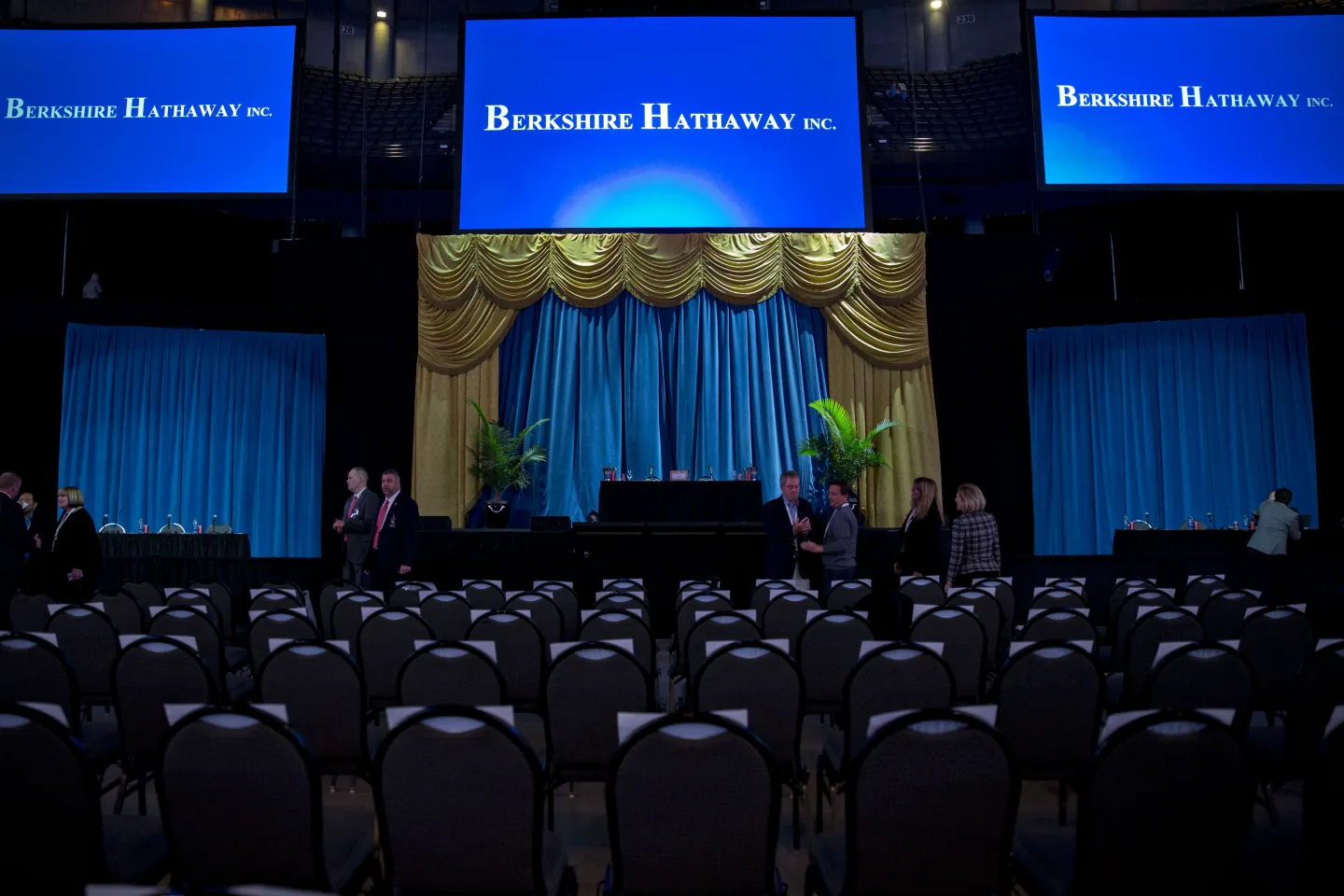
No slides. No teleprompter. No walk-on music. No rehearsed opening. No cocktail reception. No video package. No panel of executives. No celebrity moderator.
Just one man, Warren Buffett, in a chair for five hours, answering whatever he’s asked.
By every modern standard of event production, the Berkshire Hathaway annual shareholder meeting should be a snoozer. It violates every rule of contemporary audience engagement, and it’s the exact opposite of what IR consultants typically recommend.
Yet, it draws 40,000 people to Omaha every May. It commands global media coverage. It moves markets. And it’s routinely cited by institutional investors as the single most valuable investor communication event in the world.
So what’s going on?
The short answer: the Berkshire meeting isn’t boring. It’s disciplined. And it works for the exact reasons most shareholder meetings don’t.
Here’s what 60 years of the “Woodstock for Capitalists” teaches about effective investor communication – and what any IR team can apply to their next event.
Lesson 1: The Best Production Is Invisible
Most corporate events are built around a fundamental assumption: investors need to be entertained, impressed, or both.
So the production gets heavier every year. More video. More stagecraft. More choreographed executive walkons. More polished messaging. The implicit message: we don’t trust you to stay interested unless we keep the energy up.
Berkshire does something different, and it takes more production skill, not less, to pull off. The format assumes the audience is smart enough to stay engaged without decorative flourishes. Every production decision – staging, lighting, camera work, broadcast design – is built to disappear so the content can carry the room.
That’s the hardest thing to do in event production. Making the work invisible requires a team that understands exactly what to amplify and when to pull back .
The takeaway for your next event: production isn’t about adding spectacle. It’s about designing every element – visible or invisible – to serve the core moment. The most confident companies communicate through production that feels effortless and intentional, which is almost always the product of the most thoughtful production design.
Lesson 2: Format Itself Is Content
Every production decision at a Berkshire meeting communicates something:
- Running five hours says: we’re not hiding behind a short window
- Open Q&A with no pre-screening says: we’ll take whatever you want to ask
- Warren Buffett as solo presenter for most of its history says: one person is accountable for everything
- Global webcast in English and Mandarin says: our investor base is global, and we’ll meet them where they are
- The microphone lottery system says: any shareholder can reach the CEO, not just the largest
None of those are obvious production choices. Each one was deliberate. Each one required significant production planning and infrastructure to execute consistently year after year.
Together, they communicate Berkshire’s values more effectively than any mission statement could.
The takeaway for your next event: every production choice – length, format, staging, Q&A structure, broadcast design – is saying something about your company. The best production partners don’t just execute the format. They help you understand what each decision communicates and design every element to reinforce the narrative you’re trying to build.
Lesson 3: One Great Format Beats Ten Good Tactics
Most shareholder meetings are a mosaic of competing elements: opening remarks, CEO presentation, CFO deep-dive, divisional updates, video segments, panel discussions, Q&A, networking reception. Each element is designed to serve a different audience need. The result is often a meeting that does many things adequately and nothing exceptionally.
Berkshire picked one element – the open-question Q&A – and made it the entire event.
That single format decision is what built the brand. It’s also what makes the event irreplaceable. There’s nowhere else an institutional investor can ask a man like Warren Buffett – the CEO of a $1.1 trillion company – any question they want and get a real answer in real time for five hours straight.
The takeaway for your next event: identify the one element of your investor communication that genuinely differentiates you. Then ask whether the rest of your format is supporting that element or diluting it. If you’re doing ten things to satisfy different stakeholders, none of them will be memorable.
Lesson 4: Transparency Is a Production Decision
There’s a reason Berkshire’s meeting generates so much media coverage. Reporters and analysts know Buffett will answer hard questions directly – about the economy, about politics, about specific holdings, about mistakes. The format makes it impossible to dodge.
Compare that to a typical investor meeting where executives deliver scripted remarks, take three pre-screened questions, and exit stage right. The contrast isn’t subtle. Shareholders notice. So do journalists. So do short sellers.
Transparency at Berkshire isn’t a corporate value statement. It’s a production structure. The format doesn’t allow evasion. And because the format doesn’t allow evasion, the company has spent 60 years demonstrating that it has nothing to evade.
The takeaway for your next event: if your IR format includes a lot of guardrails; pre-screened questions, heavily rehearsed executives, short Q&A windows, vague forward-looking statements – those guardrails are communicating something. Ask whether what they’re communicating is actually what you want.
Lesson 5: Build a Foundational Identity, Evolve the Execution
The “Woodstock for Capitalists” works because its core identity is unmistakable.
Same weekend. Same city. Same open Q&A format.
But here’s what’s easy to miss. Berkshire has evolved the event substantially over 60 years. The webcast expanded from audio-only to video to global streaming in English and Mandarin. The question-submission system evolved. The microphone lottery was introduced. The broadcast production grew from bare-bones to one of the most sophisticated corporate livestreams in the world.
What Buffett and his team understood is the difference between identity and execution. The identity stayed fixed. The execution kept getting better.
That’s the formula most IR teams get wrong in one direction or the other. Some reinvent everything every year and lose the continuity that builds audience loyalty. Others freeze their format and miss opportunities to elevate the experience as technology, audience expectations, and stakes evolve.
The best IR events have clear identity and constant elevation. What stays the same is the core: the narrative, the intentionality, the relationship. What gets better every year is the craft that delivers it.
The takeaway for your next event: separate what should never change from what should always improve. Your core identity, your voice, your relationship with investors – protect those fiercely. Your production value, your storytelling sophistication, your technical execution – those should get better every single year. Great production partners help you identify which is which and elevate the execution without disturbing the foundation.
What Berkshire Gets Right
Every IR team is making the same tradeoff, whether they realize it or not.
Most shareholder meetings are designed around this year’s messaging. The best ones invest in a relationship with investors that lasts decades.
There’s a reason Berkshire’s annual meeting has outlasted recessions, leadership questions, and Warren Buffett’s own transition off the stage. The event was built to carry weight, not to win a single news cycle. The format, the venue, the open Q&A, the trust between the company and its shareholders – none of it happened by accident. It was built, refined, and protected, year after year, by a team that understood what the event needed to carry. The result is the most respected, most attended, most covered corporate event in the world.
That’s not boring. That’s the highest form of the craft.
Great IR communication isn’t built one event at a time. It’s built as a long-term asset – a production foundation strong enough to hold the company’s relationship with investors through every cycle, every leadership change, every market condition.
That’s the work worth investing in. And that’s the quality Cardboard Spaceship delivers.
Rethinking your next investor event?
The best IR communication isn’t about stripping production down or piling it on. It’s about making sure that every production decision, visible or invisible, earns its place. That’s the discipline we bring to every high-stakes investor event we build.
