
SpaceX’s 2026 IPO: The Roadshow Production Challenge
October 2026 update: SpaceX completed its IPO on June 15, 2026. Its Class A shares began trading on June 12 under the ticker SPCX, and the offering raised approximately $85.7 billion in gross proceeds. See SpaceX’s June 15 announcement and its SEC filing.
We first published this analysis on April 14. In October, we checked its forecasts against SpaceX’s official launch announcement, roadshow presentation and SEC-filed materials. We corrected the financial figures and schedule below. The production ideas remain our April proposals; the public record does not establish every live-event detail.
Our central question was how one roadshow could explain launch services, Starlink, AI, and long-term exploration to institutional and individual investors while giving each audience an experience that served its needs.
What the public materials confirm
- Schedule: SpaceX launched the roadshow on June 4, earlier than the June 8 start we cited in April.
- One company story: the official presentation connects Space, Connectivity and AI through an infrastructure thesis. That supports our central narrative prediction.
- Sequence: the deck introduces the mission early and covers Space before Connectivity and AI. It does not follow our proposed Starlink-first, Mars-last order.
- Media: the June 4 SEC filing includes a roadshow website and video assets. Those assets do not confirm our predictions about stage design, live demos or terminal giveaways.
- Still unverified: these materials do not establish the reported 1,500-person retail attendance, 125-analyst session, final 30% retail allocation, Musk’s live format or Johnsen’s precise speaking role. We treat those as April reporting or predictions, not confirmed outcomes.
Our April 2026 production forecast, with factual corrections

The financial details are staggering.
October correction: SpaceX’s roadshow deck reports $18.7 billion in 2025 total revenue and $11.4 billion in Connectivity revenue. It shows 8.9 million Starlink subscribers at the end of 2025 and 10.3 million in Q1 2026. Our original estimate understated revenue and mixed subscriber dates.
The company combined with Musk’s AI venture xAI in February 2026. Its June 4 announcement names the final book-running managers and co-managers. That official list replaces the preliminary banking lineup we cited in April.
But here’s the thing. None of that guarantees the roadshow works.
We’ve produced enough high-stakes investor events to know. We’ve been in the rooms where CEOs make their pitch, where the production design either builds conviction or lets it slip away, where the difference between a good event and a great one lives in the details most people never notice. In April, we identified five production and narrative challenges for SpaceX’s team.
Here’s what we expected – and the production choices we proposed.

Five Challenges We Expected SpaceX’s Team to Solve
1. Two audiences, one week, zero room for error.
April reporting pointed to institutional meetings in the week of June 8 and a June 11 event for approximately 1,500 retail investors. The official roadshow launch came on June 4. We have not confirmed the retail event’s attendance or final format from the public materials we reviewed.
These are two fundamentally different productions.
The institutional roadshow is a controlled, small-room format. Twenty people around a conference table. Dense financial content. Detailed Q&A. The team designs the presentation for sophisticated investors who have already read the S-1 and want to pressure-test the numbers. The tone is precision. The goal is analytical conviction.
The large retail event we imagined called for a different approach. A broad audience needs clear explanations, energy and a reason to care about the company’s work, alongside a financial case it can examine. CFO Bret Johnsen signaled an ambition for unusually broad retail participation in the April reporting.
Our April prediction: a large retail event would look and feel closer to an Apple keynote or an NVIDIA GTC than a traditional roadshow stop.
We expected strong production values and visual storytelling to help explain the technology. The experience would still need to give individual investors enough financial context to weigh the opportunity and its risks.
The production challenge is keeping the narrative consistent across both formats while adapting the tone, pacing, and persuasion mechanics for each audience. Same story. Completely different rooms.
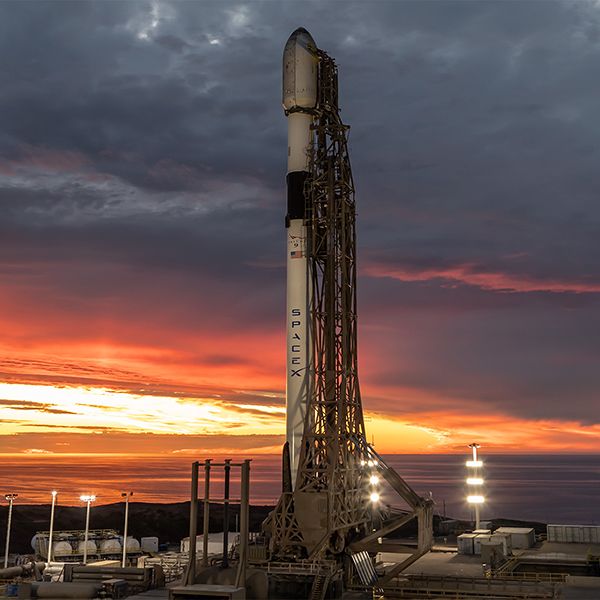
2. The Musk calibration.
There’s no way around it: Elon Musk is simultaneously SpaceX’s greatest asset and its greatest production risk.
Musk’s presence draws attention and dominates headlines. For some individual investors, he embodies the brand. We expected the team to use that visibility while giving the business case and other executives room to speak.
During an offering, management’s public comments carry unusual weight. Production teams need to coordinate scripts, Q&A and media plans with the company’s legal and investor relations teams. An unscripted remark can distract from the financial case.
Our April prediction: the production team would structure Musk’s participation in one of two ways:
- Moderated format – a fireside chat where a skilled interviewer (likely a senior banker or a trusted journalist) guides the conversation through the narrative arc. This gives Musk room to be compelling while keeping guardrails in place.
- Structured keynote with an emotional close – Musk follows a clear narrative for 30–45 minutes, then takes curated questions. This duration was our production proposal, not a confirmed run of show.
What we did not expect
We did not expect a two-hour, fully unscripted appearance. Our proposal gave Musk room to be compelling while keeping the conversation focused on the offering. The public materials we reviewed do not establish his actual live format.
We expected CFO Bret Johnsen to carry much of the financial explanation. That remained a prediction about his speaking role.
Our April bet: Johnsen would lead the financial presentation, while Musk would concentrate on vision. We also expected other executives to feature in the reported analyst briefing. We have not verified that session’s attendance or speaker lineup.
The calculus is clear. Musk brings the room to life. Johnsen brings the numbers to life. The roadshow needs both, in the right sequence, with the right boundaries.
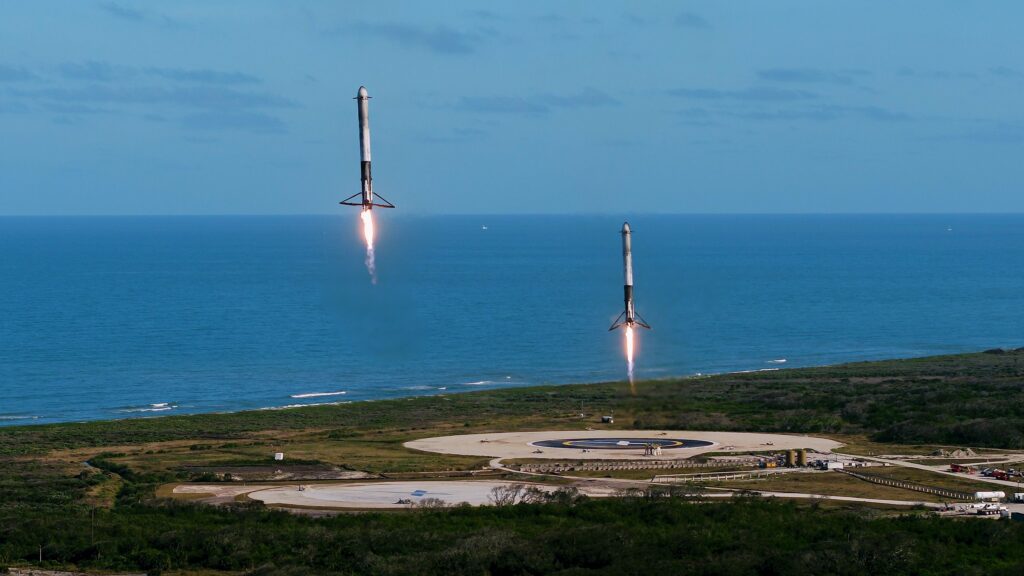
3. Pitching four businesses as one story.
This might be the single hardest narrative architecture problem in the entire roadshow.
Our April analysis separated four kinds of investment argument. The final presentation groups the company into three segments – Space, Connectivity and AI – rather than treating these four themes as separate businesses:
- Launch services (Falcon 9, Falcon Heavy, Starship) – the original business, dominant in commercial launch, deeply embedded in government contracts
- Starlink – a global satellite broadband business with recurring customer revenue
- xAI (merged February 2026) – Grok, AI infrastructure, compute at scale
- Speculative ventures – Mars colonization, space-based data centers, orbital AI compute
Each of these has a different financial profile, a different time horizon, and a different type of investor who cares about it. Starlink is a recurring revenue growth story. Launch services is a margin-and-moat story. xAI is an AI-optionality story. Mars is a vision-and-mission story.
The roadshow has to weave all four into a single thesis that holds together. If the narrative fragments, if investors feel the company has stapled unrelated investment arguments together, the valuation argument weakens. A coherent platform argument needs to explain how the businesses reinforce each other; a label alone cannot earn a valuation premium.
Our April prediction: the team would anchor on a single connective idea.
Something like “infrastructure for the next century” or “the platform that connects Earth and beyond.” Starlink carries the financial argument. Launch services carries the competitive moat argument. xAI becomes the intelligence layer that enhances both. And Mars becomes the vision closer – the aspirational endnote that makes people want to own a piece of the story.
The sequence we proposed in April:
- Starlink first – the cash flow engine, the financial anchor, the business Wall Street can model
- Launch services second – the competitive moat, the cost advantage that makes Starlink’s unit economics work
- xAI third – the growth optionality, framed as the intelligence layer that enhances the core businesses
- Speculative ventures last – the vision closer, saved for the final act when the audience’s imagination is most receptive
That’s an architecture we’ve seen work in multi-business Investor Day presentations. We proposed putting the businesses investors can model first, then moving toward the longer-term vision. SpaceX’s published deck chose a different sequence.
4. Making the retail event actually work.
A large retail gathering during an IPO raises a practical question: how do you explain a complex offering to people with different levels of financial experience?
Retail investor events at IPOs typically involve a webcast, maybe a streamed presentation. A substantial in-person gathering also requires a live experience that helps attendees understand the business and find the offering documents.
We thought that format would need to accomplish several things simultaneously:
- Build understanding of a complex multi-business company without overwhelming a non-institutional audience
- Explain the investment case while giving attendees space to assess the risks
- Coordinate communications review with the company’s legal and IR teams
- Create useful, shareable material for interested investors who cannot attend
- Feel like a reward – Johnsen’s framing of the retail allocation as recognition of long-time supporters created an expectation of appreciation that we thought the production should address
Our April prediction: the production would borrow from the tech keynote playbook.
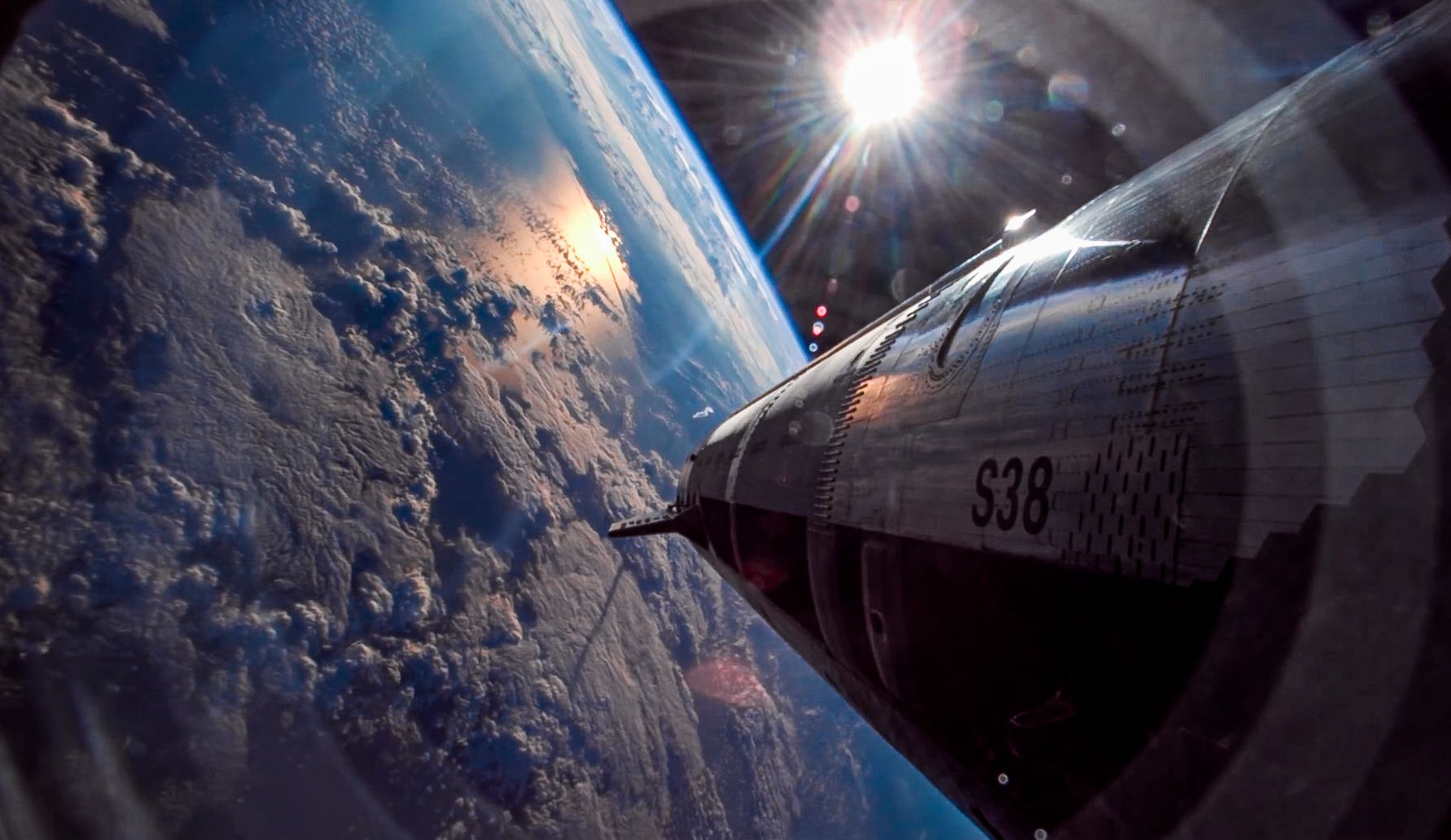
High-quality video packages showing Starlink coverage expanding across the globe. Starship footage that puts you inside the experience. Live demos or visual presentations that make the technology tangible. We even proposed a Starlink terminal in each attendee’s hands. We have not verified a giveaway. The room needs to feel like you’re stepping into the company’s future, not sitting through its pitch.
The follow-through matters as much as the event. Attendees need clear routes to the prospectus, eligibility information and the allocation process. A room full of enthusiasm does not prove that the event caused share purchases.
5. The analyst briefing needs financial depth.
April reporting described a planned briefing for roughly 125 analysts. We have not confirmed the final attendance, date or format. Our production analysis assumed a separate session with enough time for detailed financial questions.
Analysts need enough detail to test management’s assumptions and explain the offering to clients. Their questions can expose gaps that a polished keynote misses. The production task is to make that scrutiny possible.
Our April prediction: this session would carry the greatest financial detail.
S-1 walkthrough. Revenue decomposition by business line. Margin trajectory modeling. xAI integration accounting. Risk factor discussion. Dual-class share structure explanation. Management credibility assessment.
An analyst session needs clear tables, readable assumptions and time for follow-up questions. A broad retail presentation needs accessible explanations. Both should serve the same equity story, with the detail each audience needs.
How to Pitch Rockets, Broadband, and AI in One Story
We expected narrative architecture to matter because investors needed a way to evaluate the connections between the businesses. We cannot isolate the roadshow’s effect on valuation from the offering’s other financial and market factors.
Here’s the core tension: Starlink is the financial story. It’s where the revenue is, where the margins are, where the subscriber growth is. Analysts can model it. Institutional investors can compare it to telecom and broadband peers. If SpaceX were just Starlink, the valuation conversation would be complex but tractable.
But SpaceX isn’t just Starlink. And the other businesses create both upside and confusion.
The “infrastructure” reframe will be critical.
We expected an infrastructure thesis to connect broadband, launch capabilities and compute. The final deck uses that framing across its three segments. We did not perform a word-frequency count, and the framing alone does not prove that investors accepted a particular valuation.
The useful production question is concrete: can the presentation show how launch capacity, connectivity and AI support each other? Diagrams, operating examples and financial disclosures have to carry that argument.
The xAI integration will be the hardest section to land.
We expected investors to question AI revenue, compute costs and capital requirements. They needed to understand whether the combination strengthened the core businesses or added complexity. The final materials provide a basis for examining those questions.
Our April prediction: the roadshow would frame xAI as an “intelligence layer” across the SpaceX ecosystem – AI-driven Starlink network optimization, autonomous flight systems, predictive maintenance for launch vehicles, and AI compute infrastructure in orbit. If the team can make xAI feel like an enabler of the core businesses rather than a separate bet, it adds to the story. If they can’t connect it, it becomes the section where institutional investors start shifting in their chairs.
The Mars question will hang over everything.
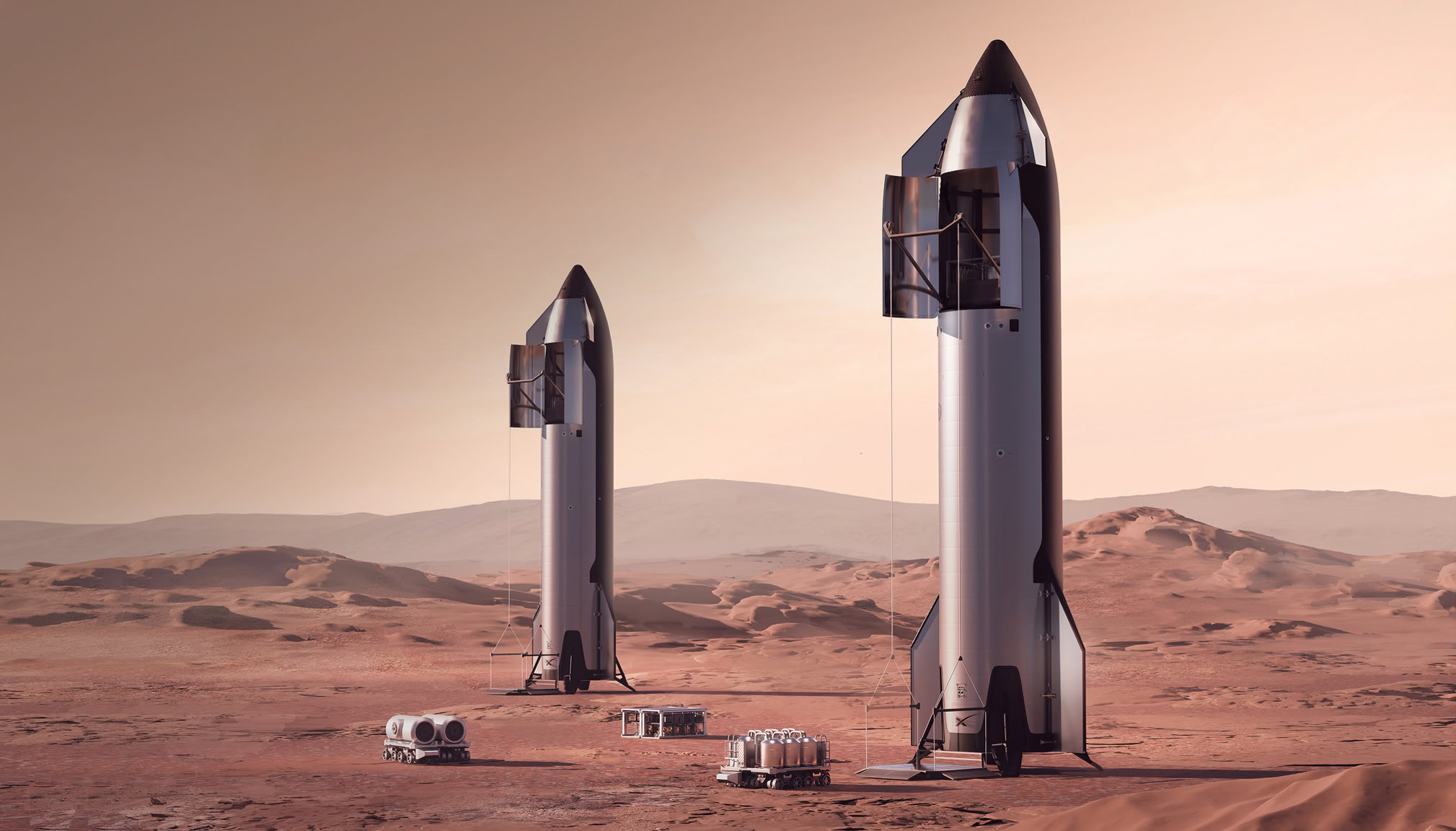
Mars is the origin story. It’s why Musk founded SpaceX. It’s why many retail investors care about the company. But it’s also, from an institutional perspective, the part of the story that’s hardest to value and the easiest to dismiss.
We proposed holding the Mars vision until the audience understood the operating businesses. The published deck instead introduces the mission near the beginning.
Our April proposal: use Mars in the closing minutes, framed not as a near-term investment thesis but as the long-term vision that motivates the company’s engineering culture, its willingness to take risks, and its ability to attract world-class talent. It’s the “why” behind the company, not the “what” the market is buying. That distinction matters enormously in how institutional investors receive it.
What We Thought the Retail Investor Event Needed
The retail format we imagined still offers useful questions for IR teams.
The test is whether attendees leave with a clearer understanding of the business, its risks and the offering process. Attendance, media coverage and share purchases measure different things. None alone establishes the quality of the event or its effect on investment decisions.
The production review needs those distinctions.
Here’s what we recommended in April, with factual corrections:
Individual investors may know SpaceX through launches, Starship tests or Starlink service. Start with the work they recognize, then connect it to the financial case and its risks. The mission can help people understand the company; it cannot replace offering information.
Make the business tangible through coverage maps, customer experiences and launch economics. Explain what a metric measures and date it. For example, the final roadshow deck reports 10.3 million Starlink subscribers in Q1 2026. Footage and diagrams should help the audience understand the figures.
Our April proposal gave Musk a clear narrative arc, through a moderated conversation or structured keynote. The purpose was to keep attention on the business and reduce distracting tangents. We have not confirmed the format he actually used.
The closing moments should give attendees a clear route to the prospectus and explain the next steps for eligible investors. A sense of participation can support the experience, but it does not establish that attendance caused an allocation or share purchase.
Plan useful clips, graphics and explanations for investors who cannot attend. Give each asset enough context to stand on its own, including the date and source of financial claims. Our April attendance estimate does not establish the final audience size.
What We Urged IR Teams to Watch
Whether you’re planning an IPO, an Investor Day or a shareholder meeting, three questions from our April analysis remain useful. Answering the live-format questions would require a replay or run of show that the public materials we reviewed do not supply.
Our April proposal used distinct institutional and retail formats to explain the same equity story. To assess that approach, compare the information each audience received, the questions it could ask and the material available afterward. The published assets alone do not establish the live experience.
A high-profile CEO can command attention and pull the conversation away from the financial case. Review the moderator’s role, prepared transitions, Q&A boundaries and other executives’ speaking time. We have not confirmed those details for SpaceX’s live appearances.
The final deck connects Space, Connectivity and AI through a shared infrastructure story. IR teams can study that architecture, then examine whether the operating examples and financial information explain the links. The narrative’s coherence does not by itself prove an effect on valuation.
What This IPO Tells Us About Where Investor Communication Is Heading
SpaceX’s IPO roadshow brought attention to a practical communications problem: institutional and individual investors need access to the same equity story, with different explanations and levels of detail.
April reports described a proposed 30% retail allocation. We have not verified that figure as the final allocation. The broader communications question remains: how can a company give individual investors a clear route to its offering information?
Our April proposal treated the retail experience with the same production seriousness as the institutional roadshow. That principle does not depend on a particular attendance figure or allocation percentage.
IR teams can ask: What are you doing for retail? How are you bringing individual investors into the process? What does your retail event look like?
That question also applies beyond IPOs. Investor Days can consider individual investors more deliberately. Earnings presentations can give a broad audience accessible explanations while preserving the detail professional investors expect.
For production teams, that convergence creates both a challenge and an opportunity.
The challenge: designing events that serve audiences with fundamentally different levels of financial sophistication.
The opportunity: helping each audience understand the business through a format that respects its questions and level of financial experience.
That’s the production challenge we described before SpaceX’s IPO. It’s also a challenge we work on every day, from planning to playback.
The October review confirms some elements of the published narrative and corrects others. It leaves the unverified live-event details open. The proposals above offer a production checklist, not a claim that a particular event format caused the offering’s results.
Thinking about your next IR event?
Every analyst walks in with questions. The most effective events anticipate those questions through narrative architecture, experiential production and clear financial explanations. Let’s start a conversation →
- “SpaceX lays out IPO details, targets early June roadshow,” – Reuters, April 6, 2026.
- “Elon Musk’s SpaceX lays out IPO details, targets early June roadshow,” April 7, 2026.
- “SpaceX IPO 2026: $1.75T Valuation, SEC Filing & How to Invest,” April 2026.
- “SpaceX files confidentially for IPO that will rewrite the record books,” April 2026.
- “SpaceX IPO: June 8 Roadshow, $1.75 Trillion Target,” April 2026.
- “SpaceX Roadshow as Early as June, OpenAI and Anthropic IPOs in Second Half,” April 2026.