


The second quarter of 2026 was the strongest stretch for new listings in years. One historic mega offering dominated the headlines, but the more useful signal sits underneath it. According to recent capital markets analysis, U.S. IPO volume rose meaningfully both quarter-over-quarter and year-over-year, Europe continued its recovery, and billion-dollar offerings appeared across technology, industrials, energy, and digital infrastructure.
The window is open. But it is not open for everyone in the same way.
The same analysis makes a point that should matter to every pre-IPO leadership team. Investors remained selective, favoring companies with differentiated growth stories and strong fundamentals. Read that carefully. Fundamentals alone did not carry the quarter. Differentiated stories did.
That is a communications finding hiding inside a market report. And it points to a gap in how most companies define IPO readiness.
What is IPO communications readiness?
It is the work of building a company’s public-market storytelling system before the offering window opens. It includes the roadshow presentation, executive on-camera preparation, an investor relations site or microsite, listing day content, and the first-year cadence of earnings and investor communications.
Why This Quarter Rewards Prepared Issuers
A recovering IPO market does not lower the bar. It raises it. When more companies come to market, investors compare more stories side by side. The offerings that priced well in Q2 shared a pattern: clear positioning inside long-term structural themes, credible leadership, and a narrative investors could understand quickly and repeat accurately.
That last part deserves more attention than it gets. During a roadshow, your story is retold dozens of times without you in the room. Analysts summarize it for portfolio managers. Portfolio managers summarize it for investment committees. Every retelling is a compression test. Stories that were built with discipline survive compression. Stories that were assembled in the final six weeks before pricing usually do not.
Where “IPO Readiness” Usually Stops
Ask most companies what IPO readiness means and you will hear about audited financials, governance structure, internal controls, and legal preparation. All of it is necessary. None of it is sufficient.
Here is what typically happens instead. The financial and legal workstreams get 18 months of runway. The communications workstream gets a sprint. The roadshow deck gets built under deadline pressure by people who are simultaneously drafting an S-1. Executives who have never presented to institutional investors on camera get minimal preparation. The IR website goes live days before it needs to perform. Listing day gets treated as a photo opportunity rather than a produced communications moment with a global audience.
The result is a company with clean financials and an underbuilt story. In a selective market, that gap shows up in the order book.
The Communications Infrastructure of a Public Debut
Sophisticated issuers treat communications as a parallel workstream with its own timeline. Four assets deserve early investment.
The roadshow presentation. This is not a slide deck. It is the master narrative document of the entire offering. Every subsequent communication, from testing-the-waters meetings to the first earnings call, inherits its structure. Companies that invest in narrative architecture and presentation design early give every later asset a foundation. Companies that do not spend the first public year fixing inconsistencies.
Executive on-camera readiness. Public-market investors evaluate leadership constantly, on webcasts, in recorded interviews, and across virtual meetings. An executive who is precise and confident on camera compounds credibility. One who is visibly uncomfortable creates friction that no amount of financial disclosure offsets. Purposeful corporate video production, built around each leader’s natural strengths, closes that gap before it becomes visible to the Street.
Digital infrastructure. Your IR site is where analysts verify what they heard. It needs to carry the same narrative, the same design system, and the same clarity as the roadshow itself. For companies managing complex debuts, dedicated investor relations microsites serve as a controlled source of truth: presentation materials, webcast access, FAQs, and governance messaging in one place.
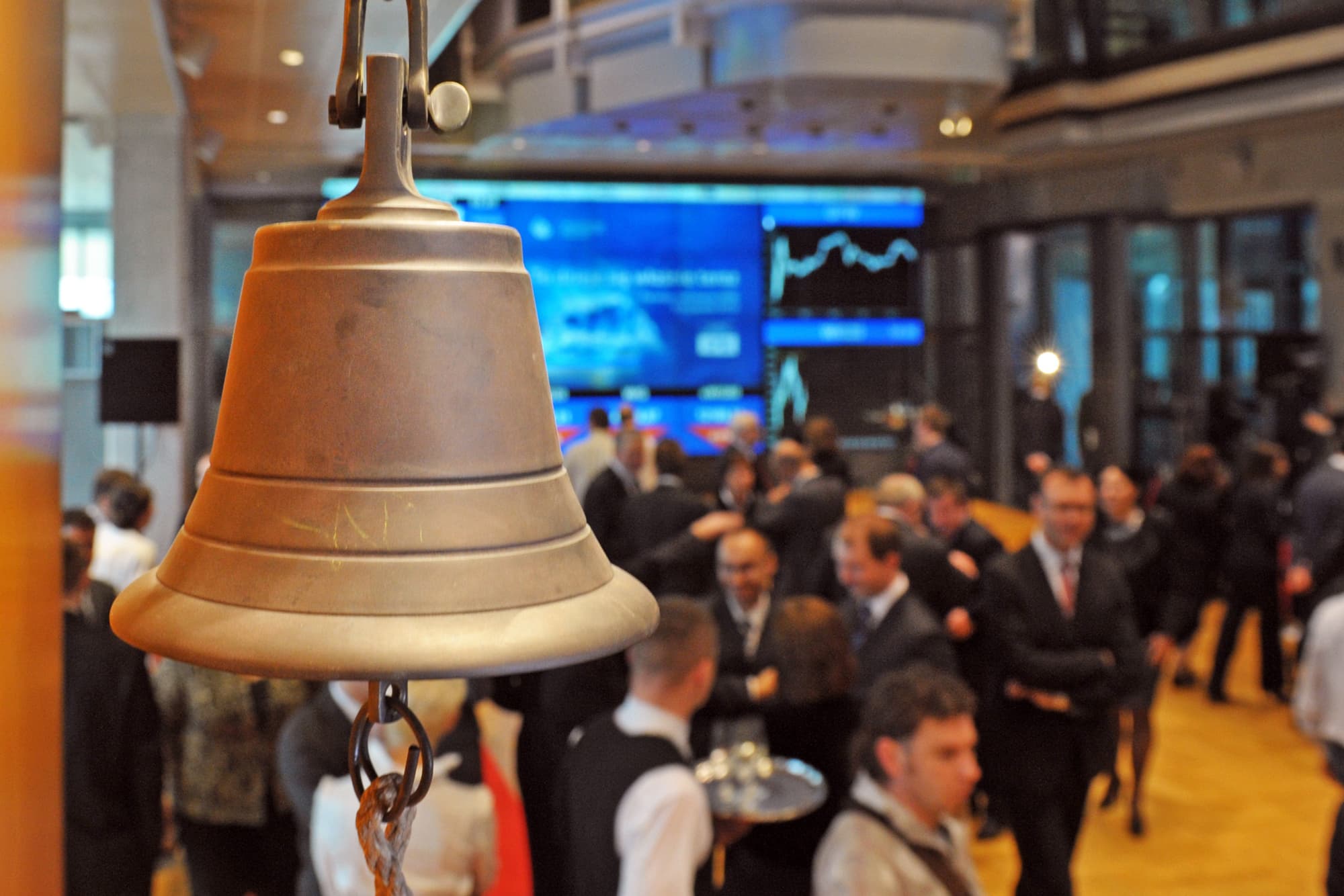
The listing day moment. Bell ceremonies, broadcast segments, and launch content reach employees, customers, and investors simultaneously. Treating the day as professional live, virtual, and hybrid event production, rather than a ceremonial afterthought, turns a single morning into a durable asset library.
SPAC or Traditional, the Story Requirement Is the Same
The Q2 data shows both paths to the public markets remain active, with traditional IPOs regaining share as issuer confidence strengthens. From a communications standpoint, the choice of path changes the mechanics, not the requirement. A de-SPAC transaction still demands a clear narrative, prepared executives, and credible investor-facing infrastructure. In some ways it demands more, because SPAC investors can redeem, which makes the story a retention tool, not just a sales tool.
How to Sequence the Work
For teams eyeing a 2027 window, a practical sequence looks like this.
Twelve or more months out, build the core narrative and test it against the hardest questions institutional investors will ask. Nine months out, translate that narrative into a designed presentation system and begin executive communications preparation. Six months out, develop the IR digital presence and begin producing the video assets the roadshow and listing day will need. Ninety days out, rehearse. Not once. Repeatedly, on camera, under conditions that resemble the real thing.
None of this requires waiting for bankers to set a timeline. All of it makes the banker-driven sprint dramatically easier when it arrives.
The Cardboard Spaceship Perspective
We produce high-stakes investor communications for public and pre-IPO companies, and the pattern we see is consistent. The companies that perform best in front of investors are not the ones with the biggest budgets. They are the ones that treated narrative, design, video, events, and digital as one connected system rather than separate vendor deliverables.
We saw a structurally similar dynamic with Yesway. The company was reintroducing its leadership and reframing its growth story for an investor audience that had not heard from it directly in years. That is, functionally, what a debut is. The content had to work quickly, convincingly, and at the standard a public company’s most critical audience demands. The production system was built to protect that outcome across five executives and three countries.
An IPO compresses the same challenge into a shorter window with higher stakes. Investor audiences do not just evaluate numbers. They evaluate confidence, coherence, and credibility, and production quality either reinforces those signals or works against them.
The Takeaway
The market data says the window is reopening and investors are selective. The practical translation is simple. Your financials get you into the conversation. Your story, and how well it is built, told, and produced, determines how the conversation goes.
If a public debut is on your horizon, the best time to pressure-test your communications readiness is before anyone sets a pricing date. If you want a second set of eyes on what that system should look like for your company, we are glad to compare notes.
Frequently Asked Questions
Ideally 12 months or more before a target window. The narrative and executive preparation workstreams benefit most from runway. Compressed timelines are workable, but they trade polish for speed.
No. Design is the final layer. The roadshow presentation is the master narrative for the offering, and every later communication inherits its structure. Narrative architecture comes first, then visual system, then production.
Yes, and sometimes more. De-SPAC investors can redeem shares, so the story functions as a retention tool. The narrative, executive readiness, and digital infrastructure requirements are equivalent to a traditional debut.
A controlled, consistent source of truth: the company narrative, presentation materials, webcast access, leadership profiles, governance information, and FAQs, all aligned with the roadshow’s messaging and design.
Listing day is a produced broadcast moment reaching investors, employees, and media at once. Companies that plan it as an event production capture content that supports investor communications for months afterward.
