


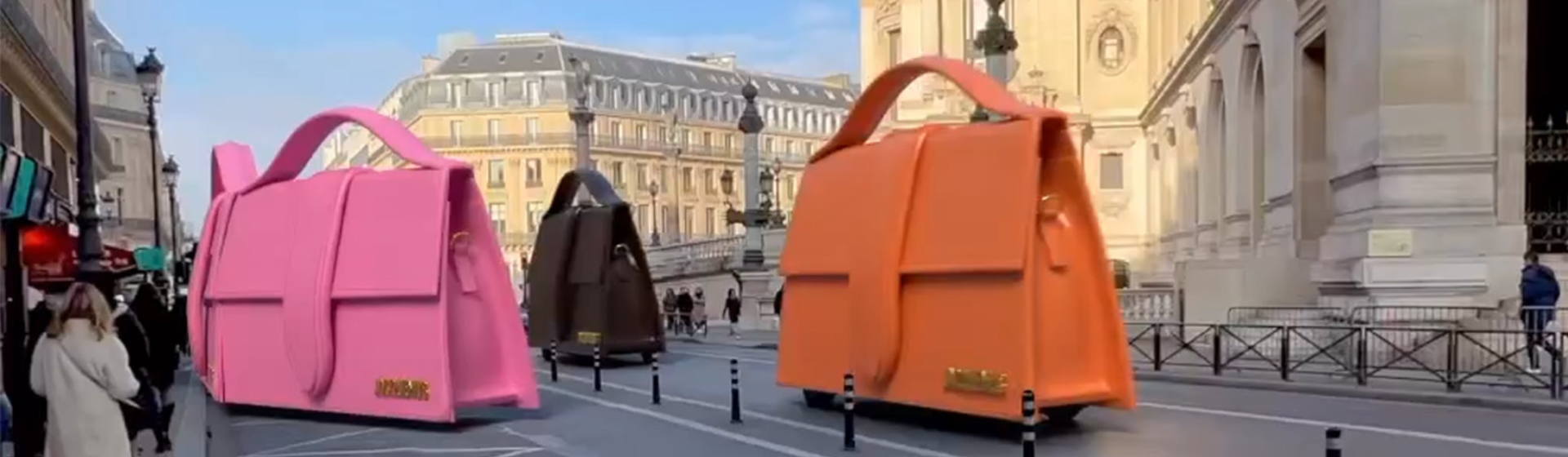
FOOH (fake out-of-home – CGI spectacle staged on real footage of real places) is a legitimate, high-performing format. But AI has collapsed the cost of entry just as disclosure rules for synthetic ad content have spiked – led by the states. The brands that win treat FOOH as a production discipline with proof, not a prank.
Nobody ever needed Maybelline’s giant mascara wand on the London train to be real. That’s the point of the format. The lashes sweeping the carriages, Jacquemus’s handbags driving through Paris, the impossible objects parked on real streets. Audiences got the joke almost immediately, and the punchline earned hundreds of millions of views.
This format has a name, FOOH – fake out-of-home advertising – and in our experience it’s the most misunderstood line item in the modern social budget. Teams either treat it as a cheat code with no rules, or refuse to touch it because “fake” sounds like a liability.
Both are wrong, and the reason is the same. FOOH doesn’t fail because it’s fake. It fails when the audience can’t tell whether it’s supposed to be – and the format’s earliest hits sat closer to that line than most people remember. The comment sections asking “is this real?” weren’t a bug in those campaigns. They were the point of the playbook. That trick worked once, when the format was new. Now, it’s the exact behavior the disclosure rules target.
The risk of FOOH advertising
FOOH advertising is CGI or AI-generated spectacle composited onto real footage of real places – social video a brand publishes, not media space it buys. It works when the illusion is confident enough that the audience is in on it. But it turns into a trust problem when viewers genuinely believe a physical installation exists.
That second scenario is no longer just a comms risk – states have begun requiring disclosure of AI-generated content in advertising, and existing truth-in-advertising rules already reach synthetic content that presents as real. The fix isn’t avoiding the format. It’s producing the content like a stunt: real foundation footage, deliberate craft, and a documented decision about how the audience finds out.
Our perspective: We shoot the real world for a living – the streets, facilities, and city plates underneath illusions like these – and we produce for brands whose work faces real scrutiny. So we come at FOOH from the ground up: the foundational content that supports the fantasy is our department.
What is FOOH, actually?
Lose the acronym and it’s simple: an out-of-home ad that was never really out of home. A team shoots or licenses footage of a real location – a landmark, a transit line, a storefront – and composites an impossible brand object into it. The film ships to social, where it behaves nothing like a billboard and everything like scroll-stopping entertainment.
The economics explain the popularity of this format. A physical spectacular means leases, permits, fabrication, and one city. A FOOH film means a location plate and post-production, and it plays everywhere at once.
Then, generative AI collapsed the cost again. One artist can now rough out in days what once took a VFX team weeks – which is why feeds were full of floating products and CGI content, and why the format’s early novelty advantage is gone. When everyone can fake a branded moment, the faking isn’t the idea anymore.
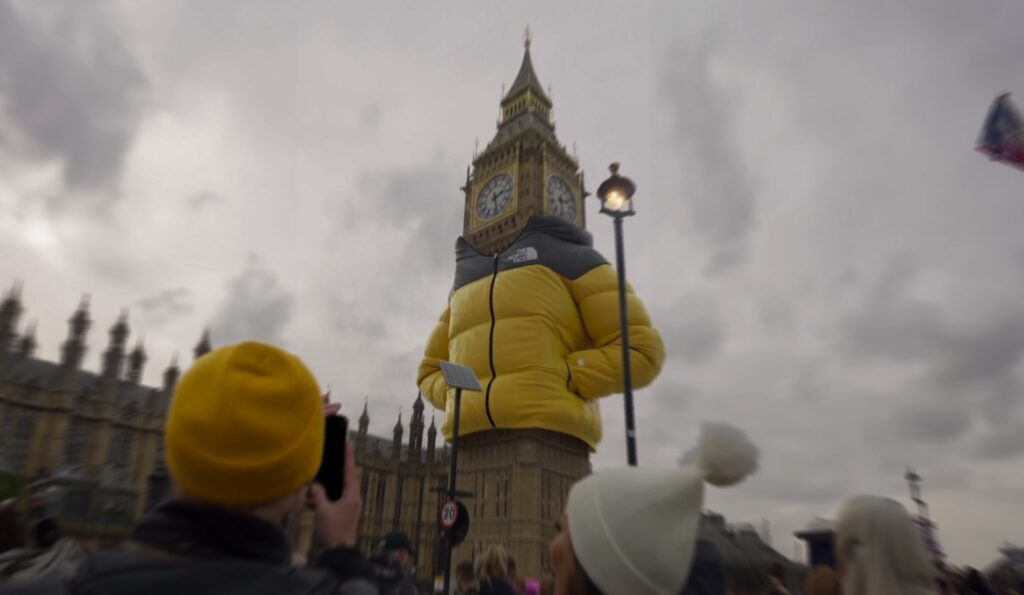
Why do some FOOH campaigns charm and others backfire?
The pattern we see is consistent: audiences forgive spectacle and punish ambiguity.
The campaigns people love operate like a magic trick. Nobody storms the stage because the magician didn’t actually saw someone in half. The audience being aware of the trick is the pleasure. The best FOOH plays the same way: the impossible object is so gleefully impossible that the video reads as wit, not deception. The physics stretch. The scale winks. The comment section is part of the show.
The campaigns that backfire share a different trait: plausibility without disclosure. A composited installation that a reasonable person could believe exists – a realistic pop-up, a believable projection, a product placement that looks documentary – invites people to visit, share, and report on something that isn’t there. When they find out, the story stops being about the brand’s imagination and starts being about the brand’s honesty. And once one “was this real?” moment goes badly, every future post gets the skeptical read.
That’s the whole design principle in one line: make it spectacularly impossible, or label it clearly. The dangerous work lives in between.
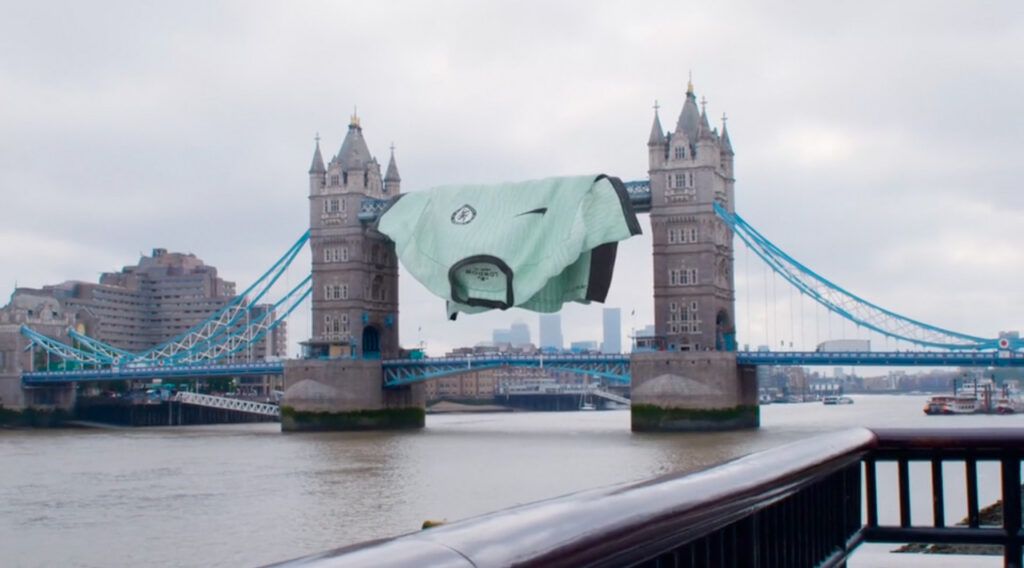
What changed in 2026? The AI disclosure rule
The informal era is closing – just not from the direction most teams expect. Federal regulators have signaled restraint on AI enforcement this year, but the FTC’s position on synthetic content in advertising hasn’t moved. Existing deception and endorsement rules apply to AI-generated material with the same force as anything else, and content that presents as real when it isn’t sits squarely inside them. The real momentum is in the statehouses.
New York’s disclosure requirement for AI-generated synthetic performers in advertising took effect this June, with similar bills introduced in other states. Which means a national campaign now answers to a patchwork rather than a rulebook. Nobody wrote any of it with FOOH in mind, and that’s exactly the problem. Rules built for deepfakes and virtual influencers don’t pause to ask whether your levitating sneaker was meant as a joke. (Not legal advice; which statutes touch any one campaign depends on where and how it runs.)
For most brands the practical translation is boring and freeing at the same time: a small, confident label – “CGI,” “digital art,” “not a real installation” – costs the campaign nothing. The audience already suspects; confirming it reads as confidence. What the label buys you is the difference between a clever stunt and a deception if anyone official ever asks. Think of it as the permit. A physical stunt needs one before the crane arrives; the digital stunt’s permit is the disclosure (and it’s a lot cheaper).
What separates FOOH that lands from FOOH that looks like everyone’s?
Now that generation is cheap, the differentiator moved back upstream to the thing AI can’t source for you. The real-world foundation for your illusion. Four production calls we’ve learned matter most:
- Shoot the plate; don’t generate it. A fully synthetic street reads as synthetic, and it converges on everyone else’s synthetic street. Real plate footage of a real location – with its specific light, crowds, and imperfection – is what makes the impossible object feel like it’s somewhere. That starts with a camera on a real street, not a prompt.
- Honor the physics before you break them. The trick only lands if gravity, reflections, and shadows behave – right up until the one thing that doesn’t. Sloppy compositing doesn’t read as fantasy; it reads as cheap.
- Pick a location you have a right to depict. Landmarks, transit systems, and storefronts carry their own permissions questions. Depicting someone’s property as your ad space is a conversation to have before publish, not after.
- Decide the reveal on purpose. Caption disclosure, an in-film wink, a behind-the-scenes cut – any of them work. What doesn’t work is deciding after the comments turn.
None of this requires a bigger budget. It requires treating a thirty-second social film with the same production discipline as the work that runs on television – which, not coincidentally, is where the format’s best examples came from.
Should a public company touch this format?
Yes – with the volume in mind. A consumer brand’s FOOH misfire costs it a news cycle. Customers read a public company’s feed – and so do investors, journalists, and analysts. “This company published something fake without saying so” is a sentence that travels differently when there’s a ticker attached. The standard doesn’t change; the margin for ambiguity shrinks. For a listed brand, we approach the disclosure as essential, keep the illusion firmly in the spectacularly-impossible zone, and keep the record of who approved what. (What the broader flood of AI-generated content is doing to audiences’ appetite for the real thing is a separate argument, and we’ve made it here.)
Done that way, FOOH is actually a natural fit for corporate moments that struggle for attention – a launch, an anniversary, an opening – because it delivers scale without a crane.
The honest close
FOOH is what happens when production craft and internet culture shake hands: a format where being fake is the point, as long as everyone’s in on it. The brands getting it right aren’t the ones with the best prompts. They’re the ones treating the illusion like an actual shoot. Real plates, real physics, a real decision about the reveal, and a paper trail behind all three.
If you’re planning FOOH content, send us the idea and the location you have in mind. We’ll tell you honestly what needs a camera, what needs a compositor, and where the label goes.
Frequently Asked Questions
FOOH – fake out-of-home – is digital video that composites CGI or AI-generated brand spectacle onto real footage of real locations, made to resemble an outdoor installation that never physically exists. It runs on social media; nobody buys physical ad space.
The format itself is legal; the risk sits in ambiguity. The FTC applies existing deception and endorsement rules to synthetic content, and New York now requires disclosure of AI-generated synthetic performers in ads, with similar bills pending in other states. A clear label and an obviously impossible premise keep most campaigns comfortably clear.
Best practice is yes – a short caption label such as “CGI” or “digital creation.” If the depicted installation is plausible enough that a reasonable viewer might believe it exists, the disclosure stops being best practice and becomes essential.
Because the real plate is what sells the illusion. A genuine location brings specific light, texture, and imperfection that fully generated environments lack – and generated backgrounds converge on the same generic look across every brand using the same tools.
Yes, and it suits attention-starved corporate moments well. But a listed company’s content reaches investors and press as well as consumers, so treat the disclosure standard as non-negotiable and keep the illusion unmistakably impossible.
