


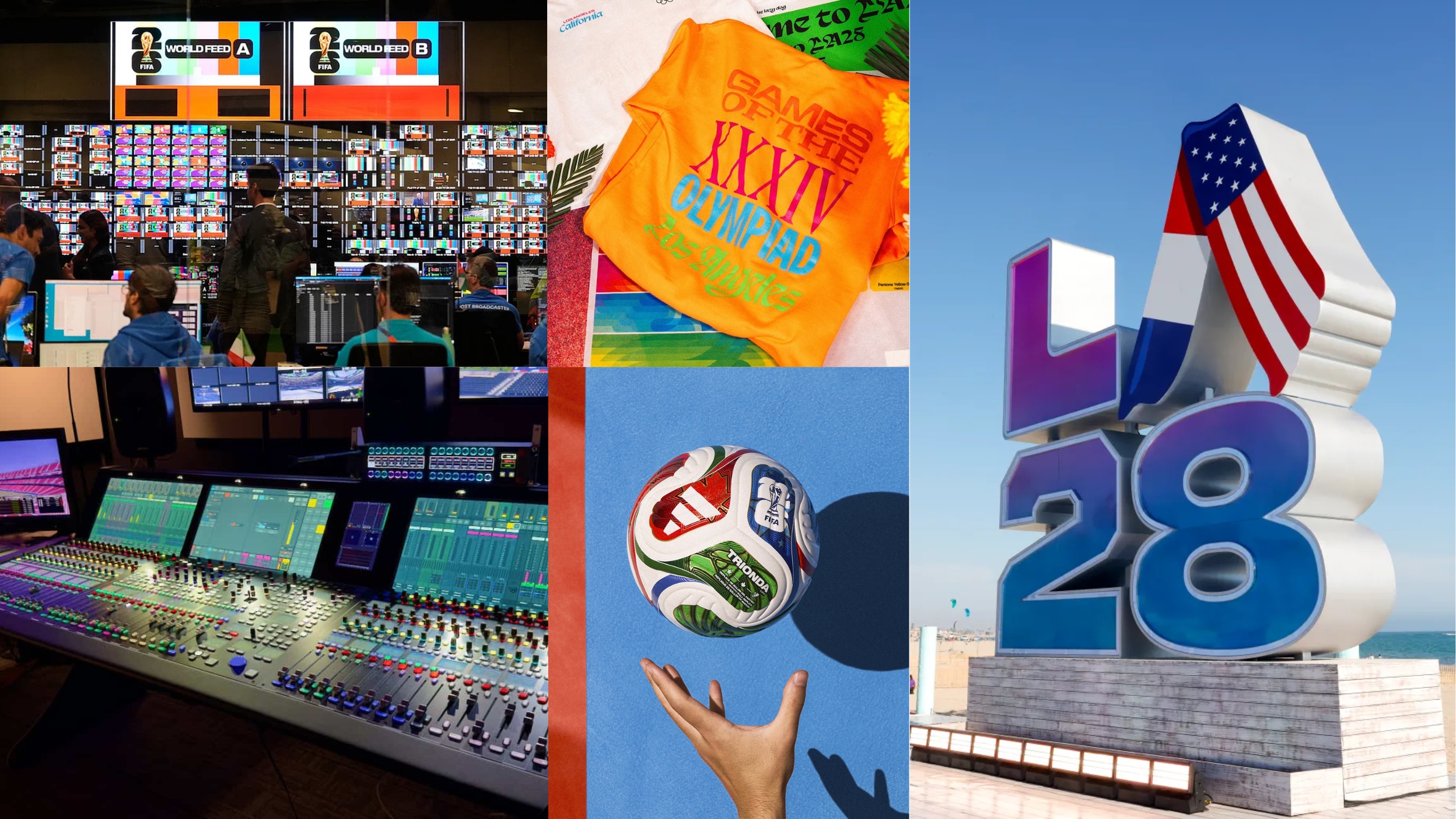
FIFA’s remote-production model turned a Dallas convention center into the control room for the World Cup’s 104 matches. And LA28 is taking notes. For the 2028 Olympics, the real lesson is not simply how to broadcast more events. LA28 has to decide which work belongs at the center, who needs to stay close to the action, and what it takes to make more than 40 venues and over 800 events feel like one Olympic Games.
If you went looking for the beating heart of the 2026 FIFA World Cup, you would be forgiven for heading toward a stadium.
You’d also be wrong.
The tournament’s busiest broadcast building had no pitch, no tunnel, no cheering fans behind the goal. It was a convention center in Dallas – the sort of place most people associate with lanyards, carpet tiles, and morning coffee. On the busiest days of the group stage, six matches were played in a single day across the largest footprint the World Cup had ever attempted. Inside that one building, operators shaped the pictures and sounds that made each game feel like its own individual event.
Why the World Cup matters for the LA28 Olympics
FIFA’s operation supported all 104 matches across 16 stadiums in three countries.
From the stands, matches feel improvised. Behind the broadcast, the World Cup runs on choreography. Every spontaneous moment reaches the audience through a small civilization of people making choices – what to show, what to hear, what to replay, and what to leave alone.
In July 2028, Los Angeles will attempt to choreograph a larger and more chaotic version of that playbook. The LA28 Olympics will stretch across over 40 competition venues. Olympic soccer alone will reach seven stadiums, from San Diego to New York – six of them outside Los Angeles. For the first time, the Opening Ceremony will unfold across SoFi Stadium and the Los Angeles Memorial Coliseum – a dual-venue start that asks two of the city’s most symbolic spaces to carry one Olympic moment. Broadcasters will also generate 3,800 to 4,000 hours of coverage across 51 disciplines.
That is why the World Cup’s Dallas matters to Los Angeles. Not as a case study. As a dress rehearsal.
FIFA solved for the same problem LA28 now faces at punishing scale: how do you make a sprawling, distributed event feel coherent when the work happens everywhere at once?
For most of broadcast history, the answer was proximity. Production trucks and technical compounds crowded the stadium because the equipment, signals, and the people operating it all needed to be close. Proximity was not a preference. It was necessary.
Then FIFA moved the work.
What FIFA’s remote production model means for LA28
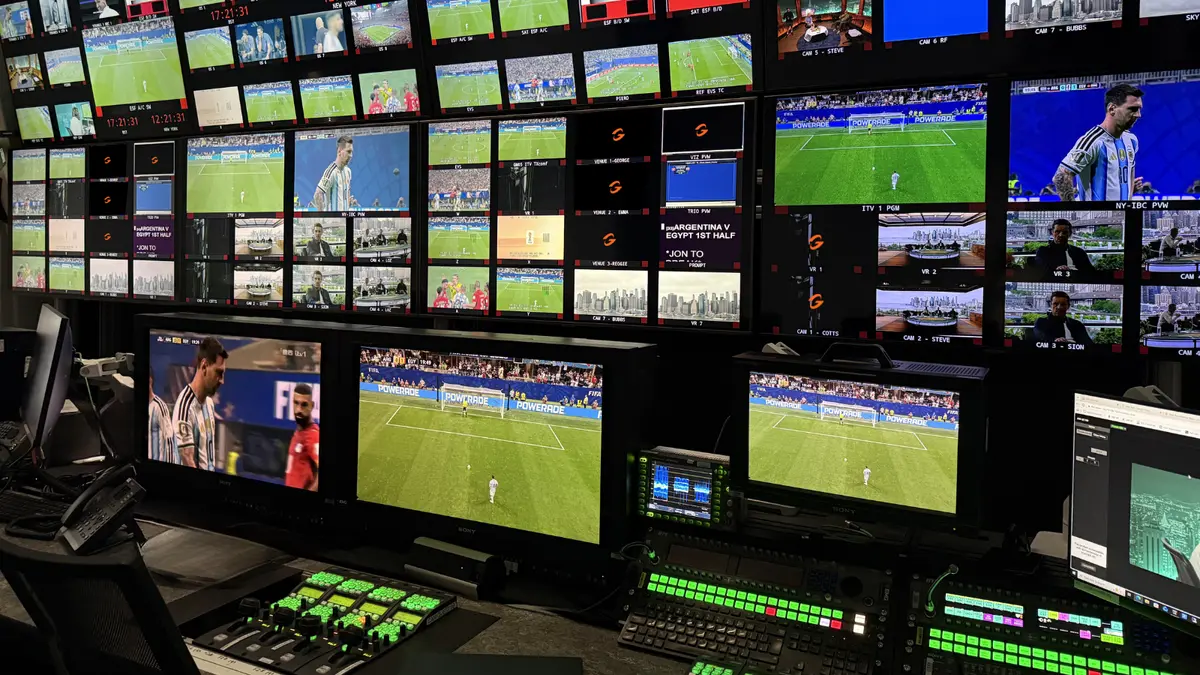
FIFA put remote production to a more demanding test than any World Cup before it. The industry calls the model remote production, REMI (the remote integration model), or decentralized production. These are dry names for a fairly radical idea: the event and the work required to produce it no longer have to occupy the same patch of earth.
It is easy to tell this as a technology story. The numbers invite it: fiber, bandwidth, camera feeds, control rooms. But technology only made the model possible. FIFA’s real decision was human: which roles needed to stay close to the match, and which could do their best work from Dallas?

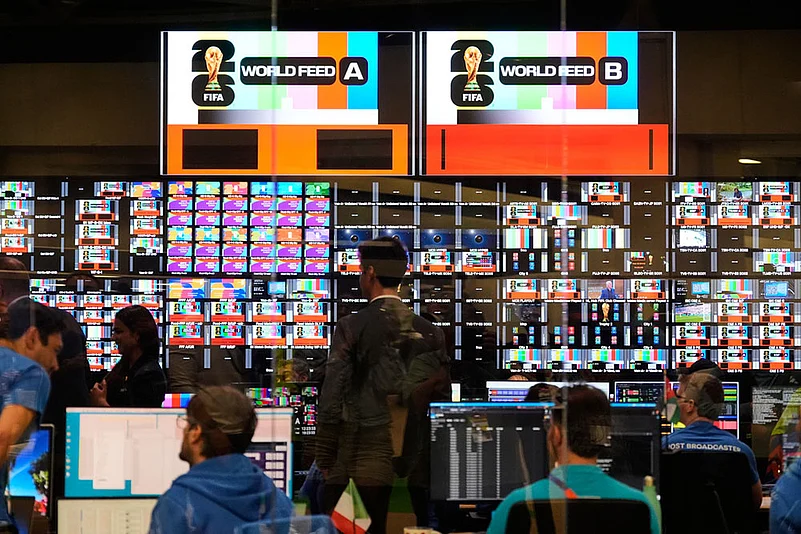
In 2026, FIFA pulled replay operations out of the venues – a first in tournament history – leaving each stadium only a limited emergency replay system as a fallback. It routed replay, audio, graphics, and camera shading for every match through the Kay Bailey Hutchison Convention Center in Dallas. Producers and directors remained at each stadium, looking at the field and listening to the crowd. Local backups stayed within reach.
Inside it, FIFA and Host Broadcast Services (HBS) built 12,000 square meters of production space, tied to feeds from 45 cameras per match on a network designed to carry 7 Tb/s back to the building.
A defender could hook the ball clear in Vancouver, and a replay operator in Dallas could immediately find the angle that explained whether the tackle was heroic, reckless or both. The next match might be in Seattle, Mexico City, or Kansas City. The geography kept changing. The rooms, systems, and many of the operators did not.
That division is reshaping modern live production: centralize repeatable work, keep live judgment close to the action, and build local fallbacks.
What LA28’s two-campus production model reveals
At first, Los Angeles chose the familiar arrangement. In May 2025, LA28 named Hollywood Park Studios in Inglewood, beside SoFi Stadium, as its International Broadcast Center. Put the hub next to the flagship venue. Keep the machinery close to the spectacle.
Then the plan changed.
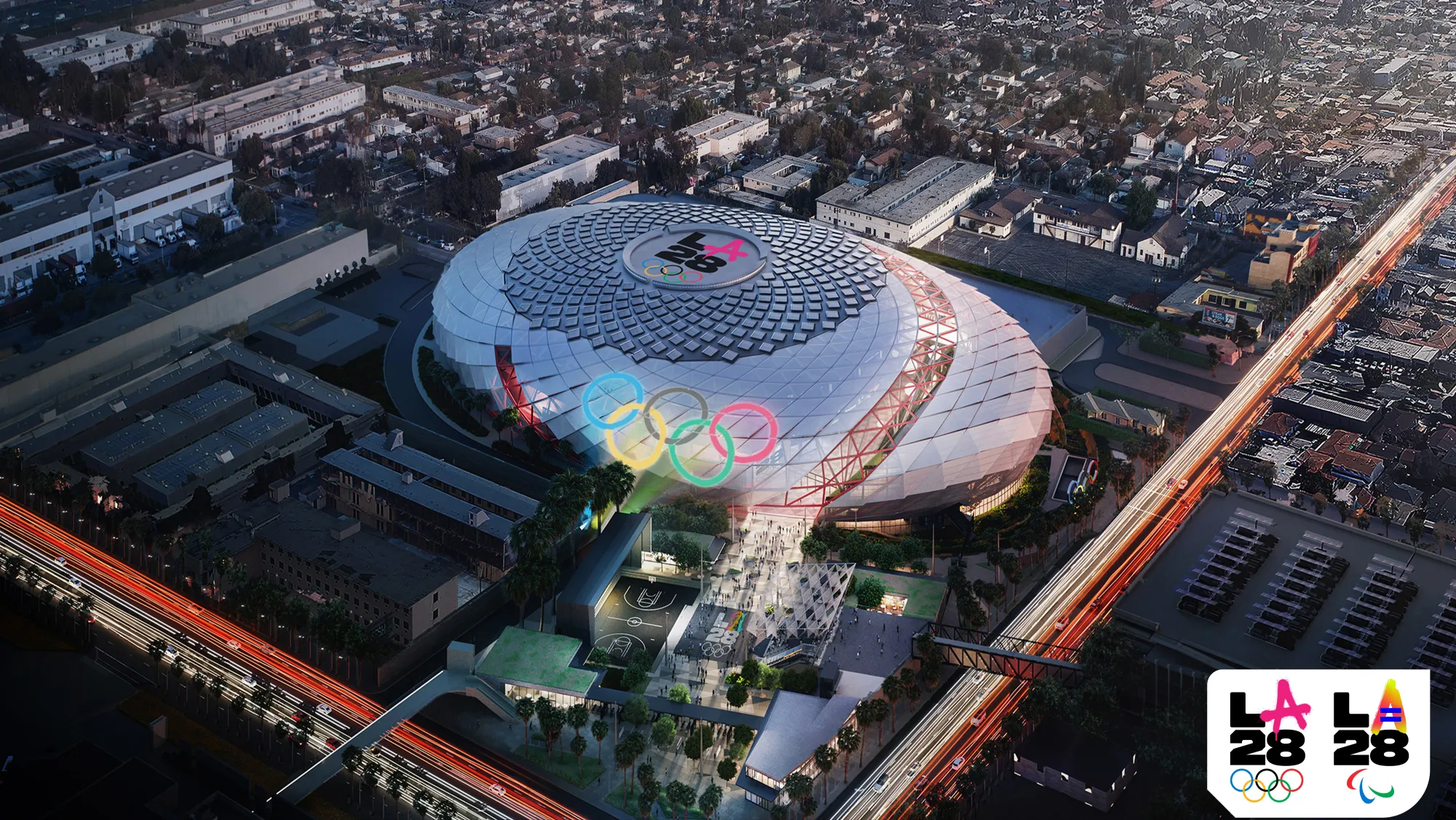
After IOC Executive Board approval in June 2026, LA28 finalized a two-campus model. The International Broadcast Center and rights-holder operations will move to Warner Bros. Studios’ Ranch Lot in Burbank, a 30-acre campus with 16 soundstages. Hollywood Park retains the Main Press Center and the live stand-up positions – the work that benefits from having the venue, the crowd, and the Games visibly humming behind the reporter.
The timing invites speculation. LA28 announced Burbank on July 9, while the World Cup was still running. No published evidence ties FIFA’s model to Los Angeles’s change of course, and claiming otherwise would overreach. Still, the convergence is hard to miss: FIFA showed that production could operate away from the field as LA28 moved its broadcast center to a purpose-built studio campus.
Strip away the fiber and the studio lots, and the comparison looks like this:
FIFA 2026 vs. LA28 2028: Where the work lives
| What FIFA proved in 2026 | What it means for the LA 2028 Olympics |
|---|---|
| Centralize repeatable specialist work. Dallas handled replay, audio, graphics, and camera shading for 104 matches. | Burbank can concentrate rights-holder operations, technical infrastructure, and specialist talent. |
| Keep live judgment at the venue. Dedicated producers and directors remained at 16 stadiums, with local backups. | Venue teams still need the authority to read the room and act before a central hub can respond. |
| Design for simultaneous scale. FIFA operated across 16 stadiums and three countries. | LA28 has to coordinate more than 40 venues, 51 disciplines, and a dual-venue Opening Ceremony. |
| Build backup capacity at the venues. FIFA kept local fallbacks for centralized functions. | LA28 must define which venue-level functions continue when Burbank or a signal path fails. |
That is not the whole of LA28’s production strategy. It is the first visible decision that shows how the rest may take shape.

Why LA28’s Burbank International Broadcast Center is really a talent strategy
Burbank is not simply where LA28 will place its broadcast center. The Ranch Lot gives the Games a place to concentrate specialist talent and organize thousands of hours of Olympic and Paralympic coverage without tying either to stadium geography.
FIFA kept dedicated producers and directors at each stadium but pooled specialist talent in Dallas. Operators moved from match to match without moving between cities, building rhythm, speed, and flexibility – instead of itineraries.
The need is clear because LA28’s footprint is not merely large – it is discontinuous. The Games will stretch across Southern California, Oklahoma City, and designated soccer cities around the country. The Opening Ceremony will unfold in two stadiums at once. LA28 is building no new permanent competition venues. More than 70 percent of competition sessions will run in existing facilities and the rest in temporary ones – each with its own infrastructure, operating habits, and constraints.
The World Cup offers only a partial rehearsal for Olympic scale. Paul Krekorian, executive director of the city’s Office of Major Events, described the Olympics as “the equivalent of seven of those things every single day for two-and-a-half weeks.” Eight World Cup matches in one stadium can survive on long hours and heroic effort. More than 40 venues cannot. LA28 needs a system sturdy enough that no one has to save it every day.
Every crew list answers one question: which roles get better in Burbank, and which lose value once they’re away from the venue?
The allocation test for LA28
Before LA28 assigns a role to Burbank or to a venue, it can ask three questions:
- Does the role need a direct view of the moment? If it depends on crowd behavior, venue conditions, or an immediate local call, it belongs at the venue.
- Does the work improve when talent and tools are concentrated? If repetition, shared infrastructure, and specialist depth make the output better, it belongs where LA28 can sustain that expertise.
- What’s the fallback if the connection fails? Centralized roles need a named local backup or a clear degraded-mode plan.
How LA28 can standardize Olympic production across more than 40 venues
LA28’s production standard will only scale if people can learn it quickly and follow it under pressure.
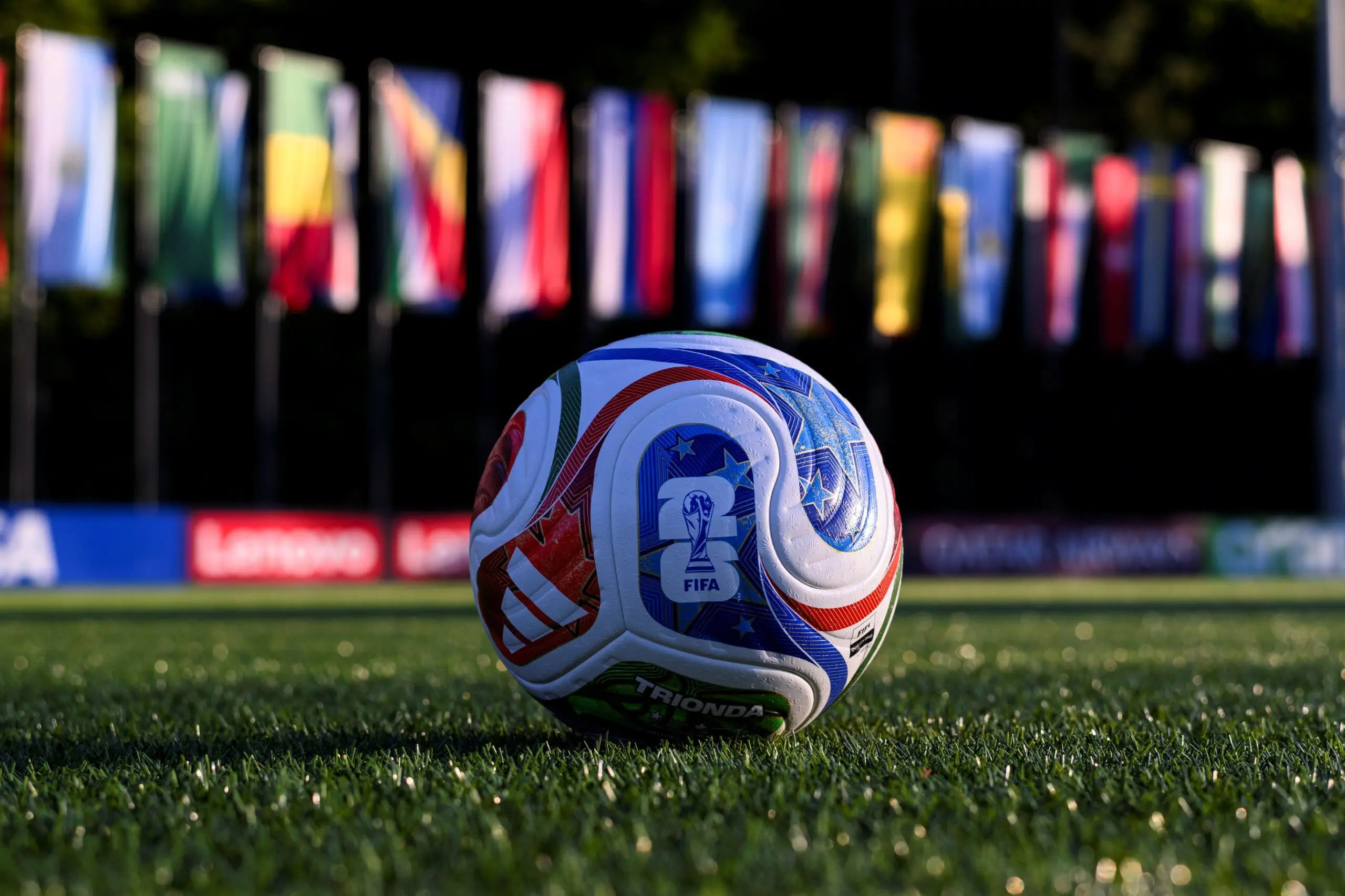
FIFA’s Adidas Trionda captures both the glamour and the operational reality of producing at scale. Its 500Hz motion sensor reported to the Video Assistant Referee in real time. The technology looked effortless. The operation was not. More than a dozen balls rotated through each match, and each took two and a half hours to charge for roughly six hours of playing life. Crews tracked batteries, prepared reserves, and used different-colored inflation valves to keep match balls out of training bags.


The sensor made headlines. The colored valve made the system work. At Olympic scale, both count as innovation.
For LA28, that operational lesson matters more than the novelty. The Games plan depends on more than 40 venues, many of them existing facilities whose full-time staff will work alongside Olympic specialists, contractors, and a 60,000-person volunteer crew. No onboarding program can create deep institutional knowledge across a temporary workforce that large.
The standard has to travel without the people who created it.
A brand manual can explain the intention, but it cannot run the day. At Olympic scale, the standard has to live in:
- the cue-based run of show;
- the locked graphics package;
- a shared comms language;
- the escalation map;
- signage and equipment labels;
- the handoff, fallback trigger, and physical layout of the work.
LA28’s most useful production documents may be its least glamorous: a single-page escalation map, a visual cue that needs no translation, a checklist that tells an operator when a local system becomes the fallback, and naming rules that keep directions clear. A stranger should be able to learn them quickly, and a tired person should still be able to follow them late.
At 11 p.m., a dead battery and the wrong equipment bag can unravel a very smart plan – unless the standards have become second nature.
Making one Olympic brand feel local
LA28 needs a common visual language that makes the Games instantly recognizable anywhere while leaving room for each local venue to show up as itself.
Some parts of the Games should stay uniform. Bringing 15,000 competitors together at the UCLA Olympic and Paralympic Villages gives athletes a shared standard experience, even as competition spreads across dozens of venues.
The LA28 brand has a different job. It has to unite every venue under one unmistakable Games identity while giving that identity enough range to meet the place and people around it. Los Angeles is not one visual reference. It is Hollywood backlots, neighborhood murals, modernist architecture, surf culture, lowrider design, streetwear, music scenes, and communities that speak dozens of languages. A rigid system could flatten that range into generic sunshine. A flexible one, with a strong enough foundation, can expand it without losing the Olympic thread.
“No one mark could ever express all that Los Angeles and the Games represent.”
Amy Gleeson, Strategic Advisor (LA28’s CMO at the 2020 Emblem Launch)

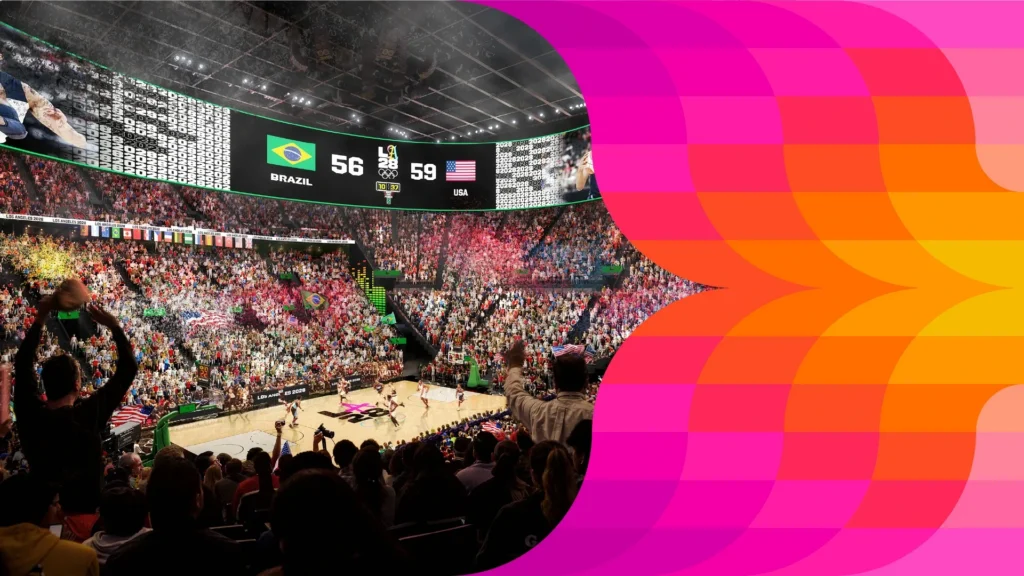
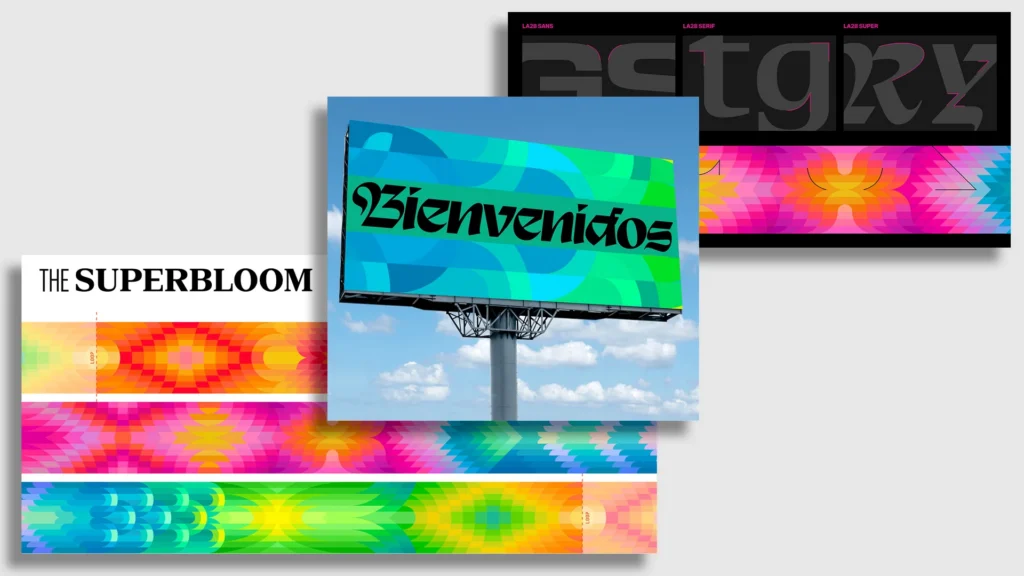





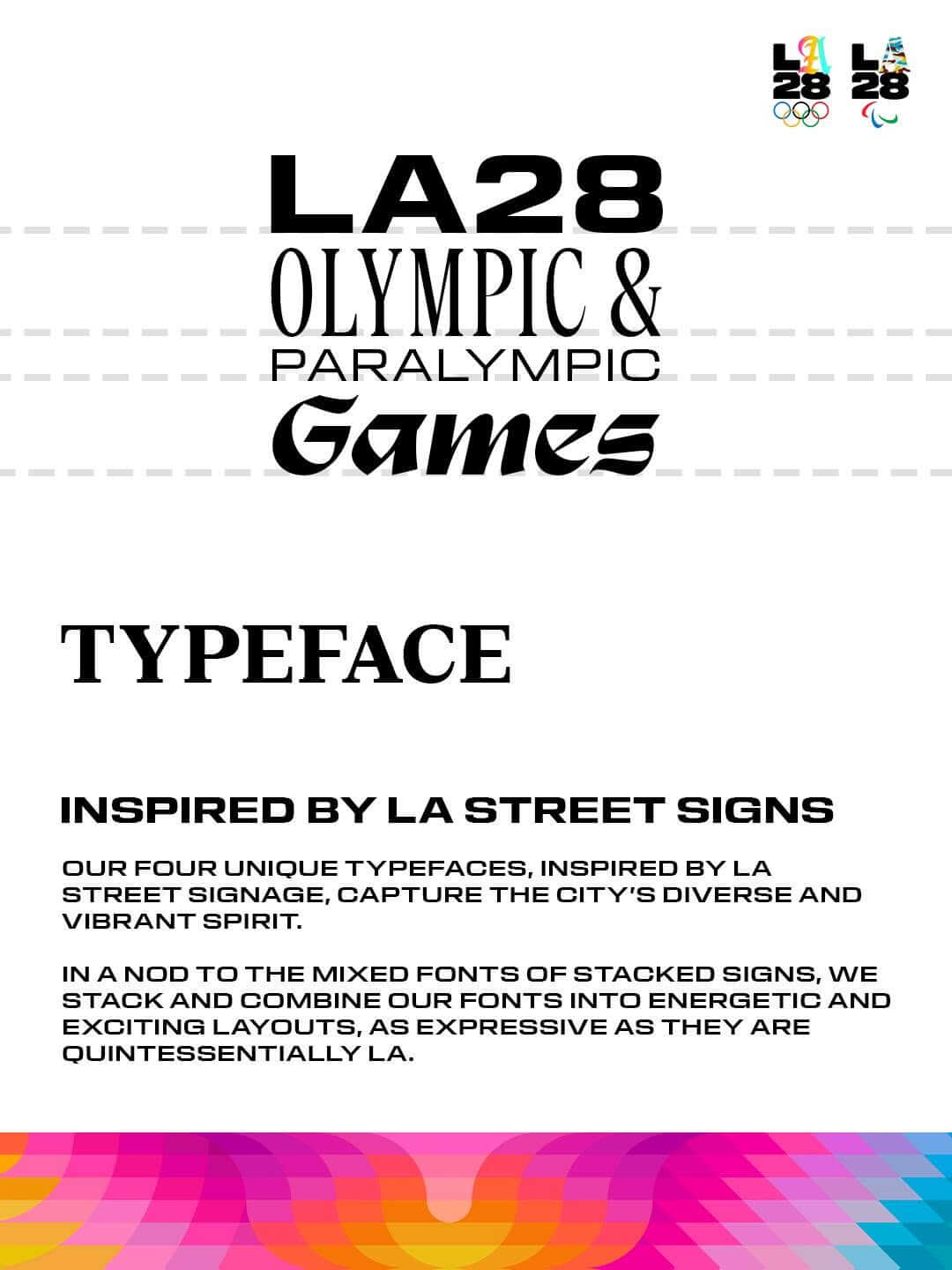
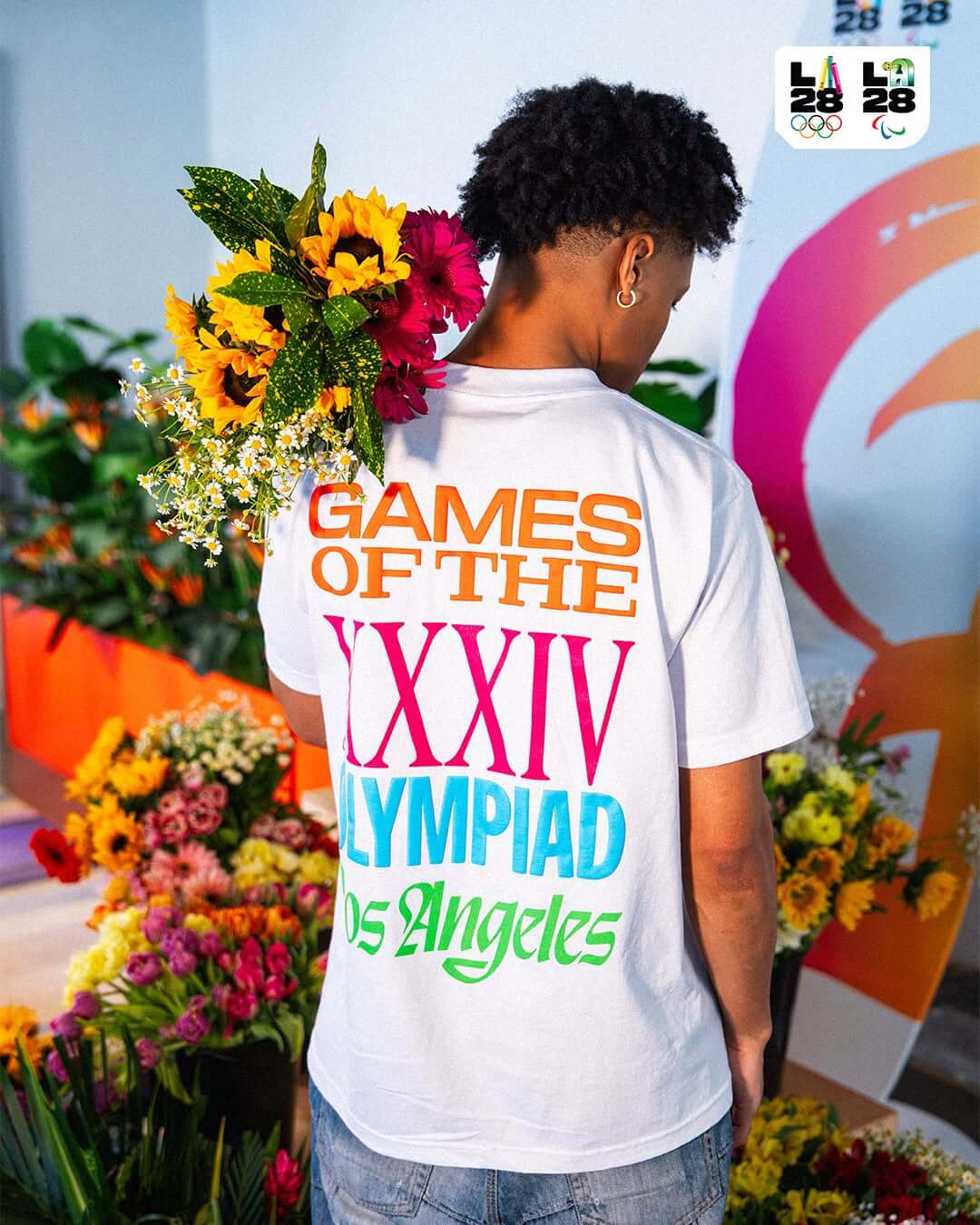

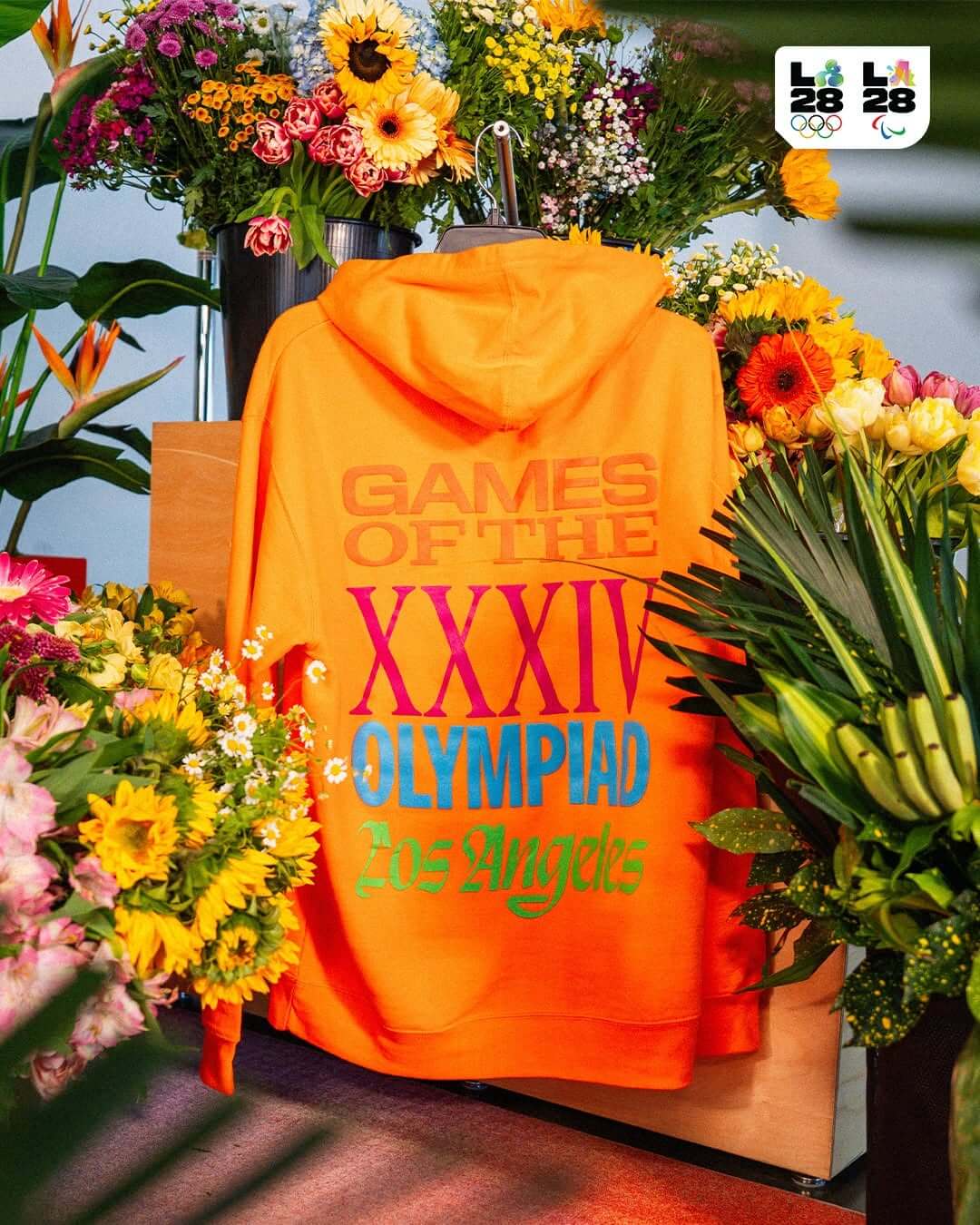
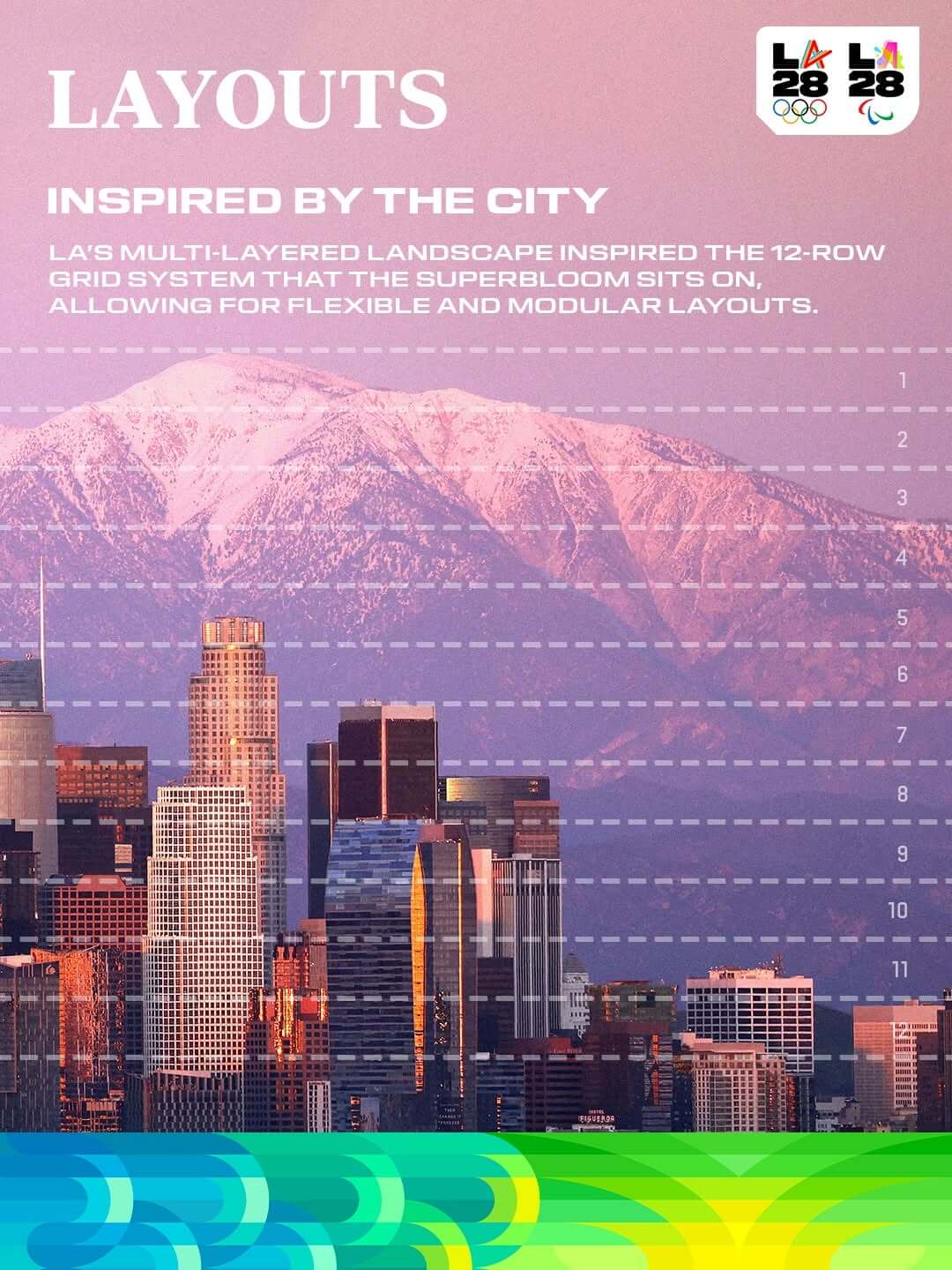
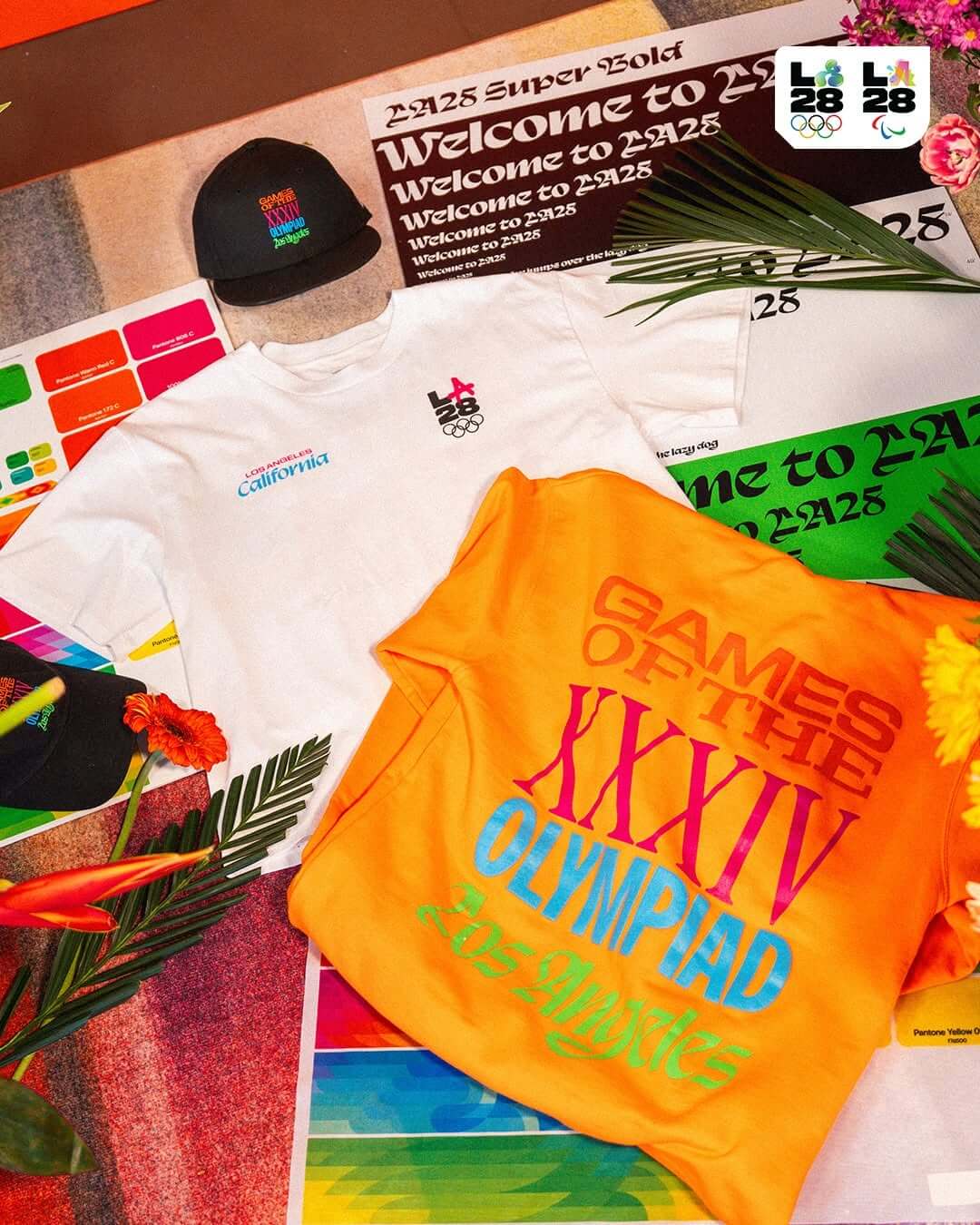
The LA28 Look of the Games, called LA in Full Bloom, centers on the Superbloom concept. Its 13 blooms, four typefaces, and flexible grid allow the identity to change tone, scale and emphasis while remaining unmistakably LA28.
That flexibility is not decorative. The Superbloom turns a distinctly Southern Californian phenomenon, wildflowers transforming hillsides, valleys, and deserts, into thirteen blooms inspired by LA’s people, cultures and landscapes. The type draws from strip-mall signs and hand-painted lettering. A precise grid lets those elements scale from an athlete credential to a stadium façade while adapting to each venue’s architecture and demands. The expression changes with the setting. The Games identity does not.
FIFA’s Host City Identity System
FIFA set a useful precedent for that balance. Its restrained 2026 mark created a global frame for 16 host-city identities, each with its own palette, patterns, and locally commissioned poster. The system stayed recognizable without asking every city to look alike.

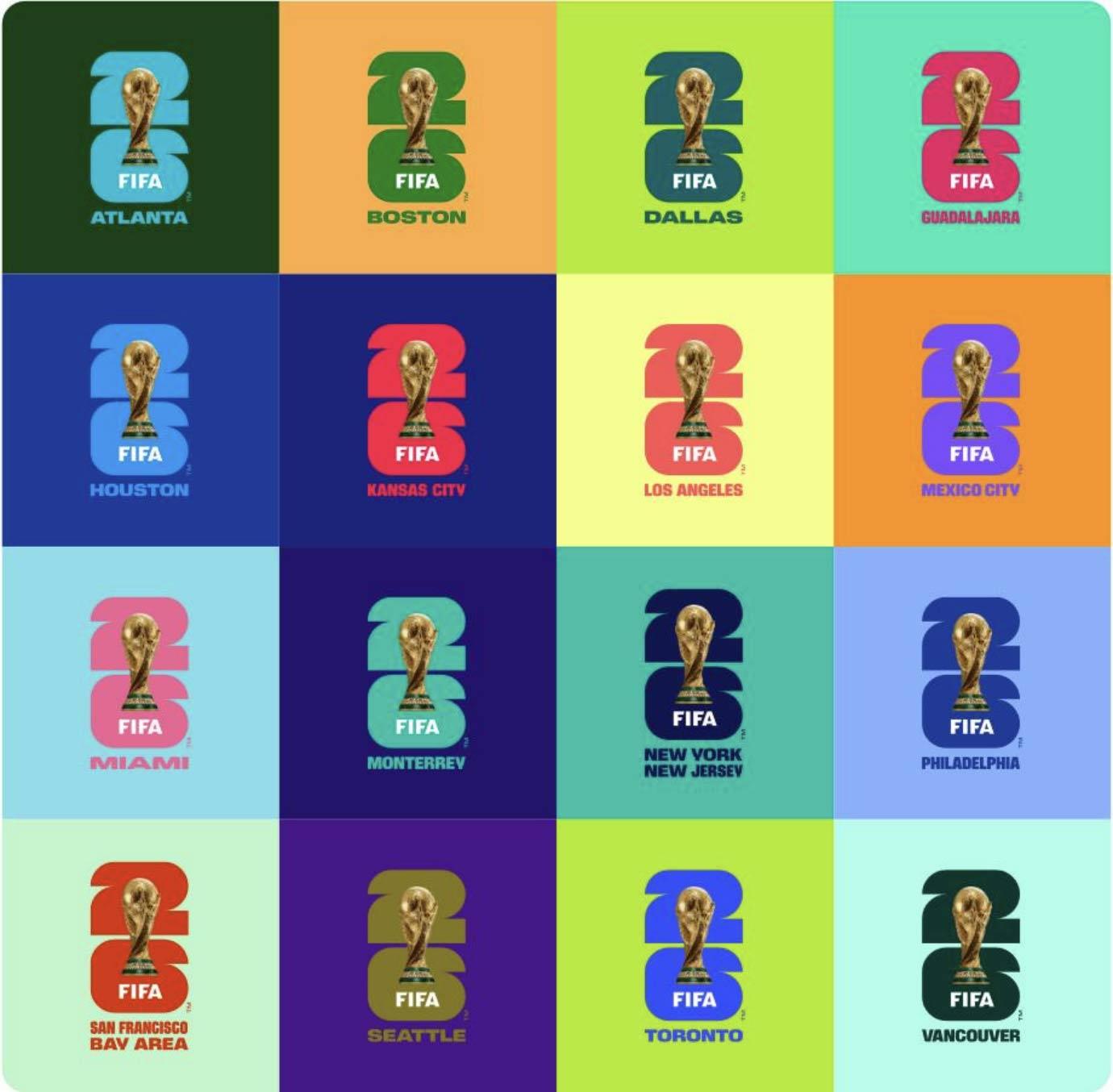
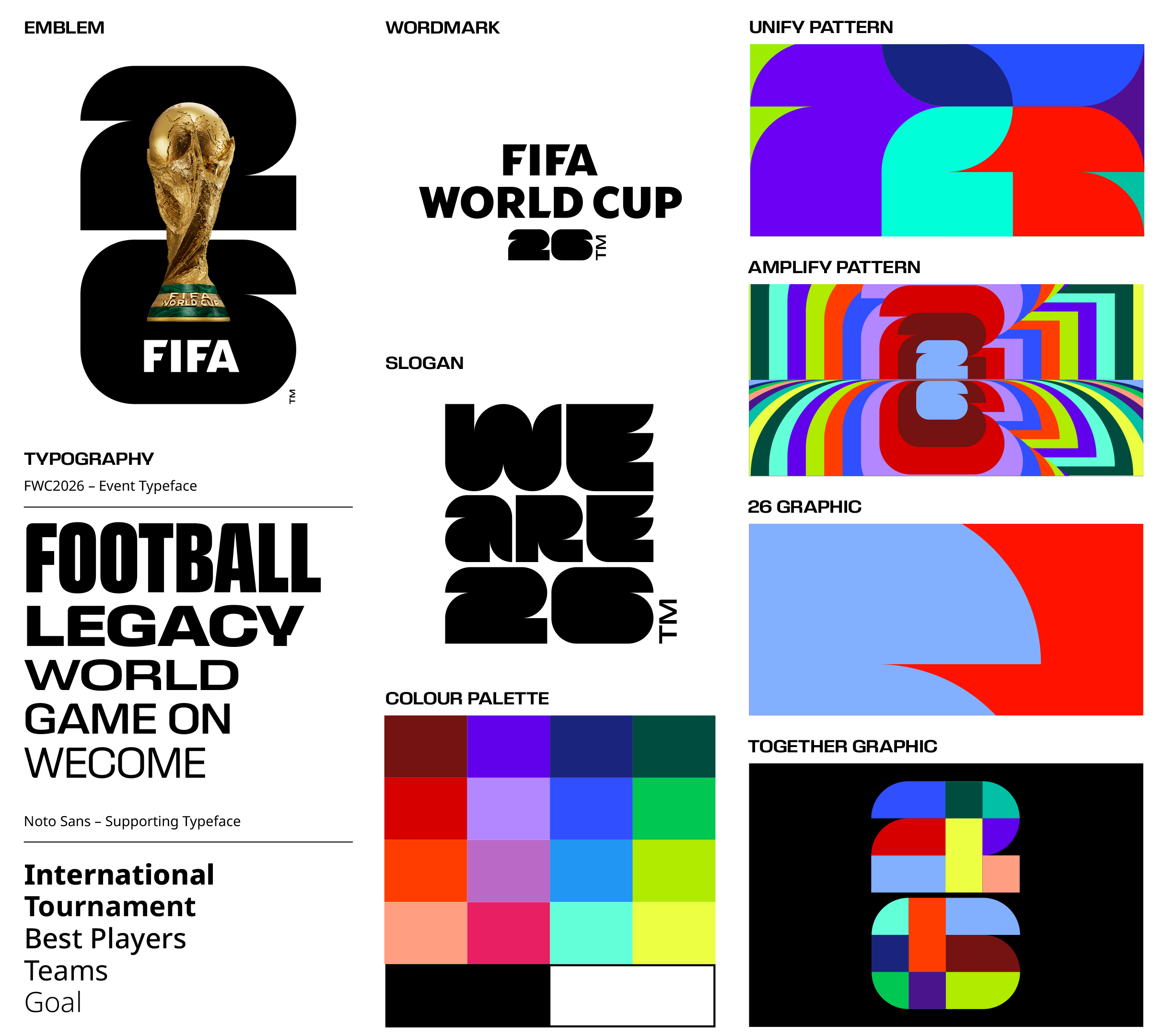

Kansas City used that freedom to build a free, 18-day Fan Festival around a 65-foot heart. More than 800,000 people moved through the city’s World Cup footprint, and Mayor Quinton Lucas says the heart will remain in Kansas City. The identity did more than represent the World Cup. It gave residents something to claim as their own.
World Cup Ceremony Event Production
The same balance between a shared framework and local expression shaped the tournament’s ceremonies. FIFA opened all 104 World Cup matches with a ceremony, while one creative company – Lab 2580 – held the idea together across 16 venues. Holding the idea together was only half the job. It still had to survive each stadium.
Daylight is a ruthless creative director. It has no interest in the mood board. It does not care how expensive the screen was. Plenty of beautiful ideas reach technical rehearsal only to discover they are invisible.
Lab 2580 designed for those constraints from the start. That design only works if local crews supply what a central team cannot: where the load-in will snag, how the light behaves, and which handoff needs another minute. One team protected the idea. Sixteen teams kept it alive.


LA28’s Olympic Ceremony Production Challenge
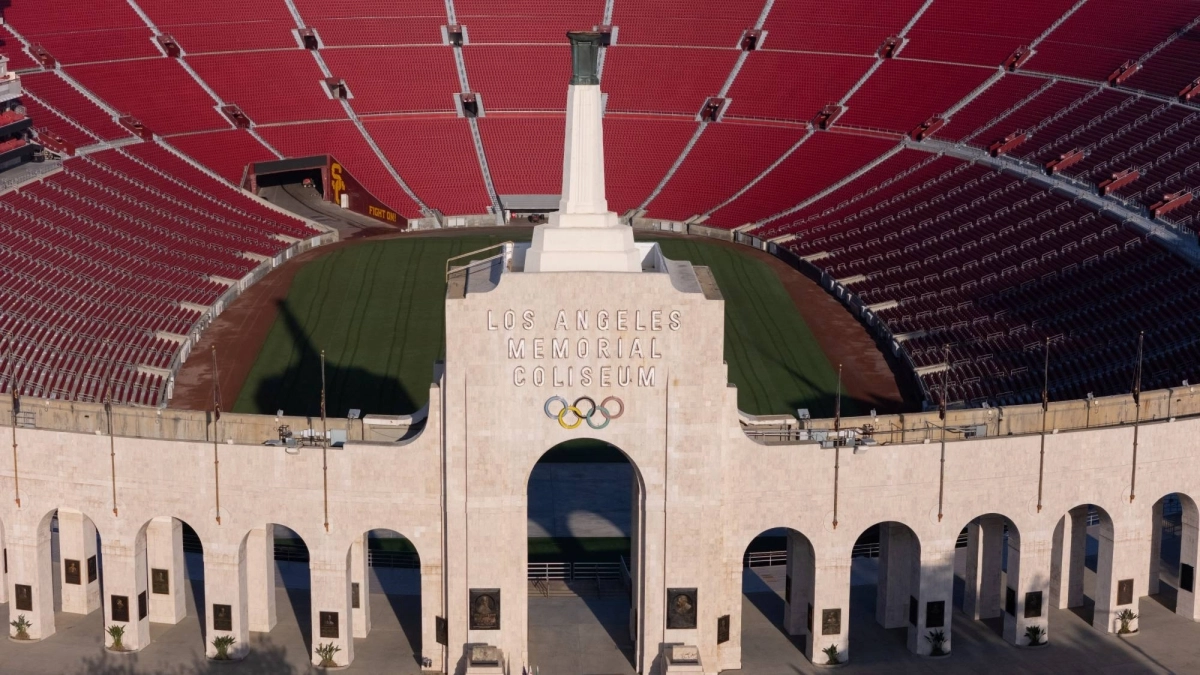
LA28 will face the same test. It has named FulFive to produce the Opening and Closing Ceremonies. Los Angeles also faces another degree of difficulty: the Olympic Opening Ceremony will unfold across SoFi Stadium and the Los Angeles Memorial Coliseum. The venues sit miles apart and have different lighting conditions, entrances, rigging, crowd flows, and operating rhythms. The production plan has to account for both.
LA28 has to hold two things at once: keep the core visual system, broadcast graphics, accessibility, safety, and cueing standards consistent while letting local art, music, fan activations, and venue execution reflect the place hosting them. Central control protects the Games identity. Local expression keeps it from flattening the city.
One Games, not one template.
Why the 2028 Olympic Games still needs someone in the room
Centralized production does not eliminate the need for local judgment. It makes that judgment and expertise more valuable.
FIFA offered a small preview of what that judgment will mean for LA28. During a mandatory three-minute hydration break inside Atlanta’s climate-controlled stadium, the crowd booed. FIFA required the pauses at every match, regardless of conditions, and critics argued that they disrupted the game’s traditional two-half rhythm, created commercial windows and effectively split each match into four quarters.
A stadium DJ chose a song, and the crowd began to sing. FIFA had prepared the options: all 48 federations submitted songs, and stadium DJs arrived with deep libraries. But only the person in the room could hear the boos and choose a response in time. The system supplied the material. Local judgment made it useful.
LA28 will need that same division of expertise across the Games. A centralized system can carry the standard, remove duplication, and widen the talent pool. It cannot replace judgment in the moment – nor should it try.
Across more than 40 competition sites, the plan will break somewhere. Each site therefore needs a named show caller with clear authority: what can change without approval, what must move up the chain, what stops the show, and who takes over if communications fail.
When no one knows who has the final call, both sides hesitate. The on-site team waits for direction from Burbank. Burbank assumes the local team will act. By the time someone takes responsibility, the moment has passed.
LA28 has a useful pressure test on the calendar: Super Bowl LXI at SoFi Stadium on February 14, 2027. It will not reproduce the Olympics’ full geography, but it can expose weak handoffs at the flagship stadium before the Games. An organizational chart can hide weaknesses for months. A live event exposes them before halftime.
The operating model should absorb predictable work so the people closest to the moment have room to handle what is not.
Building broadcast redundancy beyond Burbank
Burbank can coordinate the Games, but it cannot be the only place capable of keeping them on air. FIFA understood that distinction. Even with specialist teams working centrally, it kept backup audio mixes and locally racked graphics machines at the stadiums.
LA28’s use of existing buildings makes that local capacity especially important. Permanent infrastructure and experienced operators offer real advantages, but every site comes with its own constraints – a ceiling that cannot carry the rig, a dock that cannot take the truck, an elevator unavailable during load-in, or afternoon glare that turns a screen into an expensive mirror.
None of those problems is unusual on its own. The challenge is encountering them across more than 40 competition sites, on a live schedule, with an audience already watching.
Redundancy therefore requires more than spare equipment. Every fallback needs an owner, a trigger, and a full-load test. A backup plan only counts after a pressure test proves it can carry the entire show from end to end.
LA28 does not need to rebuild Burbank at every site. It needs a clear backup plan for each one: what the local team can keep running if communication goes down, how long it can do so, and who has the authority to call a failover – moving the show from its primary broadcast path to the backup.

What FIFA’s World Cup production model teaches every live event producer
The World Cup makes production choices visible at their largest scale, but the discipline applies to every live event. Cardboard Spaceship’s live, virtual and hybrid event production work starts with the same questions: what must happen in the room, what can move to a remote workflow, who owns each handoff, and what keeps the show running when something changes.
Our expertise connects the creative and operational systems – run-of-show, show calling, technical direction, cameras, audio, graphics, presentations, streaming, and redundancy – so the audience experiences one coherent story in the room and on the screen.
Scale changes the number of moving parts, not the standard. People, tools, and authority still belong where they make the work better.
What success will look like for LA28’s Olympic production strategy
The Olympics is one of the few times the world agrees to pay attention together.
A swimmer touches the wall, a gymnast sticks the landing, a striker finds the net, and millions of people across languages and time zones understand the stakes at the same instant. If LA28 gets the production right, the distance between those moments will disappear. More than 40 competition sites will become one shared experience – not because every place looks the same, but because each human moment belongs to everyone watching.
