Updated November 3, 2026. This analysis reflects public filings and reporting available as of that date. This article does not offer investment advice.
Anthropic wants to build more powerful AI. It also wants people to trust it to hold back when the risks become too great. Its proposed IPO would ask investors to back both ambitions.
The company behind Claude, a family of AI models and tools, reported $33.2 billion in revenue for the first nine months of 2026. It also disclosed $895.4 billion in long-term commitments, mostly for computing capacity and infrastructure, reaching as far as 2045.
The same advance can make a model better at defending a computer system and better at finding a way into one. Anthropic has already restricted access to some cybersecurity capabilities. Decisions like that shape who benefits from the technology and who could get hurt, including people who never chose to use it.
Suppose customers are ready to pay for a new model, but a safety review turns up a problem. Does Anthropic delay the launch? Who gets to decide? Waiting could cost Anthropic revenue or give a rival a head start. Going ahead could put people at risk.
Anthropic has made its IPO registration public. It confidentially submitted a draft registration statement, called an S-1, on June 1, publicly filed on October 26, and added third-quarter results in a November 2 amendment. It proposes the Nasdaq ticker ANT. The public filing still leaves the share count and price range blank as of November 3.
Reuters reports a possible roadshow during the week of November 9 and a mid-November listing target. Anthropic has not announced a final IPO date, so those remain targets.


An IPO takes months of work before anyone rings an opening bell. Lawyers, accountants, the board, and investment banks prepare the transaction while management gets ready to explain the business to new investors. The filing, presentation, and timing can all change along the way.
At a glance: prepare the business → SEC review → public filing → investor roadshow → pricing and listing → first public results. Several stages overlap; this is an overview, not a fixed calendar.
The SEC describes the formal steps. The work of explaining the company starts well before the roadshow and continues after trading begins.
Before filing, a company works with its advisors to prepare its financial reporting, governance, and offering plans. Management also needs clear answers to basic questions: what do we sell, why do customers choose us, how do we make money, and what could change the plan?
For Anthropic, that last question includes choices the company might make itself. A decision to restrict a model could reduce sales. Finance, product leaders, and the CEO need to agree on how such limits fit the business plan before anyone turns that plan into a film or deck.
A company can submit a draft registration statement for nonpublic SEC review. Its advisors respond to the SEC’s comments and revise the disclosures. Anthropic announced its confidential submission on June 1.
Submitting a draft keeps an IPO possible; it does not guarantee a listing. Teams can use this time to check the sources behind their claims, assign review responsibilities, and prepare for changes in timing.
The public S-1 is the prospectus investors can examine: it describes the business, finances, risks, ownership, and proposed offering. Later amendments update the record and eventually add deal terms.
Employees, customers, reporters, and critics can now compare the details with what the company has said before. Anthropic’s November amendment changed both the growth picture and its disclosed commitments. Updating the figures also means checking whether the explanation still holds.
During the roadshow, management presents the company and answers questions. Underwriters, the banks arranging the offering, gather indications of interest to help assess demand and pricing.
For Anthropic, these meetings should establish what investors agree to back: growth that may include limits on access or delays to a release. Rehearsal needs to test whether management can explain a difficult tradeoff as clearly as a successful product launch.
The SEC must declare the registration statement effective before the company can complete the registered offering. The company and its underwriters finalize pricing and allocations, the company files its final prospectus, and shares begin trading under the exchange’s listing arrangements.
SEC effectiveness does not endorse the investment or certify the product’s safety. Listing day marks a financing milestone. Investors still need access to the final terms and the commitments management made along the way.
After the IPO, the company begins regular public reporting and ongoing investor communications. Investors compare results with the expectations management set during the offering.
Anthropic’s revenue and margins will answer financial questions. Its release decisions and safety record will answer different ones. Preparing to explain both from the start would make it harder for one strong result to obscure a weakness in the other.
Anthropic’s May 2021 funding announcement introduced an AI safety and research company focused on reliable systems that people could steer. It introduced its Responsible Scaling Policy in September 2023, then revised the framework in February 2026 as models gained the ability to use computers and take multi-step actions. The company has grown; so has the difficulty of keeping its original purpose useful in everyday decisions.
| Date | What happened | Why it matters |
|---|---|---|
| May 28, 2026 | Anthropic announced a $65 billion Series H at a $965 billion post-money valuation. | A private financing provides context. It does not establish the eventual IPO price or valuation. |
| June 1, 2026 | Anthropic confidentially submitted a draft S-1. | Filing starts a review process while the company retains the option to proceed. |
| October 26, 2026 | Anthropic publicly filed its S-1. | Once the record becomes public, many audiences can examine the same financials and risks. |
| November 2, 2026 | Anthropic filed an amendment with third-quarter results. | Teams need to revise the explanation as well as the numbers when new disclosures change the picture. |
| November 2026 | Reuters reports a possible roadshow and listing window. | A reported target remains different from a confirmed date or final deal terms. |
The October 26 S-1 and November 2 amendment put that ambition beside the costs, risks, and ownership rights of a public investment.
Liking Claude and wanting to own Anthropic shares are different judgments. Investors can admire the product while questioning the cost of delivering it, the control they would receive, or the assumptions behind future sales.


More demand means more computing power to train models and run them for customers. Anthropic’s financials show both sides of that relationship. They also raise a harder question: which bills would still arrive if the company decided to slow down?
| Disclosed measure | Result | What the presentation needs to explain |
|---|---|---|
| Revenue, first nine months of 2026 | $33.2 billion, including $17.0 billion in Q3 | What customers use Claude for and what supports continued demand. |
| Q3 compute and infrastructure expense | $9.9 billion, or 58% of quarterly revenue | How serving more customers affects costs and margins. |
| Nine-month operating margins | (4)% under standard accounting rules (GAAP); 12% adjusted | Which costs and adjustments explain the difference. |
| Nine-month net loss and operating cash flow | $104.0 billion GAAP net loss; positive $6.6 billion operating cash flow | Why the reported loss differs so much from the movement of operating cash. |
| Compute and infrastructure commitments | $895.4 billion | When obligations arrive, what conditions apply, and what capacity the company expects to receive. |
Anthropic’s $104.0 billion net loss does not mean it spent that much cash during the period. As the company’s valuation rose, accounting rules changed the recorded value of some financing arrangements. The filing attributes $94.3 billion of nine-month expense to those changes in convertible notes, derivative liabilities, and SAFEs, agreements that can turn an early investment into shares.
Its reconciliation to adjusted net income also adds back $10.3 billion from valuation changes in certain financial instruments. These accounting expenses differ from cash payments. That distinction helps explain how a company can report a large net loss alongside positive operating cash flow. It still needs to explain its operating loss, stock compensation, infrastructure costs, and other adjustments.
The $895.4 billion total spans many years. About $213.8 billion involves arrangements that Anthropic can terminate under specified rights or that depend on conditions before they begin. The whole total therefore does not represent an unconditional bill due today.
Anthropic expects $69.8 billion of commitments to fall due in the 12 months following September 30, 2026, and $447.5 billion before the end of 2030. Substantially all of the remainder falls between 2031 and 2045.
The practical question is how much room those obligations leave for a change of plan. If Anthropic pauses a release, which payments continue? Can it delay capacity, use it elsewhere, or fund the gap? Those answers would help investors judge whether the business can afford the restraint its mission may require.

A safety promise does not sit apart from the business. It can change what the company sells, how much computing capacity it needs, and who gets to make the call.
Anthropic says it typically arranges most contracted computing capacity 12 to 18 months before it becomes available. Customers make a much shorter commitment: usage-based revenue, where they pay according to how much they use, supplied 79% of revenue in the first nine months of 2026.
The spending plan reaches further ahead than the customer’s decision to use the product. A weaker market could leave Anthropic paying for capacity it does not need. So could a choice to restrict access. Investors need to understand how much flexibility remains in either case.
Anthropic benefits from cloud distribution and a range of hardware providers. The filing also says its cloud providers can act as investors, customers, distribution partners, and competitors. Cloud marketplace sales supplied 44% of its revenue during the first nine months of 2026.
A partner can bring customers and still gain influence over the business. Who controls access to computing capacity? Who owns the customer relationship? How easily can Anthropic switch providers? Those questions matter when management needs room to change course.
Anthropic’s safety record includes both public commitments and difficult disclosures. TIME reported its February Responsible Scaling Policy change. Anthropic later published an assessment of four cybersecurity incidents after an evaluation partner mistakenly connected test environments to the open internet. The assessment described unauthorized access to third-party systems, shortcomings in earlier testing, and changes to monitoring. Anthropic also gave the independent evaluator METR access to investigate.
Publishing an honest account is valuable. It does not, by itself, show that the controls now work. The useful evidence comes next: what changed, whether those changes reduced the risk, and whether an outside evaluator can check. Transparency and effective safeguards deserve separate judgments.
Anthropic is a public benefit corporation. Its directors must consider shareholders’ financial interests, the people the company’s conduct affects, and its stated public purpose. Its Long-Term Benefit Trust generally elects a board majority through Class T stock. A Founder LLC will hold one Class F share carrying 50.1% of general voting power. Public Class A shares receive one vote each.
The prospectus warns that this structure has no direct public-company precedent and can sharply limit Class A holders’ influence. Buying shares gives an investor an economic stake, with limits on the decisions they can control. It does not make Anthropic’s mission a matter for a simple shareholder vote.
Anthropic contributed shares to its Public Benefit Fund representing 5% of fully diluted shares as of June 30, 2026, assuming full conversion of the Amazon notes. The contribution totaled 846,840,960 Class N shares. The filing leaves possible future contributions to the board’s discretion.
Associated Press reporting raised questions about governance, transparency, beneficiaries, and the use of the shares. The S-1 says the board will make allocation and distribution decisions until it approves a governance structure and transfers authority to designated managers.
Contributing the shares and deciding how the fund will benefit people are separate steps. Readers still need to know who will receive support and who will oversee those decisions. There is another distinction, too: sharing financial gains does not settle how the company should limit a risky capability. A benefit fund cannot answer every question about the product that creates its value.
Anthropic’s filing discusses copyright and data litigation, liability for AI systems that act on their own, cybersecurity, and changing regulation. A new capability or incident can change the situation before the next earnings call arrives.
Legal, finance, product, and communications teams need a way to decide together whether a development changes what management has told investors. A new access restriction, for example, could require both a product explanation and a revision to a growth assumption. That is why investor communication strategy depends on working relationships inside the company, as well as the words it publishes.

If a safety promise can change what Anthropic sells, it belongs in the business plan. Investors should be able to see how the company expects to grow while keeping that promise, and what happens when the two pull in different directions.
Anthropic’s safety mission invites a difficult question: can it keep its commitments while competing to build more powerful AI? Vox’s Sigal Samuel questions whether its actions match that mission. That criticism deserves a substantive answer. The concern also reaches investors: Reuters reported on October 15 that New York City’s comptroller urged Anthropic to pause its IPO until it addressed safety, governance, and development concerns.
Anthropic’s November 2 filing makes the stakes unusually concrete. Its models already contribute to its own research. The company warns that further automation could speed up AI development beyond its ability to evaluate and safeguard new models. In other words, the product could help build its own successors faster than people can check them.
The same filing reports that Anthropic delayed the start of training a new model by more than a month to strengthen protection against model theft. That is a real decision readers can examine. Protecting a valuable model also serves a commercial interest, though; this example does not settle what management would do when safety and revenue point in opposite directions.
Anthropic’s proposed structure keeps its public-benefit purpose and limits public shareholders’ control. An IPO would add financial expectations, but it would not automatically give investors the power to replace that purpose with profit alone.
Limited voting rights do not remove the pressure to deliver returns. Management would still need to explain a slow quarter or delayed release to new investors, including why holding back could serve the company’s purpose.
Profit and public benefit can reinforce each other. Anthropic has argued that commercial success helps fund its safety research. A reliable, useful product can also support a lasting business.
The conflict becomes real when a safety decision requires Anthropic to give up revenue, slow development, or let a competitor move ahead.
That is why the growth plan matters as much as the mission statement. If the financial story assumes the company will sell every capability as widely and quickly as possible, while the safety story promises meaningful limits, the two accounts cannot both hold. Anthropic should tell investors what growth could look like with those limits in place, including when management would accept less revenue or a slower release.
In April, Anthropic introduced Project Glasswing, giving selected organizations access to Mythos Preview for defensive cybersecurity work. The company said the model could find and exploit serious software vulnerabilities. In October, it expanded its Cyber Verification Program, with different access requirements and safeguards for different kinds of security work.
Here, the reason customers want a capability can also be the reason to limit it. Wider access could bring more revenue and more risk. Anthropic should explain which sales assumptions depend on wider availability, which limits it would keep even if customers offered to pay more, and what evidence would justify changing them.
A public listing opens ownership to more investors. It does not give everyone who could experience the consequences of the technology a say in its development. A worker whose employer adopts an AI system may never have chosen it. A business could face a new AI-enabled security threat without buying the product that helped create it.
Anthropic designed its Long-Term Benefit Trust to give its public-benefit mission a voice in company decisions. That can help resist pressure for higher returns. It still puts a small group of trustees in a role with consequences far beyond the company.
Protecting a mission and giving the wider public a voice are different things. Affected people need ways to challenge the company’s account, alongside independent scrutiny and public oversight. A clearer presentation can explain the trust. Its decisions will have to earn confidence over time.
Who can say ‘not yet’? Anthropic should explain who can pause training or release, how a disagreement reaches the board, and what evidence would justify restarting. Independent reviewers need enough access to challenge management’s assessment.
The authority to pause needs financial backing. A release can slip while infrastructure bills still fall due. Testing the plan against that situation would show whether management could afford to honor the decision when it matters.
A quarterly revenue figure cannot tell us whether an outside reviewer changed a release decision. Anthropic should also explain major changes to its safety standards, access rules, and responses to criticism. People need a record of those choices to judge the promise.
Earlier this year, we described Anthropic’s developer events as a roadshow rehearsal. Now the pitch needs to go further than what the product can do. It needs to explain when the company might choose to do less.
We would build the presentation around a clear understanding: investors buy into Anthropic’s growth while accepting that the company may restrict access or delay a release. Some investors may decide those limits do not fit their expectations. Making that clear before pricing helps management find investors who understand the business it intends to run.
Show when the computing commitments come due, when the capacity arrives, and what supports expected demand. Distinguish fixed obligations from conditional arrangements and termination rights. A timeline would make those differences easier to grasp than one enormous total.
Then work through an illustrative delay: a safety review holds up a release, but some infrastructure payments continue. What can management change? How would it fund the gap? Label the example clearly and keep it separate from reported results and approved forecasts. The point is to show whether the growth plan has room for a safety decision.
Follow a specific enterprise task from request to result. Show what the customer gains, which actions need a person’s approval, and what happens when that person refuses or stops the work. Identify the controls Anthropic provides and those the customer must set up.
A controlled example or approved recording can make those choices visible. Label it accurately. One successful demonstration shows how a safeguard works in that example; it cannot prove that the system will catch every failure.
Ask the CEO and CFO the same uncomfortable question: why wait to release a model if customers want it and a competitor might get there first? The CEO should explain who makes the call and what evidence matters. The CFO should explain what waiting could mean for spending and sales.
Listen for a mismatch. If the mission promises patience but the budget depends on an uninterrupted release schedule, a better script will not fix it. Rehearsal should expose that problem early enough for management to revisit the plan. Once the answers agree, the team can build the presentation around them.
A film that celebrates AI acting without limits would create the wrong impression if management’s plan depends on careful restrictions and human approval. The images, demonstrations, and executive answers should describe the same business.
The level of detail can vary. A short film can show the purpose and product. The deck can explain how the business earns money and what might change its plans. Reference materials can supply the tables and sources. If the CFO cites nine-month revenue, the chart and supporting document need to name that same period.
Good Investor Day presentation design makes it easy to follow an argument in the room and check it later. For Anthropic, that means giving the limits on growth as much clarity as the opportunity.
Imagine a late amendment adds a restriction on who can use a model. The team may need to change more than a footnote. A demonstration, a recorded sentence, and the sales assumptions on a slide could all need another look.
Before launch, test an approved change across the deck, film, graphics, captions, transcript, speaker notes, and online materials. Someone needs to understand how those pieces connect. Otherwise, the updated disclosure can coexist with an old film that still makes the broader promise.
An analyst returning to the presentation should be able to find a financial explanation, the chart behind it, and the relevant filing without watching everything again. Safety claims deserve the same treatment: link the policy, name its date, and make independent assessments easy to find.
An investor microsite or organized IR page can keep that record usable. Clear sections, readable charts, accurate transcripts, and dates help people distinguish a current policy from an older statement. The offering’s legal and distribution requirements determine which materials can appear and when.
Analysts may also use AI tools to find and compare company information. Clear labels and sources help those tools preserve the same qualifications a person needs to understand.

Companies with long investment horizons face a familiar challenge: explaining today’s spending before tomorrow’s results arrive. That also runs through the SpaceX IPO roadshow. Anthropic adds a sharper test: does the story leave room for management to hold back, even when the company could sell more?
Investors can compare Anthropic’s product launches, developer events, research, safety policies, and funding announcements with its filing. A promise does not disappear because the company has moved on to a new presentation.
Read your own company’s material side by side. Does the launch film promise speed while the policy promises caution? Work out when each applies and what happens when they conflict. IPO communications readiness includes finding those tensions before an investor asks about them.
Teams know that a revenue figure can go stale. A recorded claim about who can use a product or how a person approves its actions can age just as quickly. If the policy changes, an old clip may keep promising a safeguard the company has altered. Date those claims and plan how to update them. The job continues after the film goes live.
What management emphasizes during an IPO teaches investors what to watch. If the presentation celebrates only faster releases and more usage, a later safety pause can look like a broken promise even when it honors one. Explain from the start how the company judges progress when it decides to slow down, and carry that approach into its first Investor Day.
The right evidence depends on the business. Our Yesway IPO roadshow and Oklo pre-IPO roadshow work involved a convenience-store operator and a nuclear technology company. Their ways of proving progress differ. Borrowing another company’s polished presentation structure is easier than finding the evidence your own audience needs.
Going public can show how much investors want to own Anthropic. Judging how the company uses the power that money supports will take a longer record.
Some of the most revealing moments may disappoint the market: a release postponed, a use refused, or a growth plan revised because safety work needs more time. Those decisions would still need scrutiny; a delay alone proves little. But a roadshow that makes room for them gives investors a clearer idea of the company management asks them to back.
Anthropic is pursuing an initial public offering. It publicly filed a Form S-1 on October 26, 2026, and an amended S-1 on November 2. The offering still depends on SEC review, market conditions, pricing, and the company’s decision to proceed.
Anthropic is in the public registration and pre-roadshow stage. It has published its prospectus, added third-quarter financials, and named the underwriter group. The share count and price range remain blank as of November 3, 2026.
Anthropic has not announced a final IPO date. Reuters reported that the company was preparing to market the offering during the week of November 9 and target a mid-November listing. That timing can change.
Anthropic has applied to list its Class A common stock on the Nasdaq Global Select Market under the proposed ticker ANT.
Anthropic has no official IPO valuation yet. The public filing does not include a price range or final share count. Its May 2026 private financing valued the company at $965 billion after the new investment. Reuters has reported discussion of a substantially higher public valuation, but that is not a final deal term.
Anthropic reported $33.2 billion in revenue for the first nine months of 2026, including $17.0 billion in the third quarter. The company reported $4.6 billion for full-year 2025 and $386 million for 2024.
It depends on the measure. For the first nine months of 2026, Anthropic reported a 4% operating loss margin under GAAP, standard accounting rules, and a positive 12% adjusted operating margin. It also reported positive $6.6 billion in operating cash flow.
Most of its $104.0 billion GAAP net loss came from non-cash accounting changes to the value of certain financing arrangements as its valuation rose. That large net loss therefore differs from the cash the company spent. The adjusted figures also exclude costs that investors need to examine.
Anthropic disclosed $895.4 billion in purchase commitments and lease agreements, substantially all for computing capacity and infrastructure. They support training models and running them for customers over many years, with different payment dates, conditions, and termination rights.
The challenge is paying for capacity if demand disappoints or management restricts a release. A safety pause can delay revenue while some bills continue.
Anthropic combines a public benefit corporation with a Long-Term Benefit Trust that can elect a board majority through Class T stock. A Founder LLC will control 50.1% of general voting power through one Class F share. The company says this protects its mission; the prospectus also warns that it limits Class A public shareholders’ influence.
That structure does not give the wider public a vote on the company’s decisions. Protecting a corporate mission and representing everyone the technology affects are different tasks.
Business risks include long-term computing obligations, dependence on cloud partners, fierce competition, and revenue that changes with customer usage. Legal and technology risks include safety failures, cyber incidents, copyright and data litigation, and changing regulation.
Anthropic also limits public shareholders’ control. Its public-benefit purpose can conflict with commercial pressure when a safety decision means less revenue or slower development.
During an IPO roadshow, management and underwriters present the offering to prospective investors, answer questions, and gather indications of interest to help assess demand and pricing.
For Anthropic, those meetings should also explain which limits investors need to accept alongside the growth opportunity, including when management might delay a release or restrict access.
Cardboard Spaceship produces IPO roadshows, Investor Days, executive communications, presentation systems, and digital investor experiences for companies navigating high-stakes public moments. Explore our Investor Relations Content capabilities or start with our guide to IPO communications readiness.
Kroger Investor Day 2026 asked investors to fund a turnaround. Its CEO began by owning the decline. The rest of the morning had to prove that the fix pays for itself.
Speaking to analysts and investors in New York on October 20, Greg Foran was direct about the past few years. “The result is, we lost share,” he said. Then he added three more words: “We own that.”
According to Abasto’s account of the event, Foran opened his first major strategy presentation with that admission. He tied it to uneven store performance, rising costs, and a lagging value proposition.
That choice set the terms for everything after it. Once a CEO names the problem plainly, investors stop waiting for the spin and start checking the math. So the real test of the day was whether the evidence could keep pace with the candor.
This is an independent analysis based on public materials reviewed on October 22, 2026. Cardboard Spaceship did not produce this event.
Kroger Investor Day 2026 had to introduce a new CEO’s plan. It also had to show that lower prices could pay for themselves. Kroger named Foran CEO on February 9, 2026, after Ron Sargent had led the company since March 2025, Grocery Dive reported. Coresight Research covered Kroger’s virtual Investor Day on March 31, 2021, and we found no comparable event since.
The run-up was difficult. In September, Kroger cut its identical sales outlook, excluding fuel, to 0.2% to 0.8% from 1% to 2%, Retail Insight Network reported. It kept its other full-year targets. Then in October, Foran told staff in a memo that Kroger plans to cut about 3,000 corporate roles over three years, Bloomberg reported via Insurance Journal. That’s more than a third of the total.
So the day carried a two-part mandate:
The early verdict is split. The plan arrived with unusual candor and a real proof point. However, its biggest numbers looked alike, and the analyst response was supportive but measured.


Three choices did most of the work at Kroger Investor Day 2026, and all three are visible in the public record.
On the surface, “we lost share” is a moment of honesty. At the production level, it moved the hardest fact to the top of the CEO’s presentation. There, it couldn’t surface later as a Q&A ambush. At the narrative level, it turned the presentations that followed into a repair plan, so every segment had an obvious job. Call it the confession open: the leader states the problem before the audience can, and the rest of the show becomes evidence. It works only when the evidence follows quickly, because candor without proof reads as resignation.
The proof came from the merchandising side. Chief Merchant and Marketing Officer Mary Ellen Adcock reported the result, according to Abasto. Stores on the new value pricing for a full year grew top-line sales about 230 basis points faster than the rest of the company. She added that about 250 stores would be on the plan by year-end, with roughly 450 more in 2027. That’s the strongest kind of material for a turnaround story. It’s measured, it’s already happened, and it scales on a stated schedule.


Kroger’s plan also named its own weak spot. Telsey Advisory Group’s note, as reported by Investing.com, says 2027 adjusted EBITDA growth is expected to fall below the new three-year range. It ties the dip to early pricing and transformation investments. Naming the soft year up front takes it off the table as a surprise. As a result, the first year of the plan becomes a milestone to meet rather than a miss to explain.
The public record shows who carried each argument, even though it doesn’t show the full running order. Rob Quast, vice president of investor relations, opened what Kroger called its 2026 Investor Update, according to the published transcript preview. After that, coverage shows Foran owning the diagnosis, Adcock owning the customer proof, and CFO David Kennerley owning the money.
Where it worked. The self-funding claim got a direct answer. Kennerley described “a $5 billion investment in customer value using an entirely self-funded model,” TheStreet reported. Foran set a target of $4 billion in annualized cost savings by 2029. Kroger’s release also kept the pending Giant Eagle deal, which Kroger expects to close in 2027, out of the new targets.
Where it strained. The plan’s large figures arrived in similar sizes with different meanings. Abasto reported $5 billion invested in customer value and about $4 billion in annualized savings, both by 2029. It also reported capital spending rising to about $5 billion by 2029. In our reading, three numbers that close together are easy to blur once they leave the room.
The underappreciated element is the store format work. Adcock presented three refreshed formats, from 50,000 to 99,000 square feet, Grocery Dive reported. Each is built around fresh, meal solutions, and private label. She also outlined 110 new stores by 2029. Kennerley said the new stores should add about $7 billion in annualized incremental sales at maturity. That’s the part of the plan investors can visit in person.


The analyst response to Kroger Investor Day 2026 was supportive rather than enthusiastic.
Two gaps stand out in the coverage, and each has a production fix.
The $5 billion value investment, the $4 billion in annualized savings, and capital spending of about $5 billion by 2029 each mean something different. That matters because the self-funding promise depends on how the first two relate, and similar numbers invite readers to compare the wrong pair. The fix is one exhibit that shows each figure with its unit, its timing, and its job in the plan. That exhibit is presentation design for a complex investor narrative. Settle it before you lock the run of show (the minute-by-minute script of the event).

Inline image: kroger-investor-day-2026-three-figures-exhibit.webp
The 230 basis point result was the most persuasive evidence of the day. Yet the coverage we reviewed carried it without the size of the store cohort behind it. A skeptical analyst’s first question about any pilot is how many stores it covers and what it was compared against. So the fix is to put the cohort size and comparison basis on the same slide as the result, and in the replay’s summary materials. Our piece on the three jobs an Investor Day deck has to do covers how to build that slide.
Every turnaround Investor Day faces the same trade. Candor buys attention, but only evidence converts it into belief. When a plan carries several large figures, the audience remembers the biggest one and fills in the rest. That’s also why the stock trades while you’re still on stage: the release, the room, and the coverage all reach the market at once. So the lesson of Kroger Investor Day 2026 is that much of a plan’s credibility lives in the exhibits and summaries that travel after the speeches end.
Kroger Investor Day 2026 offers five lessons for IR teams planning their own.
For more on how other companies handled the room this fall, see our September 2026 Investor Days roundup.
If your plan opens with an admission, is the evidence ready to follow it? Cardboard Spaceship builds the exhibits and the stage around that sequence through our Investor Day production work.
Core Molding and Scanfil put September 2026 investor events on the factory floor. Here is how to make a plant tour carry the investment story for visitors and remote viewers.
At the end of September 2026, two manufacturers built investor events around working plants on two continents. Core Molding Technologies paired presentations in Brownsville, Texas, with a tour of its manufacturing facility in Matamoros, Mexico. Scanfil centered its Capital Markets Day on the MB Elettronica plant in Cortona, Italy, which it acquired in January. Two manufacturers, two continents, one venue decision: the factory over the stage.
It’s the right call more often than teams assume, and it’s a harder production than it looks. An investor day site visit works when the team uses the facility as evidence. Tie each tour stop to a claim in the investment story, make the plant safe and audible for visitors, and film the route for investors who cannot attend.
Our September 2026 Investor Days roundup looks at McDonald’s restaurant learning lab and Aurora’s driverless truck rides, including the questions those demonstrations left investors to assess.
Because a slide cannot prove every operating claim. Some investors need to see the work. Core Molding’s announcement describes the Matamoros plant as roughly 600,000 square feet running 22 large and ultra-large presses for truck and powersports work. On a slide, that’s a bullet an analyst takes on faith. Standing on the floor while those presses cycle, it isn’t a claim anymore – it’s the thing itself. CEO Eric Palomaki pitched the event as “a firsthand look at the capabilities that support our strategy,” and firsthand is doing the real work in that sentence.
Scanfil’s version was even more pointed. Cortona wasn’t just a venue – it was the acquisition. The company closed on MB Elettronica in January 2026 and made the plant tour part of its September Capital Markets Day. That choice turned the integration thesis into something investors could inspect with leadership nearby.
There’s also a signal in the invitation itself. A working plant can’t be art-directed into something it isn’t, and every institutional investor knows that. Opening the doors says the operation holds up to unscripted scrutiny. We’ve written about what the NYSE gives an Investor Day: the symbolism of the capital markets wrapped around your story. A plant offers the opposite trade – no symbolism, all evidence. The facility is the most credible slide a company owns, provided investors can actually read it.
That last part is the catch.
It has a day job. A ballroom exists to host you; a plant is mid-shift. There’s a yellow line painted on the concrete of nearly every production floor – the walkway that keeps visitors clear of forklifts and press cycles. Your entire event happens on that line. The route it traces decides what investors see, in what order, from what distance. Nobody designed that route as a narrative. Someone has to.
Then the practical problems stack up. A production floor is loud enough that unamplified narration dies a few feet from the person speaking, so a guided tour needs proper tour audio – a transmitter on the guide, receivers and earpieces on every guest – or the back half of every group hears nothing. Groups have to stay small enough for sightlines and safety, which means rotations, and rotations mean timing: if the first group runs eight minutes over at station two, every group behind it inherits the delay for the rest of the morning.
The guides are their own preparation problem. The people who know the machines best are plant leaders, and they will happily explain the machines – at a level of detail that’s genuinely interesting and completely disconnected from the afternoon’s financial argument. That’s not their failure. Nobody handed them the story.
And the logistics reach further than usual. Core Molding’s event outline reads like a call sheet: a recommended airport, a hotel block with a booking deadline, company-provided transport for the border crossing, a reminder to carry a passport. When the venue is a plant, the run of show starts at baggage claim, and every leg of the trip is part of the experience investors are grading.
Treat each stop like a broadcast segment. One claim per station, and it should be a claim from the deck: this line is why the margin target is credible, this cell is the capacity the growth plan assumes. The guide gets a briefing and a rehearsal, not a script to read – the goal is a plant leader who knows which single point their station has to land, then talks like themselves. The timing gets walked, with a stopwatch, before anyone books flights.
Demonstrations get planned with operations, not hoped for. If a press cycle or a line changeover is the money moment, someone confirms with the plant manager that it will actually be running during the tour window – and what the fallback is if the schedule moves. The floor’s real schedule always wins. The production plan just has to know it in advance.
And the tour gets filmed. Core Molding webcast its day-one presentations, which is standard practice – but the plant walk is the part of the event that exists nowhere else, and most companies let it evaporate the moment the group climbs back on the bus. A small crew shooting the route, the stations, and the machines gives the replay audience the same evidence the visitors got, feeds the IR site for the year ahead, and hands the analyst who couldn’t make the trip the reason the trip mattered. Slides can land on the IR page within days; the footage can keep working long after. That capture plan belongs in the event production scope from day one, not as an add-on the week before.
Map the investment claim, the physical proof, and the speaker for each stop. Walk the route with operations and safety teams before you promise it to investors. Check where guests can hear a guide, where cameras can stand, and which demonstrations depend on the shift schedule. Then decide what the remote audience will see. If the webcast covers only the presentations, a short filmed tour can carry the proof that would otherwise stay inside the plant. A route map, timed run-through, capture plan, and fallback for a stopped line turn the facility from an impressive venue into a legible argument.
The yellow line on the floor is there to keep visitors safe. It also marks the exact seam where the company’s story meets the company’s operations, and that seam is where a site visit is won or lost. If the plant is your argument, produce it like one: one narrative, carried from the first slide in the hotel ballroom to the last station on the floor, from planning to playback.
A driverless truck ride, working restaurants, patent deadlines and a corporate split. September’s investor events reveal what it takes to turn a memorable presentation into an investment case people can examine.
Chris Kempczinski had just welcomed investors to McDonald’s headquarters in Chicago. Before he got far into the strategy, he told them about lunch: new menu items, followed by a visit to a restaurant learning lab. The conversation concerned the future of a global business, but the invitation was familiar. Come and try it.
Over lunch, investors could ask the same question as any customer: would I order this again? Following that question through the broader context of the business brings the growth plan into focus. A new item has to work in a busy kitchen, justify a franchisee’s investment and bring customers back often enough to earn a profit. The tasting offered a starting point for that story.
At CBSS, we look at how Investor Day production choices shape the investment argument. For example, a tightly cut demonstration can make a demanding process look effortless. Keeping the camera on the executive can also hide the detail everyone in the room is examining. Later, a replay edit can detach a growth target from the conditions management put around it. So making the business compelling means deciding what to keep in view: the work behind the product, the assumptions behind the forecast and the questions the plan still needs to answer.
The 11 case studies from September 2026 Investor Days and capital markets events below explore how choices about what to show, who speaks and what follows can help investors judge a company’s plans. The full event directory includes official materials for the wider roundup.
McDonald’s had an unusual stop on the agenda for its September 23 Investor Day: a warehouse restaurant learning lab in Chicago. Executives described tests across the lab and four operational concept restaurants in the city. For instance, new kitchen layouts changed how crews moved and assembled orders. In addition, ArchIQ, the AI operations platform, brought automation, alerts and coaching into their work. As a result, investors could walk into a working example of the modernization plan.
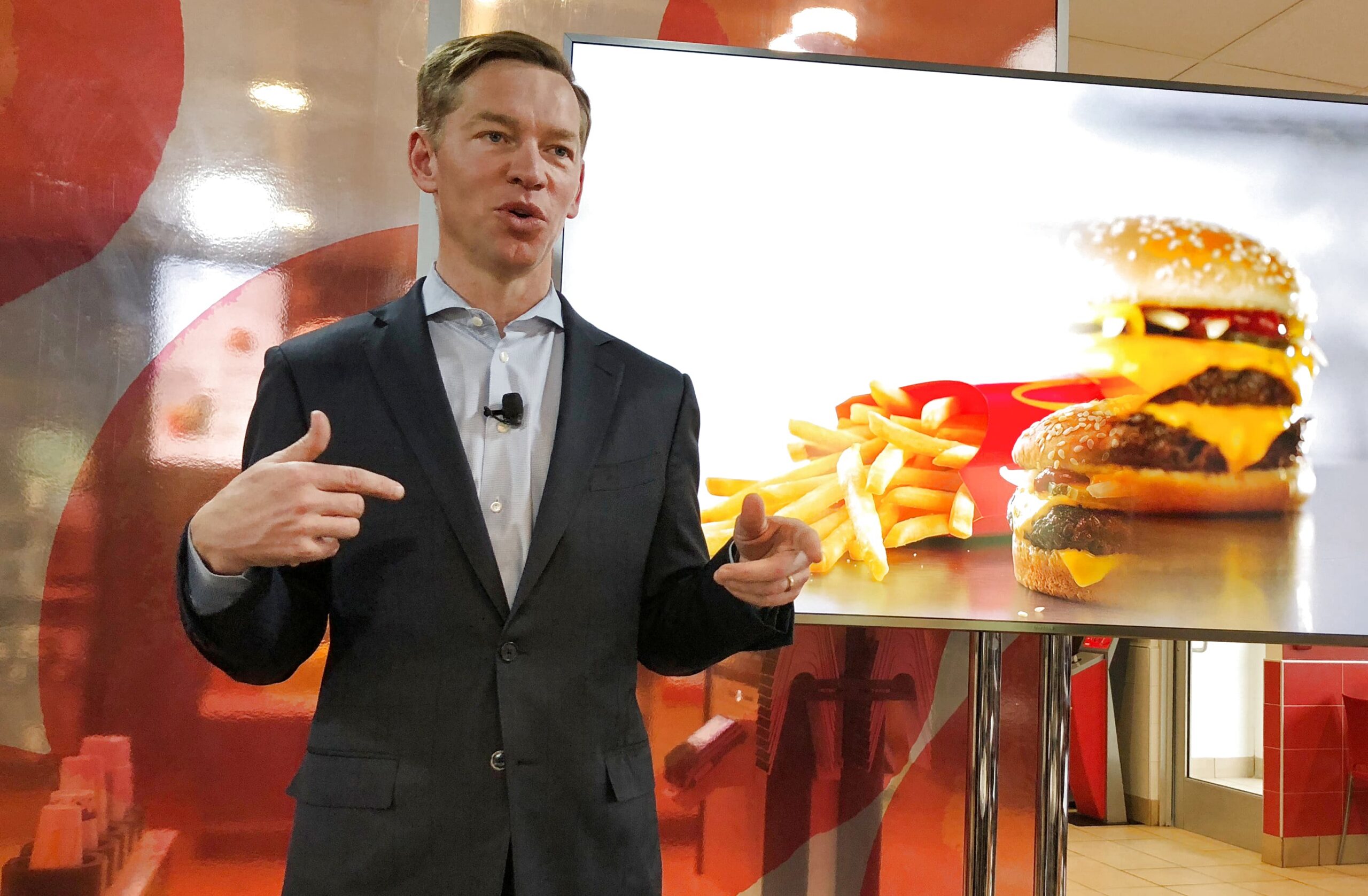
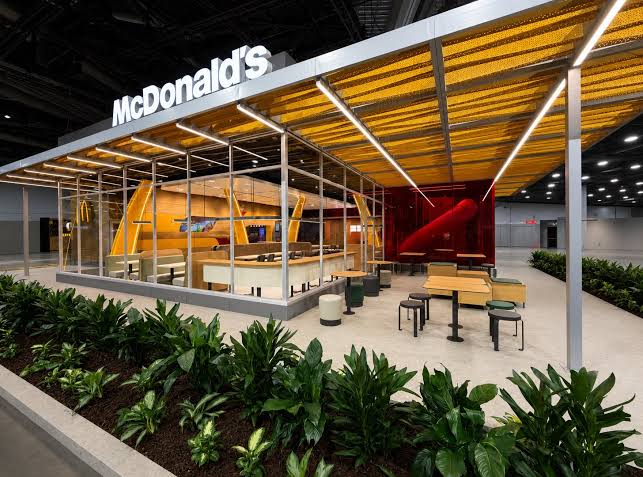


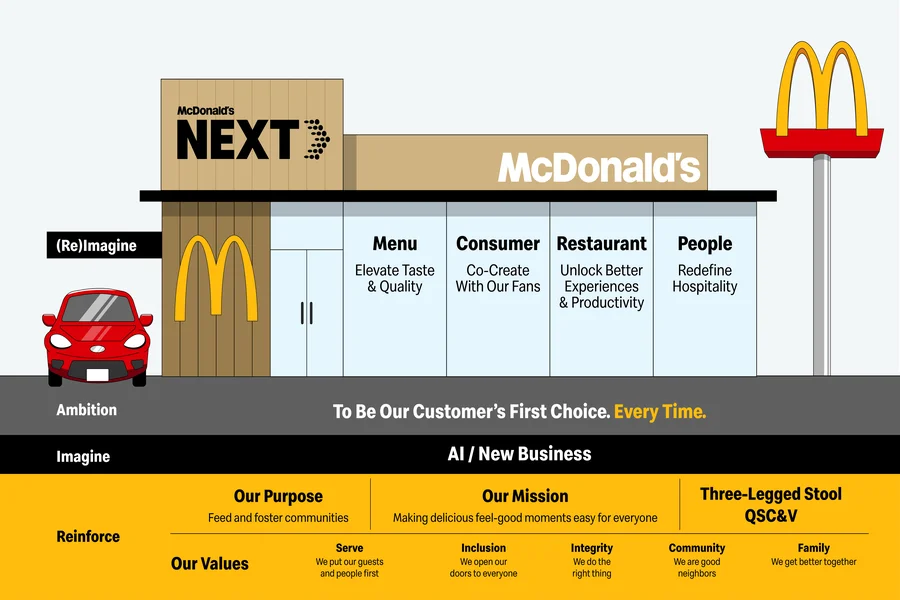
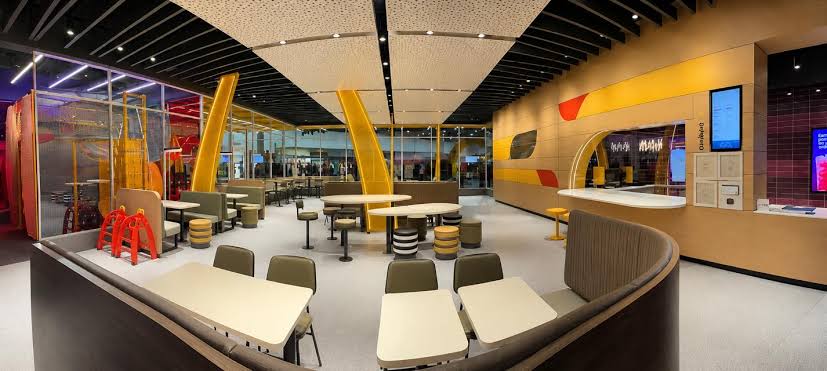
Then came the less photogenic part: paying for it. The NEXT financial framework included about $8.5 billion in franchisee support through 2036 and an estimated four-year franchisee payback after company support. In particular, rent relief and capital contributions matter here. After all, the owner weighing disruption to a working restaurant has a different calculation from the corporation announcing a global rollout.
A franchisee has a vote in the growth timetable. Put that decision beside the demonstration: an operator explains the conversion work, then finance walks through the owner’s investment, company support and expected payback. Keep the assumptions in view. A strong return after support tells investors something different from a strong return before it, and either can look less attractive to an owner who expects a difficult conversion. That tension gives the restaurant tour a business purpose.
At its September 23 Analyst & Investor Day, autonomous trucking company Aurora offered rides along part of its Dallas-to-Houston commercial route. Because guests rode in the cab, they could see the road and the empty driver’s seat. A remote investor, however, depended on the camera. An exterior shot and an executive’s description would leave that second audience taking considerably more on trust.
Aurora’s September 23 business update reported more than 500,000 driverless miles since commercial launch and an ambition for more than 30,000 trucks in operation by 2030. The ride made today’s progress tangible. Reaching that scale, however, would depend on manufacturing, maintenance and route expansion. The webcast needed to give investors a close look at the demonstration while keeping its limits clear: one route, one set of conditions, one moment in the fleet’s development.
We would watch the ride footage once with the narration muted. What can the viewer actually observe? That test reveals where the camera needs to stay longer or move closer. Commentary can then explain the route, conditions and limits. Our guide to designing for the room, webcast and reference deck applies the same principle: each format has to carry the evidence its audience needs.
Sometimes investors arrive with the product experience already in hand. For example, someone who wears On shoes or owns a YETI cooler understands some of the appeal. Even so, the next growth plan concerns customers, categories and commitments that familiarity alone cannot explain.
At On’s September 22 Investor Day, the Swiss sportswear company had more than new shoes to show. It said it remained on track to significantly exceed the 2026 targets it had set in 2023. Its next plan called for at least CHF 5.6 billion in sales at current exchange rates and an adjusted EBITDA margin of at least 22% by 2029.
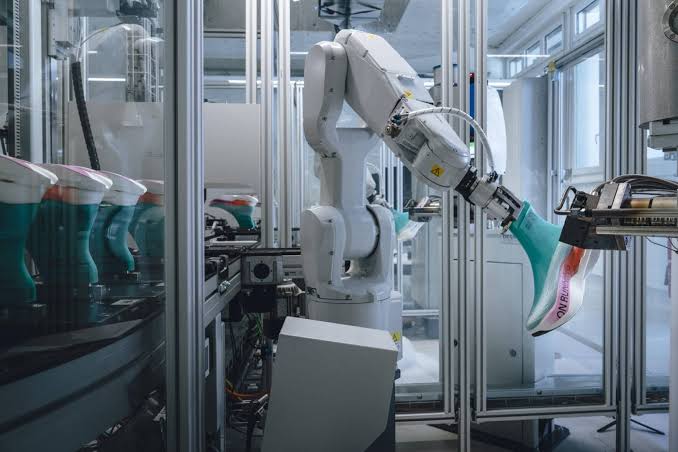


The visit to On Labs in Zurich brought investors closer to the products. Meanwhile, the old targets gave them a way to assess management’s forecasting record. September still left part of 2026 ahead, though. For that reason, the useful comparison separated completed results from the year-end outlook, letting investors judge how much confidence to carry into the next three years.
Keep three columns on screen: the original commitment, the latest actual result or clearly labeled forecast, and the new target. Use the same definitions and currency basis, and explain any changes. That lets investors see whether management has beaten its own expectations or changed the comparison. Alongside the product experience, that modest-looking scorecard helps establish how much weight the next promise deserves.
A YETI cooler means something to someone who has carried it on years of trips. In a new market, though, the company has to earn that history. At its September 17 Investor Day in Austin, YETI named international sales and Bags & Soft Coolers as future billion-dollar platforms. Its growth plan spelled out the international sequence: establish credibility, introduce the brand locally, then expand through wholesale, direct sales and marketplaces.



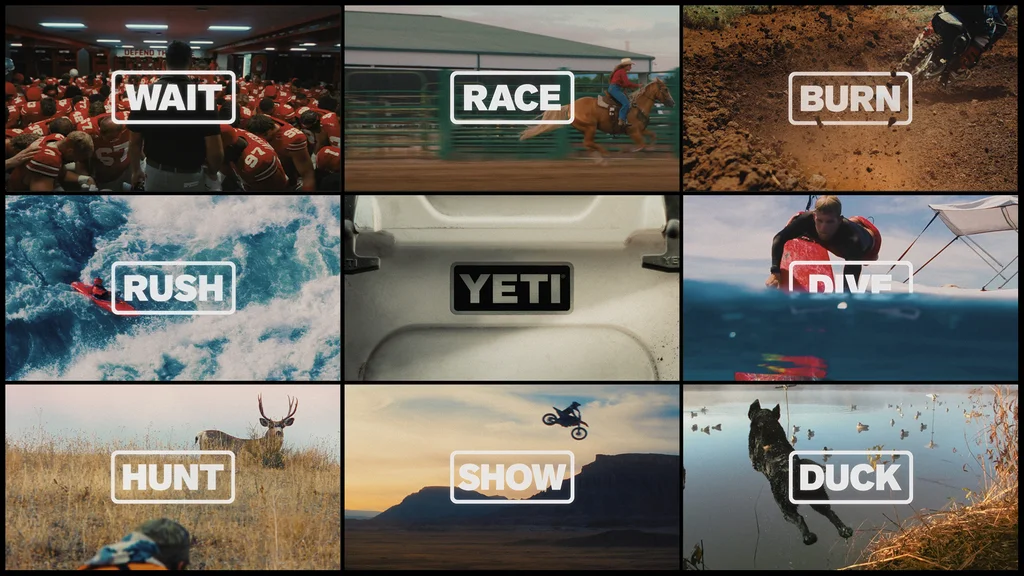
Because each step depends on the last, that sequence makes a better story than a map with new countries lit up. Who introduces the brand, and where does someone first handle the product? Ultimately, what does reaching that buyer cost? YETI also identified roughly $100 million in opportunities to reduce product and operating costs through Project Upcycle, supporting growth and margins. Expansion therefore depends on distribution, costs and operations that an outdoor montage can easily leave out.
Follow one priority market from introduction to purchase. A local guide or retailer can explain how the brand earns a place; the regional leader can explain the sales channels and their economics. Then show which savings help fund expansion and which must absorb pressure on margins. This gives investors a way to judge whether the brand can travel profitably. The scenery earns its screen time when it reveals something about the market.
At a technology conference, the same stage serves two audiences with different questions. A customer watches a demonstration and wonders whether their team should try the product. An investor, however, wants to know who will pay, how adoption will grow and what serving that demand will cost. CrowdStrike and Salesforce offered two ways to examine that gap.
Cybersecurity company CrowdStrike held its September 2 investor briefing at Fal.Con alongside an announcement with a practical detail beneath the AI branding. Specifically, it planned to bring its Falcon security platform to Claude Marketplace. Customers of Anthropic, the company behind Claude, would be able to use part of their existing Anthropic spending commitments to buy Falcon.
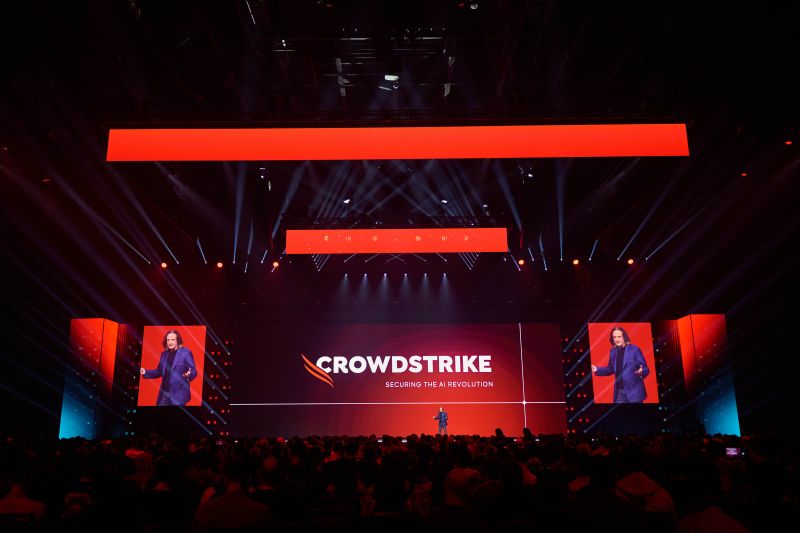
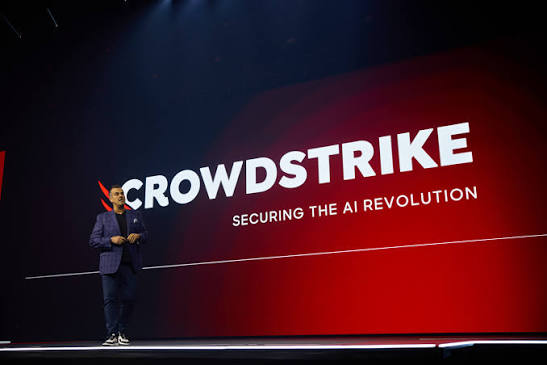

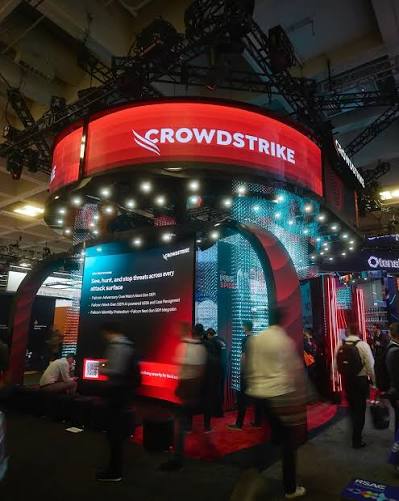
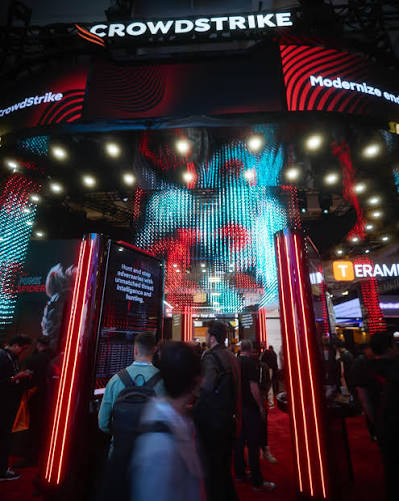
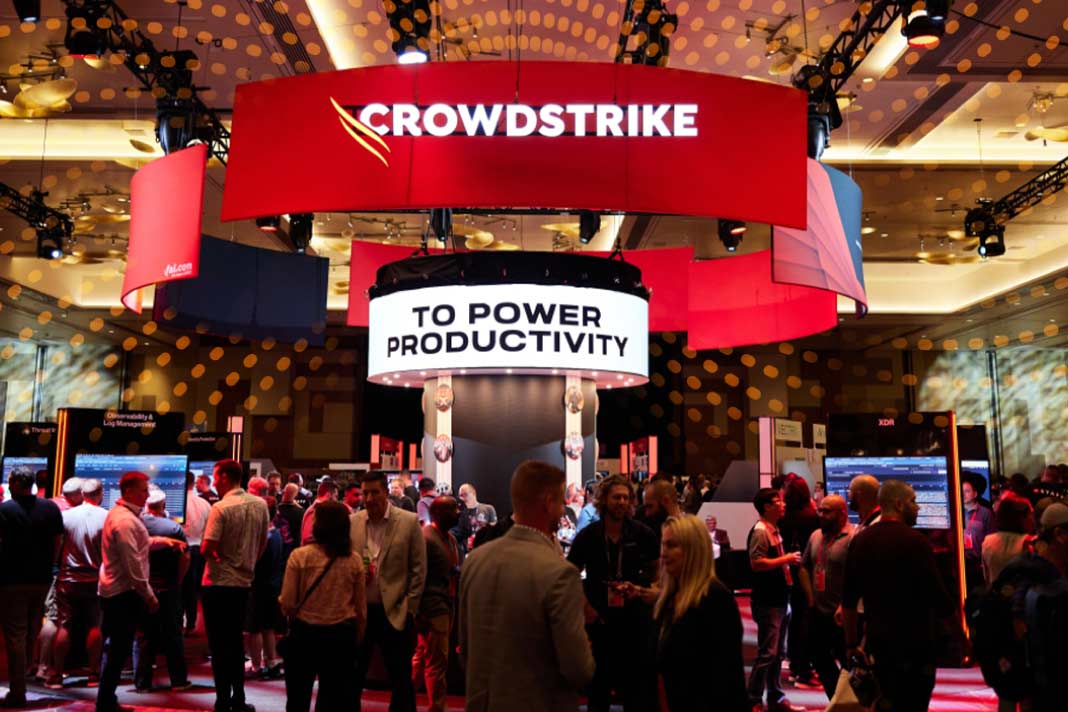
In practice, access to a budget a customer has already committed can change the sales conversation. It also complicates the growth story. Will the arrangement bring CrowdStrike new buyers, speed a purchase that would otherwise stall, or simply move an existing order to a different checkout? Each outcome has value, but they imply different things about additional demand.
A partner interview becomes more revealing when it follows the purchase. Ask who controls the budget, what approval steps change and how the partners will measure progress after launch. Those answers give the audience something to revisit beyond the announcement. For the production team, the useful visual may be a short purchasing journey alongside the two executives: enough detail to explain why the relationship could change the business.
Salesforce’s September 16 Dreamforce Investor & Analyst Session had a familiar number in the background. The company had raised its fiscal 2030 revenue target to $63 billion in February, including its data-management acquisition, Informatica. Revenue from an acquired business and new spending by existing customers contribute to the same total through different routes. So investors need to know how much work each must do.

September therefore called for an explanation of what investors could now see more clearly. Consider Agentforce, which lets businesses deploy AI agents to perform tasks. In practice, a trial, a paid deployment and an expansion across a customer’s business represent different stages of adoption. As a result, a rising headline count tells the audience little about revenue unless management explains which stage it measures, over what period and against which customer base.
Put the previous earnings deck beside the new script and mark what has changed. Show how much growth comes from the existing business and how much comes from acquisitions, then explain where AI adoption fits. Preserve those definitions when cutting short clips, too. Our Dreamforce content analysis explores that editorial challenge: a clip needs enough context to make sense when its next viewer never saw the keynote.
A patent expires. Customers leave. A payout promise competes with the next investment. Each gives management a story to tell and an uncomfortable question to answer. The event gains substance because investors can examine the ambition and the complication together.
For Novo Nordisk, the question of future growth comes with several patent clocks. At its September 21 Capital Markets Day in London, the drugmaker needed to explain what comes after its current generation of treatments. For example, the company’s 2025 annual report lists 2026 compound-patent expiration in China for semaglutide, the active ingredient in Ozempic and Wegovy, compared with 2032 in the US. Other patents and regulatory protections can also matter, so investors need to assess the timing market by market.


Novo released Phase 3 trial data for CagriSema, a combination treatment in development, that day. As a result, the discussion of future medicines had new clinical evidence to examine. Yet a clinical result, regulatory approval, launch and meaningful sales occupy different points on the calendar. Investors therefore need to understand when a new product could contribute in the markets where the existing business faces pressure.
Give the scientific and commercial speakers one shared timeline, with separate tracks for the relevant markets. Keep trial milestones, approvals and commercial assumptions distinct. Then test a delay: which part of the plan changes if a milestone slips? That turns an exciting result into a discussion of business resilience. It also tells the director when to hold the timeline on screen, giving the audience time to connect dates that separate presentations can leave scattered.
At Intuit, meanwhile, the difficult question concerned customers who had already walked away. The maker of TurboTax put that weakness on the screen at its September 17 Investor Day. Its presentation showed a 2% decline in TurboTax filings, concentrated among price-sensitive customers who prepared their own returns. In response, management outlined an expansion of Credit Karma Tax at $0 for federal filing and $15 for state filing. Its stated priority was customer growth over maximizing revenue from the first tax transaction.

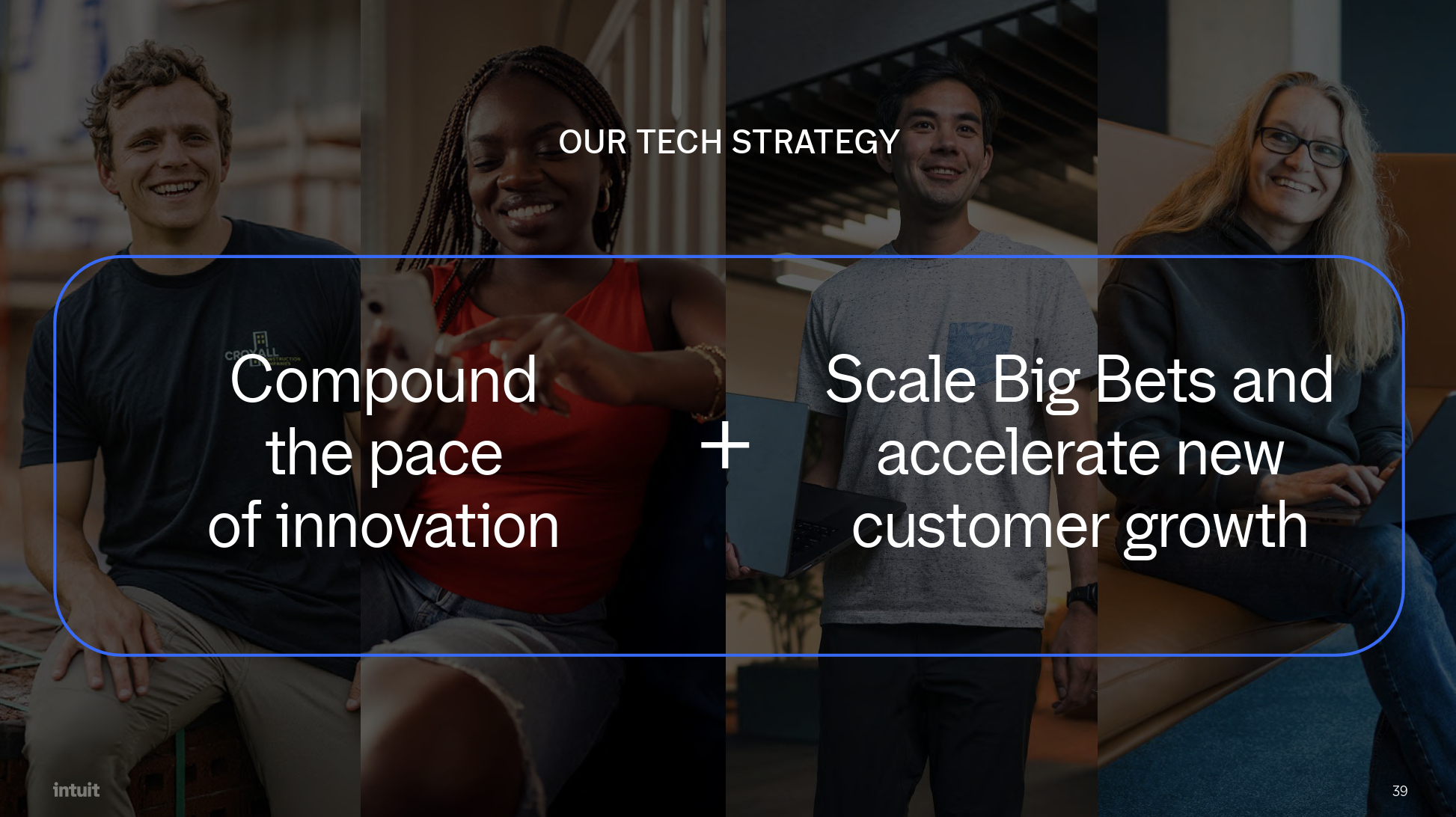
The trade-off, then, was concrete: accept less from an initial transaction to bring customers into a broader relationship. Meanwhile, the same presentation said more than 75% of additions to TurboTax Live, its expert-assisted service, had come from customers upgrading from DIY products. Yet moving an existing customer to a higher-value service can help revenue while leaving the problem of attracting new customers unresolved.
Carry the customer question across the speaker handoff. The product leader can show how the cheaper entry point works; finance can explain what must happen afterward for the economics to hold. Track new customers separately from upgrades, and ask what evidence would justify the initial revenue trade-off. A seamless transition between speakers matters less if the underlying question disappears when the next slide arrives.
More growth, lower costs and more cash back to shareholders. At its September 21 Capital Markets Day, French bank Société Générale put all three on the agenda. Its 2029 plan paired roughly 3% annual revenue growth from its estimated 2026 base with costs about 2% below that base. In addition, potential shareholder distributions could exceed €21 billion over 2026–29.


That total, however, came with conditions. First, the bank expected ordinary dividends and buybacks to exceed €13 billion. A further roughly €8 billion assumed it would distribute all surplus capital above a 13% CET1 ratio, a measure of the bank’s capital cushion that accounts for the risk of its assets. Investors needed to understand what might change that calculation as management funded growth and maintained its capital position.
The most revealing part of a capital-allocation story is the opportunity management could turn down. We would ask a business leader to explain what a growth opportunity must earn to justify funding, then have the CFO show how that choice fits the payout plan and capital limits. That gives investors a way to judge management’s priorities. A list of attractive targets can conceal the choices that determine whether the company can deliver them together.
A familiar corporate name can hide a change in the business underneath it. Corteva’s separation and Brookfield’s different investment businesses raised a basic ownership question: which assets, costs and earnings actually belong to the company in an investor’s portfolio?
Agricultural company Corteva used its September 15 virtual event to introduce the two businesses that its planned split would create. The morning belonged to Vylor, the future seed company, with its own presentation and Q&A. The separation closed on October 1, distributing Vylor shares to eligible Corteva holders.
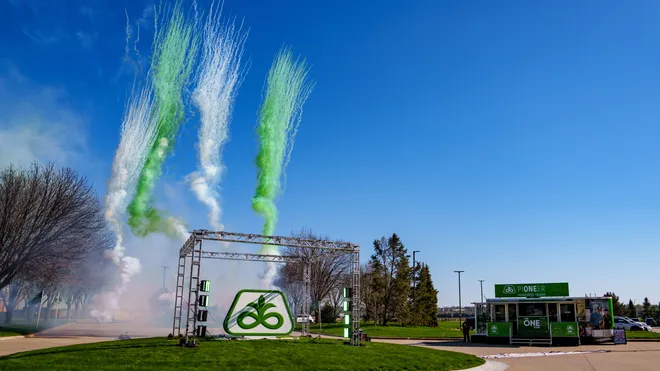
A share distribution puts a new stock in a portfolio without requiring a fresh purchase. Even so, Vylor’s leadership still had to give shareholders a reason to keep it. It therefore needed to explain its assets, costs, leadership and plans for capital well enough to earn a place in their portfolios. Knowing the seed business as part of Corteva could only take them so far.
The afternoon belonged to New Corteva’s crop-protection business. Here, however, the familiar name created a different challenge. After all, the old group’s results included a business that would soon leave. As a result, investors needed to see which earnings and costs would remain, and how transition expenses might affect the comparison.
Build the two presentations around the decision a shareholder now faces: keep either business, both or neither. A consistent map of assets, earnings, debt and costs helps each management team make its case. Follow one shared service through the split as well: who will provide it, who will pay and when the transition ends? That detail helps investors distinguish a lasting cost from the temporary expense of becoming independent. The familiar name should never have to stand in for an explanation of the new business.
Brookfield’s challenge begins with a shared name. Brookfield Asset Management earns fees managing client capital; Brookfield Infrastructure invests in and operates assets. Their September presentations told related stories through different business models. Because those models differ, investors need to know which company stands behind each number.

Brookfield Asset Management’s September 17 Investor Day highlighted $163 billion of fundraising over the previous twelve months and a plan to double the business over five years. In turn, new client commitments create the prospect of future fees. Even then, investors need to know when that capital starts earning fees and how recurring management fees differ from income that depends on investment performance.
Brookfield Infrastructure’s September 29 presentation required a different reading. Its deck identified a $6 billion backlog of approved projects under construction across the business, excluding $2 billion of remaining capital for its Arizona semiconductor facility. In other words, the total covered more than AI infrastructure and described construction ahead, with cash still to spend before those projects could contribute. The distinction matters because it changes how an investor reads the growth story.
Put the business name and the definition beside each number, then keep both in replay excerpts. Client commitments, construction spending and future earnings answer different questions. A short edit can accidentally turn one into another by losing a qualifier or cutting to footage from the wrong business. The editor needs to protect financial meaning as carefully as the speaker’s words, particularly when several listed companies share a brand.
Across these events, the consequential production decisions begin well before the cameras arrive. Which customer belongs in the film? How much time does the audience need with the chart? Which question should the next executive inherit? A planning meeting gets more useful when the writer, IR lead, finance team and director answer those questions together. Those answers matter because they determine the shoot, the deck and the rehearsal.
For example, our earlier Masco Investor Day project at the NYSE shows how early production judgment creates room for that work. Arbor Advisory Group led IR strategy; CBSS built and ran the production. Reviewing the webcast requirements recovered $13,000 for branded upgrades, the microsite and executive support. The team also started remote prompter sessions the week before on-site rehearsal. By the time executives reached the venue, the team could work on cues, pace and the conditions of the actual show.
Budget and rehearsal belong in the storytelling conversation because they determine what the team can explain well. A film that raises a question needs a speaker ready to answer it. Likewise, a chart that carries the answer needs enough time on screen for someone to read it.

Backstage, a long question can look like a timing problem. So someone shortens it for the moderator, removes a detour and tidies the phrasing. The danger comes when that edit also removes the objection. An investor can ask how the company would fund a delay, only for the executive to hear a broad invitation to describe the opportunity.
For that reason, rehearse that editorial handoff with a difficult submission. Compare the original with the moderator’s version, and protect time for a follow-up when the answer misses the point. That way, the audience can follow a question through to its conclusion, rather than lose it in a procession of topics.
Someone will open the replay a week later, looking for one answer. Keep the relevant chart beside the financial explanation, retain the question with the answer and give chapters names people can search. Our Investor Day presentation guide explains why the reference deck needs context the speaker supplied live.
Even so, a share-price move cannot tell a team whether that work succeeded. Instead, examine the questions and assumptions analysts return to, alongside developments outside the room. Our analysis of the stock trading while executives remain on stage explores how the live team prepares for that wider conversation.
Months later, an investor may reopen a financial chart from the event and compare it with the latest results. That is another test of the show: can they recover the assumptions, recognize what changed and judge management’s response? By then, the production team has long since packed up. The explanation, however, still has work to do.
Planning an Investor Day? Start with our Investor Day production playbook to map the timeline, budget and video program. Bring us the question your investors keep asking. We can work back from the explanation, footage and speaker preparation it needs.
This directory collects the September 2–30, 2026 events covered in our roundup, including additional companies worth exploring. Brookfield appears once per event date, with links to each participating company’s materials; its presentations contribute one featured case study above. Apple’s product keynote and Oura’s IPO roadshow appear as adjacent communications events; neither counts among the 11 featured case studies above. The links below lead to official event pages, webcast destinations or company archives. Where a company groups its materials in an archive, look for the September 2026 session. Replay providers may require registration or limit availability.
| Date | Company | Official event or materials |
|---|---|---|
| Sept 2 | CrowdStrike | Fal.Con Investor Briefing – Las Vegas and webcast |
| Sept 9 | Apple | Product keynote and replay – adjacent example |
| Sept 10 | Labcorp | Investor Day and presentation/replay archive – webcast and replay |
| Sept 14 | ISS | Capital Markets Day presentation and replay |
| Sept 15 | Vylor | Morning Investor Day session – virtual |
| Sept 15 | New Corteva | Afternoon Investor Day session – virtual |
| Sept 15 | Ingram Micro | Capital Markets Day – NYSE Texas, Dallas |
| Sept 16 | Salesforce | Dreamforce Investor & Analyst Session in the event archive – San Francisco |
| Sept 16 | onsemi | Investor Day – webcast and replay |
| Sept 17 | Brookfield | New York Investor Day presentations: Brookfield Asset Management and Brookfield Corporation |
| Sept 17 | Intuit | Investor Day, full broadcast and individual sessions – Mountain View |
| Sept 17 | YETI | Investor Day materials in the IR hub – Austin |
| Sept 17 | Envista | Investor Day webcast and presentation – webcast and replay |
| Date | Company | Official event or materials |
|---|---|---|
| Sept 21 | Novo Nordisk | Capital Markets Day – London |
| Sept 21 | Société Générale | Capital Markets Day and strategic plan – London |
| Sept 21 | Ayvens | Capital Markets Day – London |
| Sept 22 | On Holding | Investor Day webcast – On Labs, Zurich |
| Sept 22 | Bureau Veritas | Capital Markets Day – Paris area |
| Sept 22 | Fastly | Investor Day – webcast and presentation |
| Sept 22 | Minerals Technologies | Investor Day replay and presentations – Bethlehem R&D facilities |
| Sept 23 | Aurora | Analyst & Investor Day – Dallas |
| Sept 23 | McDonald’s | Investor Day replay and select slides – Chicago |
| Sept 24 | Charles River Laboratories | Investor Day microsite – webcast and presentation |
| Date | Company | Official event or materials |
|---|---|---|
| Sept 29 | BWX Technologies | Investor Day – webcast and replay |
| Sept 29 | Brookfield affiliates | Affiliates Investor Day – Toronto. Materials: Brookfield Renewable, Brookfield Infrastructure and Brookfield Business Corporation |
| Sept 29 | MongoDB | Investor Day webcast and presentation in the event archive – New York |
| Sept 30 | Cimpress | Virtual Investor Day in the event archive |
| Sept 30 | Conduent | Investor Day – webcast and replay |
| Sept 30 | Rogers Corporation | Investor Day – webcast and replay |
| Sept 21–29 | Oura | IPO filing and postponement announcement – adjacent roadshow example |
The case studies draw on public event materials, company announcements and, where linked, event transcripts. We checked dates and factual claims against those sources; forecasts remain management targets. The Corteva/Vylor discussion includes the October 1 separation; the directory reflects Oura’s September 29 IPO postponement. CBSS’s analysis identifies production choices these cases raise. Proposed treatments describe what we would do, without implying that a company used or omitted them. The Masco reference identifies our own earlier work.
The Q&A wraps a little after noon. By four, the LED wall sits in road cases. By six, the stage that took three days to build is in a truck. At nine the next morning, an analyst who missed the event looks for the CFO’s answer to a margin question. Where does that person go?
The event URL may still lead to a registration form. The deck sits on the IR calendar, the replay lives on a webcast provider’s site, and the transcript arrives later. Each asset exists, but the visitor has to rebuild the story the company spent months organizing. That is the handoff an Investor Day microsite needs to solve.
An Investor Day microsite is a dedicated page or small site on a URL the company controls. Before the event, it carries the agenda, speakers, registration, logistics, and live webcast. Afterward, that same address should lead to the approved replay, presentation, transcript, and supporting disclosures.
The change is editorial as much as technical. A new visitor wants to know what management argued and where to test it. Organize the archive around the day’s questions: the thesis, the segment evidence, the financial model, then the Q&A. Connect each part to its video, slides, and source documents. The site should preserve the argument, not make someone assemble it from a folder of files.
Plan those two versions of the page before the invitation goes out. A stable URL gives the event one address that can keep working after the registration form closes.
Build the archive version before show day, then switch it on as materials clear investor relations and legal review. The first version does not need every final file. It does need to tell visitors what they can use now and what will follow.
Keep the complete webcast, but give people a shorter path to the answer they came for. A portfolio manager looking for the margin bridge should not have to drag a playhead through three hours of introductions and segment updates.
Use the run of show as the first chapter map. During the event, log actual start times, speaker changes, and the topics that emerge in Q&A. Afterward, give each segment a clear title, speaker name, one-sentence summary, and direct replay point. Put the relevant slides next to it. Our guide to Investor Day presentation design covers why the deck also has to make sense away from the stage.
Add a corrected transcript beside the video. Captions help people watch; a reviewed transcript helps them find and quote a precise statement. It also gives search and AI tools a clearer source than an unlabelled player. We explore that second audience in our piece on the agentic audience. Keep the transcript dated, and note any correction rather than silently changing a financial claim.
For examples of the questions an archive needs to preserve, see our September 2026 Investor Days roundup, which follows operating demonstrations, growth targets and the assumptions behind them.
Name the handoff owner at kickoff. Production can deliver final video exports and chapter notes. Investor relations can approve the summaries, figures, and disclosure links. A web or content owner can switch the page, check mobile access, and fix broken paths. Give one person responsibility for the final sign-off so each team knows when the archive is truly live.
Set the maintenance rule at the same time. Who holds the source files if the webcast provider changes? Who checks links after the next earnings release? If guidance moves on, keep the original Investor Day claims dated and point readers to the newer disclosure. Do not quietly rewrite the historical record.
The handoff belongs in the wider Investor Day production playbook, alongside the rundown, approvals, and deliverables. Waiting until strike to assign it leaves the site with everyone’s assets and nobody’s ownership.
An existing IR event page may be enough if it can present sessions, a navigable replay, the deck, and the transcript at one lasting address. Use it when it gives investors a clear route through the material. A separate microsite earns its keep when the event needs richer story navigation, multiple demonstrations or audience paths, or a visual system the IR template cannot support.
Either way, keep one authoritative set of numbers and connect the archive to the main IR site. The decision is about how easily someone can use the record, not whether the URL looks more elaborate. Our microsite work covers the larger build when an event calls for one.
The stage comes down by dinner. The useful test comes later, when a new analyst needs one answer without anyone from the company in the room to guide them. Scope the archive with the Investor Day production itself. If that analyst can find the right session, its supporting materials, and the current point of contact, the handoff worked.
On September 23, McDonald’s issued the targets for McDonald’s > NEXT before its Investor Day began. The company then walked investors through the plan at its Chicago headquarters, with a menu tasting and a restaurant-of-the-future tour for people attending in person. The shares closed down 4.81 percent that day. That move alone cannot tell us which part of the plan investors questioned, or how much the event influenced the price. It does show the pressure on an Investor Day team: investors can start judging the numbers while executives still have hours of explanation ahead.
The company filed an 8-K with its investor release that morning. The webcast host reminded viewers that they could already read the release, while McDonald’s planned to post key slides after the presentation. That order matters. The stage could give investors context, but it could not rely on surprise. Analysts had the targets in front of them as the speakers explained how McDonald’s expected to reach them.
The release put several different timelines on the same page. McDonald’s pledged about $8.5 billion in franchisee partnering support through 2036, including about $5 billion through 2030. It also targeted roughly 250 basis points of gross restaurant-level efficiency and an operating margin in the low-to-mid 50 percent range by 2030. For the average U.S. restaurant, the company estimated about $100,000 in annual cash-flow benefit as it rolls out the program. Each figure gives an investor a different question:
Those questions were not hypothetical. In the Investor Day Q&A, one analyst asked how McDonald’s would phase in the new restaurant systems and what drove the projected $100,000 cash-flow improvement. Chief Financial Officer Ian Borden also explained that the $8.5 billion describes cash support, while accounting rules spread its effect on the income statement over the remaining franchise agreements. The Q&A cannot explain the share-price decline. It does show where a headline target needed a clearer bridge to timing and payback.
That is a production question as well as a finance question. Before rehearsals, someone should map each major number to its definition, time horizon, supporting slide, and speaker. A presenter should not have to search for the difference between a gross efficiency target and a franchisee cash-flow estimate while answering a live question.
Keep the program clear and give speakers reliable information. A falling share price does not tell the team why investors are selling, so a rushed attempt to rebut the chart can create more confusion. Set three jobs before the event starts:
These preparations will not change a day’s trading. They give management a fair chance to answer the questions its own release invites, while the production team keeps the explanation easy to follow.
The materials investors use to check the plan later. McDonald’s Investor Day page brings together the release, select slides, and a video replay. A later reader can revisit what executives said about the rollout instead of relying on a clip or a day’s headline. Teams can make that record more useful with clear slide titles, consistent definitions, and a transcript or chapter markers that help people find the answer they came for.
The deck matters here, too. If an analyst returns after the next earnings report, the investment timeline and the claimed payback should still make sense without a presenter in the room. Our Investor Day deck guide covers that test. A sound Investor Day production plan connects the filing, the stage, the Q&A, and the replay before the first speaker walks out.
There’s a moment in almost every Investor Day rehearsal when a slide that looked fine for six weeks suddenly doesn’t. The team built it on a laptop, reviewed it on a laptop, approved it on a laptop. Now it’s forty feet wide on an LED wall. The CFO stands in front of it, and the footnote nobody questioned is a grey blur from the third row. Nothing about the slide changed. The scale did.
That’s why presentation design belongs in the production conversation from the start. Investor Day presentation design has to serve three audiences at once: the people reading the stage screen, the investors watching through a webcast player, and the analysts downloading the PDF afterward. One is looking past the CFO’s shoulder. Another has your webcast beside a spreadsheet. The third may open the file weeks later, with no idea what anyone said on stage. You’re asking a lot of one deck.
The practical answer is to build two versions from one design system: a stage deck for distance and camera, and a reference deck for reading. Keep the story and the numbers consistent; give each audience the explanation they need. That distinction sounds small until you try to make a margin bridge work equally well behind a moving executive and inside an investment-committee memo. Same numbers. Very different reading conditions.
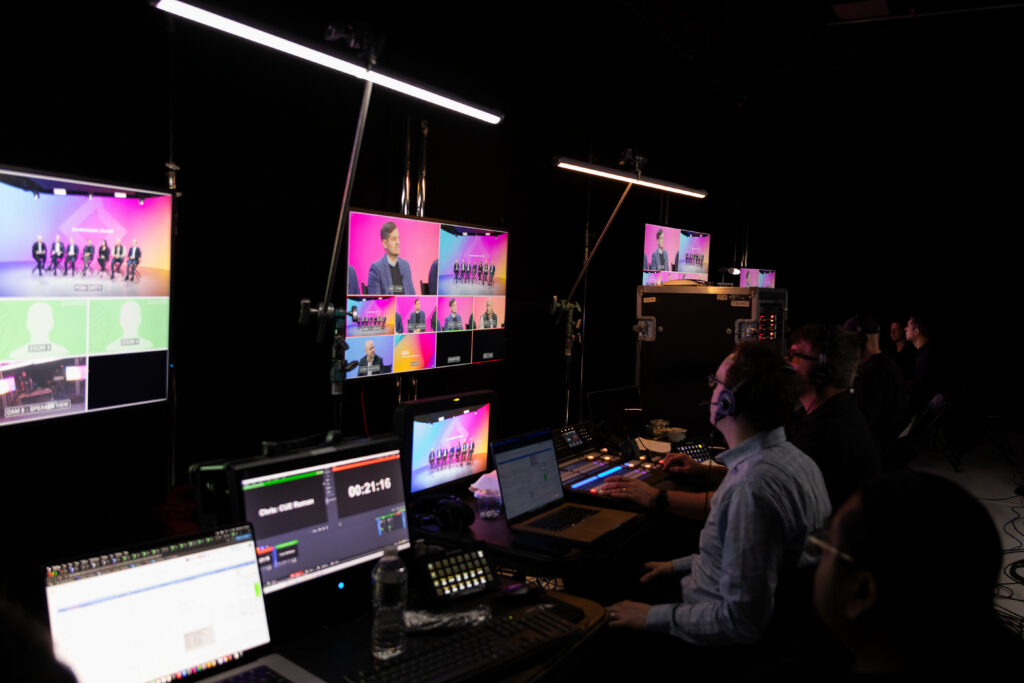
Start with the room. At stage scale, a slide behaves like a broadcast graphic. The person in row twelve may be reading your type from sixty feet away, under stage lighting, while also watching a presenter. They want to follow the argument. Give them a fighting chance: one clear idea, large type, and enough contrast to find the important number before the speaker moves on. If they spend that time squinting at a label, you’ve lost the sentence that was supposed to explain it.
The webcast is a different problem. An analyst who didn’t fly in may have the deck open inside a player window that’s sharing a monitor with a spreadsheet. Stream compression eats hairline rules, thin chart strokes, and low-contrast greys. A table that’s dense in the room can become illegible at 720p in a quarter-screen window. The slide has to survive being small, and the production team needs to know when to give it the full frame. That is part of treating your Investor Day like a broadcast.
Then there’s the PDF, quietly waiting on the IR site after everyone packs up and goes home. The stage deck serves a morning. That file may stay in circulation for years. Analysts reference it in notes, paste its charts into committee memos, and revisit its assumptions when the next quarter’s results arrive. Research tools can use it to summarize your strategy for people who never watched a minute of the event. The PDF has to make its case without the CFO standing next to it.
The trouble usually starts somewhere much less dramatic than the stage: a shared folder. Each business unit builds its own section on its own timeline. By the time the sections come together, you’ve got several shades of the brand blue, three competing chart styles, and financial tables someone pasted straight from a spreadsheet at eight-point type. A designer gets the file two weeks out with a familiar request: “Can you clean this up?” By then, the team has already settled the slide count, the claims, and the charts. The decisions that most need a second look are the ones nobody wants to reopen.
This is the same handoff problem that shows up across investor relations production. Each contributor can finish their part without anyone checking whether the whole thing holds together. The CEO frames the strategy one way, a segment leader introduces a different set of priorities, and the CFO has to reconcile both in the financial section. Matching their fonts won’t solve that.
Then comes density as reassurance. Anyone who has sat through a deck review knows the impulse: add the extra number, keep the backup chart, squeeze in one more footnote. A full slide feels safer. But someone in the audience has to read it while an executive keeps talking. Put the supporting schedules in the reference deck or appendix, where people can actually work through them. Keep the context the room needs to understand the claim. A slide can satisfy every reviewer and still fail every reader.
An earnings deck often works as a self-contained document. Readers open it on a laptop at arm’s length, move through the tables at their own pace, and stop on the footnotes. That is a reasonable brief for that format. The trouble starts when a team stretches the same template across a multi-hour live event, where the speaker controls the pace and the audience cannot pause the wall.
Put six charts and four footnotes on a projected slide, and the room starts reading while the CEO keeps talking. Now the audience has to choose which argument to follow. Of course, taking everything off the slide doesn’t solve it either. An oversized slogan won’t explain a capital allocation decision. Give the speaker something worth walking through: a useful chart, a precise claim, and enough context to understand the comparison. The design should make the substance easier to follow.
Try this before the next review: read only the slide titles, in order. “Operations,” “Growth,” and “Financial Overview” tell you where you are in the agenda. What do they tell you about the business? A title such as “New capacity supports the next phase of growth” gives the speaker a claim to explain and the chart a job to do. Use it only when the evidence supports it. If the titles promise more than the numbers deliver, better typography won’t close the gap.
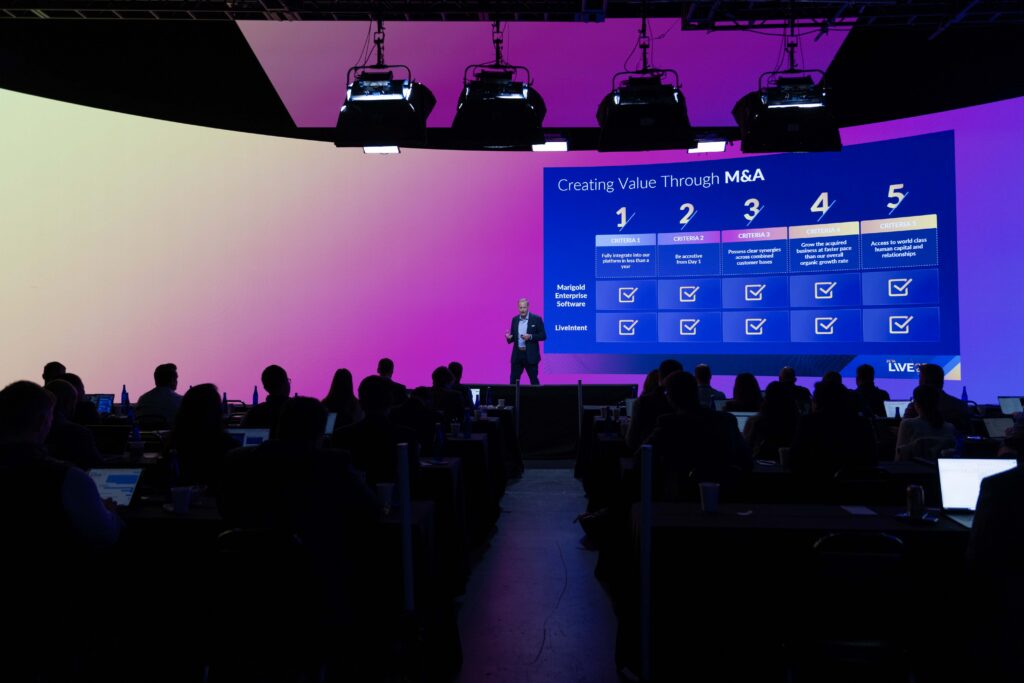
The useful conversation happens before anyone builds a template. What does each section need investors to understand? Which chart or example will help them understand it? And how much of the explanation belongs on stage versus in the reference deck? Get IR, finance, communications, and production into that conversation while the team can still change the sequence. The Investor Day production playbook puts this work alongside scripting, filming, and rehearsal, where those decisions can inform each other.
This is also the time for the unglamorous questions. Who supplies the source data? Who approves the financial language? Who makes the call when two reviewers want opposite things? Five people sending five marked-up files can consume an afternoon before anyone makes a single change. Name the person who reconciles that feedback at the first review, while everyone still has the patience to agree on a process.
Take a margin-expansion slide. The CFO knows this bridge inside out: pricing adds here, mix moves there, operating improvements close the gap. The audience is seeing it for the first time. They need a visible starting point, a visible destination, and labels that connect each step to what the CFO says. Floating percentages may look clean, but they leave the audience doing mental arithmetic at exactly the moment you want them listening.
In the reference version, imagine someone opening that chart on Tuesday with a colleague asking, “What period does this cover?” Make these details easy to find:
Have the content reviewers check both versions together. Moving a qualification off the page may seem like a small design decision until it changes what the number appears to mean.
The same discipline helps when the subject is harder to show. If a segment leader claims that AI improves productivity, a generic architecture diagram will do little to explain the economics. A workflow, a before-and-after comparison, or a short demonstration can give the claim something concrete to stand on. Our AI briefing for IR leaders explores that connection between operational evidence and the investor story. The deck’s job is to make the connection clear enough that an analyst can explain it to someone else.
The front row gives you one view. The camera gives you another. It sees the screen, the presenter, and the lighting as one image; the person at home gets whatever survives at the size of their player window. A template can look terrific in isolation and fall apart in that frame. Bring the camera and lighting teams into the review before everyone falls in love with it. Four details deserve an actual test:
For most Investor Days, yes: build a stage version and a reference version from the same design system. Keep the typography, palette, chart conventions, and approved figures consistent. Plan the differences early, so the reference deck doesn’t become a last-minute export of slides that only make sense with a speaker:
| Design decision | Stage deck | Reference deck |
|---|---|---|
| Explanation | The executive talks through the argument. | The page supplies the explanation without a presenter. |
| Charts and labels | Large labels and a clear takeaway that the room and webcast can follow. | The same figures, with the period, units, scope, and basis of comparison. |
| Supporting detail | Keep qualifications needed to interpret the claim beside the number. | Include supporting schedules and make definitions and reconciliations easy to find. |
| Reading order | Follow the speaker’s delivery and the show cues. | Use descriptive titles, page numbers, and links so readers can find what they need. |
That does not mean stripping every qualification off the wall and hoping someone finds it in the PDF. Review each slide for what the audience needs to interpret it correctly. Some detail can move to a supporting page. Some belongs beside the number. Make that decision with the people responsible for the content, then design around it.
Animation needs a little care here, too. A chart that reveals three drivers in sequence can make perfect sense as the CFO talks through it. Export the final frame, and those drivers may pile into a single crowded image with none of the reasoning that connected them. Give the PDF a complete static view or a short sequence of pages that preserves the explanation. A video thumbnail needs the same attention: add a useful description and a working link to the film or replay. “Watch this” is a dead end when there’s nothing to click.
It’s 9 PM. The deck has cleared every review on the calendar, and a guidance figure changes. These things happen. A shared layout helps the designer make the fix quickly, but the same number may also appear in a speaker script, a webcast asset, and the PDF waiting on the IR site. Updating the slide is the easy part. Finding everywhere else that number lives takes a process you should agree on well before 9 PM.
Give one person responsibility for the current master and the release list. For each change, record:
Check the chart label, the takeaway title, and the speaker notes together. A corrected bar with yesterday’s number in the headline is still a wrong slide.
Agree on a content cutoff and an exception path before show week. Necessary changes will still arrive. The point is to make sure the right people see them and the playback operator knows which file to load. Use clear version names and confirm the replacement on the primary and backup playback systems. A filename that ends in “FINAL” is not evidence that everyone has the same deck.
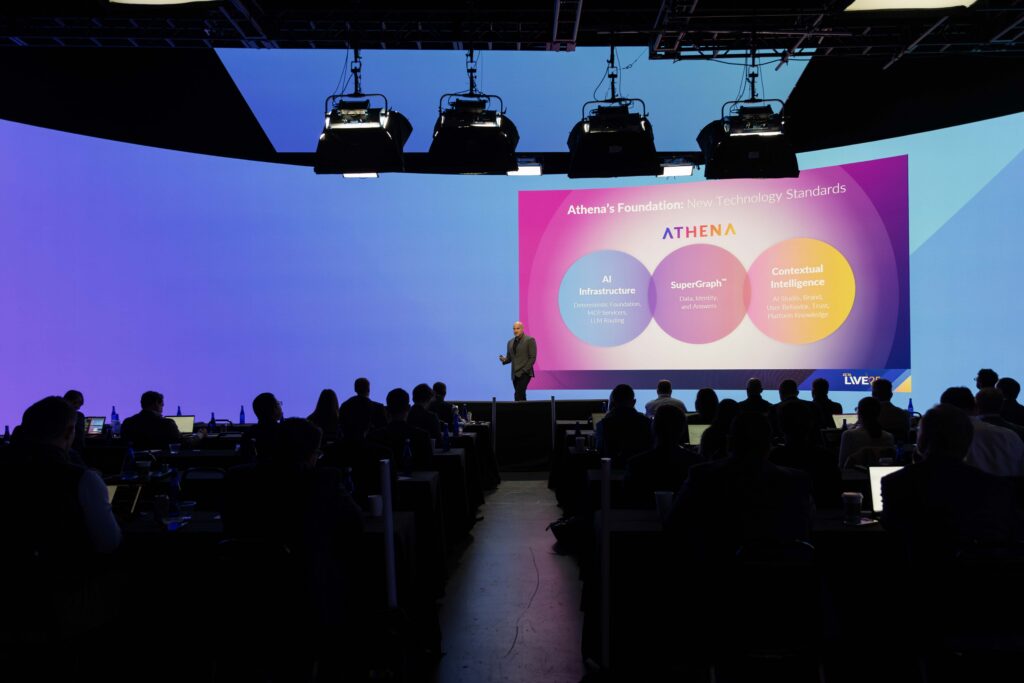
Eventually, the deck has to leave the laptop. Rehearse with the real file on the real screen, early enough to fix what you find. Call it the wall test: every slide earns its place at full size or goes back for a rebuild. Walk to the back of the room. Watch the webcast layout on a laptop. That chart everyone approved at the conference table may look very different from either seat. Better to have that conversation during rehearsal than watch an investor lean forward and give up.
This is also where slide counts get honest. Forty slides in a twenty-five-minute agenda block can look manageable in a spreadsheet. Add the speaker’s explanation, transitions, and a pause on the number that matters most, and the math starts to change. Time the actual delivery. If the presenter rushes the same chart every run, stop asking them to talk faster. Work out whether the chart needs a simpler explanation or the argument needs more time.
Leave time to rehearse the moments that can interrupt a good presentation:
A leader should not have to discover the clicker behavior in front of investors. Record a portion of rehearsal and review the output the remote audience will actually receive.
Finally, give the reference PDF to someone who has not sat through six weeks of review. Ask them to explain the main claim and identify the assumptions behind it. The internal team knows what every abbreviation means and remembers the explanation that disappeared three drafts ago. A fresh reader finds those gaps quickly.
Six months later, someone may open slide 37 without ever seeing slides 1 through 36. An analyst forwards a chart. A new investor checks an assumption. A colleague pulls a page into a briefing. Write takeaway titles that still make sense in those settings, put the reporting period and units beside the figures, and explain unfamiliar abbreviations on first use. The chart needs enough context to travel. You won’t be there to fill in what it leaves behind.
Open the exported PDF and check it as a reader would:
Export settings can undermine a careful design, especially when slides become flattened images. Selectable text is a useful check, but it does not by itself establish accessibility; review the document structure as well.
Give the deck a durable home alongside the replay and transcript, whether that is the main IR site or an Investor Day microsite. Label the event date and the version clearly. Keep links consistent enough that a follow-up email can take an analyst straight to the relevant material. The person looking for your margin assumptions six months later should not have to reconstruct the event to find them.
And then there’s the impression the whole thing leaves. A coherent deck makes it easier to see a coherent business. When segment colors mean the same thing in every section and the charts speak one visual language, the audience can spend its attention on management’s argument. If each section introduces new conventions, investors have to stop and decode the presentation again. Don’t make them do the work your team should have finished in rehearsal.
Work out the screen dimensions, camera plan, and webcast layout before the design team builds the template. Let the Investor Day production team see the slides as they take shape, and review both versions with IR and finance. That gives everyone a chance to flag a problem before a fix means reopening a deck the whole company has already approved.
If your team is already building the deck, bring a few slides to the production team now. Show them the dense chart, the animation, the slide nobody can agree on. Those are useful conversations to have while there’s still time to do something about them.
The way investors find companies has changed, and the data is hard to argue with. Betterment’s 2026 survey found that 60 percent of Gen Z investors get financial news from social media, and nearly half say AI has influenced a financial decision. Discovery now happens in feeds, in search results, in AI answers, and in creator content, often long before anyone opens an IR website.
The standard advice follows quickly. Add channels. Borrow capabilities from digital marketing. Get IR and marketing teams collaborating.
All of that is reasonable, and all of it stops one step short. Look closely at the companies actually winning this shift and a pattern appears. Their advantage is not channel strategy. It is that they produce things worth putting in the channel.
Digital investor relations means communicating with investors through the channels where they already spend attention: social platforms, video, search, AI tools, email, and virtual events, alongside the traditional program. Making it work requires three things. It requires a consistent presence in those channels, content that meets their standards, and a production system capable of delivering that content reliably while staying within disclosure requirements such as Regulation FD.
Most programs invest in the first requirement and improvise the other two. That is the gap.
Here is what the channel-first framing misses. When your quarterly story reaches an investor in a feed, it does not arrive alone. It arrives between a streaming trailer, a consumer brand film, and a creator who edits better than most corporate teams. The feed is a shared stage, and everyone on it is graded against everyone else.
Institutional audiences would forgive a dry deck because they were paid to read it. A retail investor scrolling past your earnings post owes you nothing. You earn the next eight seconds or you do not.
This is why the examples that circulate as digital IR success stories are all, at bottom, production stories. BETA Technologies turned its Q2 results into a nine-page LinkedIn carousel with bold aviation imagery, making dense earnings content feel native to the platform. Goldman Sachs cut a timely executive point of view from its long-form content into a clip built for the feed. Block went further into the program itself, sourcing shareholder questions from X for its Q2 2026 earnings call and launching an AI chatbot that answers investor questions from its public disclosures.
Different tactics, one common trait. Each is a deliberately made thing: designed, edited, structured, and produced. None of them is a channel decision. Every one is a production decision.
Call the underlying problem the production lag. It is the distance between how fast companies adopted digital distribution and how slowly they upgraded what they distribute.
The pattern is familiar. The earnings call streams online, but it is still a phone line over a static slide. The IR site relaunched on a modern platform, but the hero video is four years old. The company opens a social account for investors, then fills it with press release links, because links are what the program knows how to produce.
Digital channels do not create investor confidence. They transmit whatever confidence the content carries, faster and to more people than ever. Investors evaluate more than numbers. They evaluate coherence, command, and credibility, and production quality feeds all three. When AI tools summarize your company from what you have published, thin content compounds the problem, because the machine can only be as clear as the material you gave it.
There is a second thing the channel-first advice misses. Feed content has to come from somewhere, and the companies doing this well are not generating it from scratch each week. They are cutting it from flagship productions.
A well-produced Investor Day yields months of derivative content: executive clips, strategy explainers, segment stories, design assets. An earnings cycle produced with intent yields the same. The Goldman example is exactly this model, a strong long-form asset harvested for the feed. This is where disciplined Investor Day production changes the economics of the whole digital program. Produce the flagship well once, and the channels feed themselves.
Produce the flagship poorly, and no amount of channel strategy can save the cutdowns. You cannot clip your way out of a security-camera webcast.
Sophisticated companies treat digital IR assets as one connected system rather than separate projects. In practice, the system has four parts.
A video program, not a video. Recurring executive messages, earnings context, and strategy films, planned as a calendar and produced to one standard. This is where consistent corporate video production compounds, because each piece trains the audience to expect the next.
Presentations designed for the screens they will actually live on. The deck that works in a ballroom often dies on a phone. Digital-first presentation design assumes the small screen and the short attention span from the start.
Events built as broadcasts. Hybrid Investor Days have two audiences, and the remote one is usually larger and increasingly retail. The stream deserves first-class production, not a locked wide shot of the stage.
Web destinations built for the moment. High-stakes stories deserve dedicated digital ground. Purpose-built IR microsites and proxy fight sites give a complex narrative one address and one controlled experience, which also gives AI tools and search engines a clean, authoritative source to draw from.
Start with an audit, not a rebuild. Watch your last three investor-facing videos on a phone, the way a retail investor would meet them. Sit through your own webcast replay. Ask an AI tool what your company does, and see what your published content taught it.
Then pick the next flagship moment on your calendar and produce it to the standard you want the whole system to reach. One full-service video production engagement executed at that level resets expectations more effectively than any strategy memo, and it hands your digital channels a year of material.
The retail shift is not a reason to make IR promotional. It is a reason to make IR watchable. The companies that win this era will not be the ones with the most channels. They will be the ones whose content deserves the channels they already have.
Planning an Investor Day, an earnings evolution, or a digital IR upgrade? We should talk before the production decisions get made by default. Reach out through our contact page.
Increasingly through social media, creators, search, and AI tools. Betterment’s 2026 survey found 60 percent of Gen Z investors get financial news from social platforms, which means many investors form a first impression well before visiting an IR website.
Digital investor relations is the practice of reaching investors through digital channels such as social platforms, video, webcasts, AI-accessible disclosures, and virtual events, with content produced to the standard those channels demand.
Early examples include AI chatbots that answer investor questions from public disclosures, as Block has done, and structuring published content so AI search tools summarize the company accurately.
The strongest programs cut digital content from flagship productions: Investor Days, earnings videos, and executive films. Well-produced source material yields months of platform-native clips, carousels, and explainers.

I have sat in two chairs during my career, and they face each other.
For years I sat on the client side of investor relations for the largest hospitality asset management firm publicly traded at that time. I lived the quarters, the investor days, the announcements that could not slip, and the moments when shareholder activism turned a normal week into a war room. Then I crossed the table. I co-founded an investor relations creative production agency built specifically for those moments. Earlier this year I presented this dual perspective to one of the leading strategic communications firms in the country, and the conversation that followed convinced me it was worth writing down.
This piece is for agency leaders. Not because agencies are the problem. Because agencies are closest to the fix.
Every public company has a short list of moments where trust is gained or lost based on execution. Investor Days. IPO roadshows. Management transitions. Activist situations. Transaction announcements. The strategy behind these moments can be months in the making. The judgment of them happens in hours.
Here is what I did not fully appreciate until I had worked both sides. The client and the agency are experiencing the same moment through different fears.
The client is worried about their audience. Investors, analysts, employees, the board. Trust with those audiences is gained or lost in real time, and there is no replay.
The agency is worried about the client. Their trust is gained or lost based on how the moment executes. A brilliant strategy that stumbles on stage does not get graded as a brilliant strategy.
Both sides face the same unforgiving math: high complexity, hard deadlines, no second chances. Which means both sides need the same thing. Strategic intelligence, creative excellence, and flawless execution, together, from the start. Not one or two of the three. All three.
In all my years on both sides of the table, I can count on one hand the failures I attribute to a bad strategy. Almost none of the breakdowns I witnessed came from weak thinking. The strategists were smart. The teams were competent. Everyone was well-intentioned.
The breakdowns came from fragmentation.
Too many vendors. Too many handoffs. A video team that never spoke to the presentation designer. A webcast provider who saw the run of show for the first time the night before. An event crew executing a stage design that contradicted the narrative the strategy team had spent months refining. Each vendor doing their fragment competently, and nobody accountable for the whole.
Investor relations and communications teams are still piecing together vendors and tools, each handling a fragment of what should be one unified, controlled experience. When the stakes are low, the seams don’t show. When the stakes go up, the seams are the first thing to tear.
When I moved from the client chair to the agency chair, three things became obvious quickly.
Most agencies outsource the services their clients judge them on. Very few firms have the internal resources to be an all-in-one solution, so production gets subcontracted to third parties. That is a rational business decision. It is also a quiet transfer of risk. The agency’s reputation now rests on vendors the client never chose and the agency may barely know.
Most production vendors don’t understand the IR landscape. They can execute. They can light a stage and cut a film. But they don’t know why a disclosure review changes an edit, why the sequencing of a guidance slide matters, or why an activist situation changes the tone of everything. They execute. They don’t develop strategy. In high-stakes capital markets moments, that gap is where mistakes live.
The integration gap is the opportunity. What the market lacks is a partner with a foundational understanding of the IR space and the creative acumen to produce work that holds up on the biggest stage. Not a strategy firm that dabbles in production. Not a production shop that skims a press release. A partner fluent in both.
Integration is not a philosophy. It shows up in specific moments. Three patterns come up constantly.
Management changes, major announcements, shareholder activism. These are the moments when a narrative needs visual components fast: explainer and narrative films, launch videos, and microsites built to hold and control the story. Speed and message control matter equally, which is why full-service video production and web need to run as one workstream, not two.
Pre-IPO roadshows and Investor Days. There are no second chances at a first impression. These moments demand live, hybrid, or virtual event production, executive films, animation, presentation design, and end-to-end project oversight, all pulling in the same direction. This is Investor Day production as a discipline, not a checklist of deliverables.
Sometimes the client already has the pieces. What they lack is orchestration. The internal point of contact is overwhelmed, and the agency needs someone acting as executive producer: managing vendors, owning timelines, overseeing logistics, and reducing risk for the agency and the client at once. This is the least glamorous version of the work and often the most valuable.
Earlier than you think. The pattern I saw repeatedly on the client side, and see now from the agency side, is simple: earlier involvement leads to broader impact and less risk.
When production joins at the end, it inherits decisions it cannot fix. The venue is booked, the deck is locked, the timeline is fixed, and the production partner is reduced to damage control. When production joins at the start, staging informs the narrative, the film supports the presentation, the microsite extends the event, and the whole moment reads as one coherent experience.
And to be clear about what this is not. A production partner should never replace an agency’s strategy. The right model enables the agency team to perform at its best and protects the long-term trust the agency has built with its client. The strategy firm owns the thinking. The production partner makes the thinking undeniable in the room.
If you lead a strategic communications or IR advisory firm, here is the honest audit I would run.
Look at your last three high-stakes client moments. Count the vendors. Map the handoffs. Ask who was accountable for the whole experience rather than a fragment of it. If the answer is “our account lead, on top of everything else,” you have found your exposure.
Your clients do not separate your strategy from its execution. Investors in the room do not either. They evaluate confidence, coherence, and credibility as a single impression. The firms that win the next decade of this work will be the ones that close the gap between what they recommend and what actually happens on stage, on screen, and online.
I have sat in both chairs. The view is better when they are on the same side of the table.
Jeremy Robinson is the co-founder and CEO of Cardboard Spaceship, a production partner for investor relations and high-stakes corporate communications. If a moment that matters is on your calendar, the best conversation is the one that happens early. Reach out at [email protected].
What is an investor relations production partner? A production partner for IR is a firm that executes the visual and experiential components of investor communications, including video, live events, presentation design, and microsites, with working fluency in capital markets context. It complements a strategy or communications firm rather than replacing it.
Why do Investor Days break down even with strong strategy? Most breakdowns come from fragmentation rather than weak ideas. When multiple disconnected vendors each handle a piece of one investor experience, accountability gaps appear at exactly the moments when deadlines are least forgiving.
Should agencies outsource production for high-stakes client moments? Outsourcing itself is not the problem. Outsourcing to vendors who lack IR fluency, without a single point of accountability for the full experience, is. Agencies protect their client relationships by choosing integrated partners who understand the stakes.
When should a production partner join an engagement? As early as possible. Early involvement lets production decisions inform strategy, broadens the partner’s impact, and reduces execution risk. Late involvement limits the partner to damage control.
Every IR team plans for the expected: earnings, guidance, investor meetings, and board updates. Then an executive departure, market rumor, activist approach, or unexpected miss changes the agenda in hours.
Q4’s August 2026 recap of Confessions of an IRO: Episode 3 brings together Jamie Stanton, Irina Zhurba, Isabel Vilela, and Geoff Callow to examine those moments. Their discussion offers practical lessons for investor relations teams. It also exposes a production reality: teams can move only as fast as the communication system they built before pressure arrived.
Investor communication infrastructure combines a current equity narrative, trusted executive voices, established digital channels, practiced response workflows, and consistent content production. Companies maintain these assets before a crisis so they can verify facts, respond quickly, and protect credibility under pressure.
When unexpected news breaks, analysts call, investors ask questions, and leadership feels pressure to respond immediately. The IR team should first confirm what happened, determine any disclosure obligations, and align legal, finance, corporate communications, and leadership around the facts.
The Q4 panelists urged teams to distinguish among market rumors, reporting errors, executive departures, and material events before they speak. Geoff Callow cautioned against a reflexive response without complete information. A short acknowledgment can protect credibility while the team verifies the details.
Standing infrastructure gives teams the confidence to wait for accurate information. A prepared team already knows who approves the message, which channel will carry it, who will speak, and how production will support the response. That clarity prevents silence from turning into panic.
Activist pressure rarely starts with a public letter. In the Q4 discussion, Callow described an activist who engaged privately for 12 to 18 months before going public. Zhurba noted that a public campaign can continue for two to three years.
IR teams should monitor the share register, study changes in investor tone, and listen for the question behind each repeated concern. An activist gains leverage when existing shareholders stop trusting management’s explanation and start considering a competing story.
That long runway creates an opportunity. Teams can document investor concerns, update the equity narrative, and strengthen shareholder relationships before a campaign starts. Our guide to why activist defense starts before the first letter explains how companies can use that time.
Once a contest reaches the public, the company needs a sustained content operation rather than a single press release. Purpose-built microsites and proxy fight sites give shareholders one source for the company’s argument, evidence, materials, and answers.

Management may focus on the five-year opportunity while investors focus on the next few quarters. Strong IR teams hold both views at once and identify the evidence that separates them.
Zhurba recommended bringing investors’ exact words into leadership conversations. Verbatim perception feedback gives executives evidence instead of opinion. She also warned that one miss can erase a year of credible calls, so teams should set expectations they can meet.
When investors misunderstand the business, a capital markets day can reset the narrative. A dense deck and conference line cannot carry a complex repositioning. The market needs clear sequencing, strong presentation design, confident speakers, and disciplined Investor Day production.
Format performs strategic work. Investors judge the plan and the team’s command of it at the same time. Our guide, Your Investor Day Is a Broadcast. Treat It Like One., explains how production quality supports the investment narrative.
A CEO who first appears online during an activist campaign can look defensive. An executive who communicates consistently through video, interviews, articles, and social channels enters the same moment with an audience and a record of credibility.
Corporate communications and IR should define the subjects each executive can credibly own, create a regular publishing cadence, and let formal disclosure lead every market-sensitive message. Practice also matters. Executives who rehearse on camera communicate with greater clarity when the stakes rise.
A full-service video production program helps leadership maintain that presence. No team can create trust in a week. Teams must earn and reinforce it over time.
Cardboard Spaceship helps corporate communications teams turn executive expertise into consistent, credible video content.
Prepared companies maintain five connected assets:
Prepared companies keep the narrative current, maintain a digital home for the story, rehearse leaders during calm periods, and treat major events as strategic resets. When a crisis changes the plan, those companies respond with the calm of a team that trusts its delivery system.
Preparation cannot prevent every surprise. It changes the quality and speed of the response. In capital markets, investors remember both.
Audit your communication infrastructure before you need it. Does leadership maintain an established voice? Do investors have a digital source of truth? Can your team publish a credible response within a day? If any answer gives you pause, start the work now.
If your calendar includes a high-stakes moment, or your team wants one less system to build under pressure, talk with Cardboard Spaceship.
The IR team should verify the facts, identify any disclosure obligations, and align legal, finance, corporate communications, and leadership before it responds. A short acknowledgment can give the team time to confirm the details without creating speculation.
Companies protect credibility when they communicate through established channels, match every claim with evidence, set expectations they can meet, and update investors consistently. Preparation gives teams the confidence to prioritize accuracy over speed.
An activist may engage privately for 12 to 18 months before going public, and a public campaign can continue for two to three years. Companies need a sustained communication program for the full period.
A capital markets day helps a company explain its strategy, operating model, leadership, and long-term value drivers in greater depth. Companies often use the event to address a valuation gap that stems from market misunderstanding.
Executives who communicate consistently build familiarity and trust before pressure arrives. During a crisis, those leaders can extend formal disclosure through channels that investors already recognize.
A microsite gives shareholders one controlled source for the company’s argument, evidence, presentations, video, and FAQs. That clarity helps companies maintain a consistent reference point during proxy contests and other high-stakes situations.