The second quarter of 2026 was the strongest stretch for new listings in years. One historic mega offering dominated the headlines, but the more useful signal sits underneath it. According to recent capital markets analysis, U.S. IPO volume rose meaningfully both quarter-over-quarter and year-over-year, Europe continued its recovery, and billion-dollar offerings appeared across technology, industrials, energy, and digital infrastructure.
The window is open. But it is not open for everyone in the same way.
The same analysis makes a point that should matter to every pre-IPO leadership team. Investors remained selective, favoring companies with differentiated growth stories and strong fundamentals. Read that carefully. Fundamentals alone did not carry the quarter. Differentiated stories did.
That is a communications finding hiding inside a market report. And it points to a gap in how most companies define IPO readiness.
It is the work of building a company’s public-market storytelling system before the offering window opens. It includes the roadshow presentation, executive on-camera preparation, an investor relations site or microsite, listing day content, and the first-year cadence of earnings and investor communications.
A recovering IPO market does not lower the bar. It raises it. When more companies come to market, investors compare more stories side by side. The offerings that priced well in Q2 shared a pattern: clear positioning inside long-term structural themes, credible leadership, and a narrative investors could understand quickly and repeat accurately.
That last part deserves more attention than it gets. During a roadshow, your story is retold dozens of times without you in the room. Analysts summarize it for portfolio managers. Portfolio managers summarize it for investment committees. Every retelling is a compression test. Stories that were built with discipline survive compression. Stories that were assembled in the final six weeks before pricing usually do not.
Ask most companies what IPO readiness means and you will hear about audited financials, governance structure, internal controls, and legal preparation. All of it is necessary. None of it is sufficient.
Here is what typically happens instead. The financial and legal workstreams get 18 months of runway. The communications workstream gets a sprint. The roadshow deck gets built under deadline pressure by people who are simultaneously drafting an S-1. Executives who have never presented to institutional investors on camera get minimal preparation. The IR website goes live days before it needs to perform. Listing day gets treated as a photo opportunity rather than a produced communications moment with a global audience.
The result is a company with clean financials and an underbuilt story. In a selective market, that gap shows up in the order book.
Sophisticated issuers treat communications as a parallel workstream with its own timeline. Four assets deserve early investment.
The roadshow presentation. This is not a slide deck. It is the master narrative document of the entire offering. Every subsequent communication, from testing-the-waters meetings to the first earnings call, inherits its structure. Companies that invest in narrative architecture and presentation design early give every later asset a foundation. Companies that do not spend the first public year fixing inconsistencies.
Executive on-camera readiness. Public-market investors evaluate leadership constantly, on webcasts, in recorded interviews, and across virtual meetings. An executive who is precise and confident on camera compounds credibility. One who is visibly uncomfortable creates friction that no amount of financial disclosure offsets. Purposeful corporate video production, built around each leader’s natural strengths, closes that gap before it becomes visible to the Street.
Digital infrastructure. Your IR site is where analysts verify what they heard. It needs to carry the same narrative, the same design system, and the same clarity as the roadshow itself. For companies managing complex debuts, dedicated investor relations microsites serve as a controlled source of truth: presentation materials, webcast access, FAQs, and governance messaging in one place.
The listing day moment. Bell ceremonies, broadcast segments, and launch content reach employees, customers, and investors simultaneously. Treating the day as professional live, virtual, and hybrid event production, rather than a ceremonial afterthought, turns a single morning into a durable asset library.
The Q2 data shows both paths to the public markets remain active, with traditional IPOs regaining share as issuer confidence strengthens. From a communications standpoint, the choice of path changes the mechanics, not the requirement. A de-SPAC transaction still demands a clear narrative, prepared executives, and credible investor-facing infrastructure. In some ways it demands more, because SPAC investors can redeem, which makes the story a retention tool, not just a sales tool.
For teams eyeing a 2027 window, a practical sequence looks like this.
Twelve or more months out, build the core narrative and test it against the hardest questions institutional investors will ask. Nine months out, translate that narrative into a designed presentation system and begin executive communications preparation. Six months out, develop the IR digital presence and begin producing the video assets the roadshow and listing day will need. Ninety days out, rehearse. Not once. Repeatedly, on camera, under conditions that resemble the real thing.
None of this requires waiting for bankers to set a timeline. All of it makes the banker-driven sprint dramatically easier when it arrives.
We produce high-stakes investor communications for public and pre-IPO companies, and the pattern we see is consistent. The companies that perform best in front of investors are not the ones with the biggest budgets. They are the ones that treated narrative, design, video, events, and digital as one connected system rather than separate vendor deliverables.
We saw a structurally similar dynamic with Yesway. The company was reintroducing its leadership and reframing its growth story for an investor audience that had not heard from it directly in years. That is, functionally, what a debut is. The content had to work quickly, convincingly, and at the standard a public company’s most critical audience demands. The production system was built to protect that outcome across five executives and three countries.
An IPO compresses the same challenge into a shorter window with higher stakes. Investor audiences do not just evaluate numbers. They evaluate confidence, coherence, and credibility, and production quality either reinforces those signals or works against them.
The market data says the window is reopening and investors are selective. The practical translation is simple. Your financials get you into the conversation. Your story, and how well it is built, told, and produced, determines how the conversation goes.
If a public debut is on your horizon, the best time to pressure-test your communications readiness is before anyone sets a pricing date. If you want a second set of eyes on what that system should look like for your company, we are glad to compare notes.
Ideally 12 months or more before a target window. The narrative and executive preparation workstreams benefit most from runway. Compressed timelines are workable, but they trade polish for speed.
No. Design is the final layer. The roadshow presentation is the master narrative for the offering, and every later communication inherits its structure. Narrative architecture comes first, then visual system, then production.
Yes, and sometimes more. De-SPAC investors can redeem shares, so the story functions as a retention tool. The narrative, executive readiness, and digital infrastructure requirements are equivalent to a traditional debut.
A controlled, consistent source of truth: the company narrative, presentation materials, webcast access, leadership profiles, governance information, and FAQs, all aligned with the roadshow’s messaging and design.
Listing day is a produced broadcast moment reaching investors, employees, and media at once. Companies that plan it as an event production capture content that supports investor communications for months afterward.
Getty Images has been one of the biggest names in visual content for decades, and Getty Custom Content is its answer for brands that want imagery created specifically for them: a global creator network, exclusive selected assets, and established rights infrastructure.
But Getty is not the only way to build a custom brand footage library.
A growing set of production companies, creator networks, and custom stock specialists now solve the same underlying problem. How do you create a large volume of high-quality, on-brand visual content that works across campaigns, instead of producing everything one project at a time?
If you’re evaluating Getty Custom Content alternatives, the most useful question is not who can shoot the footage. It is this. What kind of content library are you trying to build, how will you use it, and which production model creates the most long-term value?
Here is the framework sophisticated brands use to decide.
Getty Custom Content is Getty’s custom production offering for brands that need exclusive photography or video built around a specific brief. Unlike traditional stock, which already exists and can be licensed by many customers, Custom Content is produced for the commissioning brand alone.
That distinction matters. You are not buying stock. You are commissioning a stock-style content library for your brand.
This is the biggest distinction, and the one most often missed.
A campaign shoot is optimized around a specific edit. Custom stock is optimized around coverage. Instead of capturing only what today’s commercial requires, the crew intentionally captures variation. Different compositions, focal lengths, talent combinations, actions, environments, and framings. Vertical and horizontal. Close-ups and wides.
The goal is footage that stays useful long after the original campaign ends.

At Cardboard Spaceship, licensed stock footage productions are structured specifically around building an evergreen library rather than a single deliverable. The model emphasizes versatile coverage that can be re-contextualized across messages, channels, and seasons.
When comparing providers, ask one question. How is your production process different when the goal is a reusable footage library? If the answer sounds exactly like their commercial process, they are not really offering custom stock.
Shoot cost alone is a misleading number. The metric that matters is cost per usable asset.
A production that generates 150 highly usable clips creates fundamentally different economics than one that generates 20, regardless of the day rate. Before signing, ask prospective partners:
A provider that structures shoots as stock-ready productions should be able to answer these questions immediately, with specifics.
Different providers use very different creative models, and none is inherently better.
Getty’s advantage is scale. Its contributor network spans markets and geographies, which matters for multinational brands commissioning content across regions.
Curated production models sit at the other end. Cardboard Spaceship’s Custom Stock approach selects experienced filmmakers around the creative needs of each production, with an emphasis on cinematic quality and creators who understand how footage functions inside a licensed library.
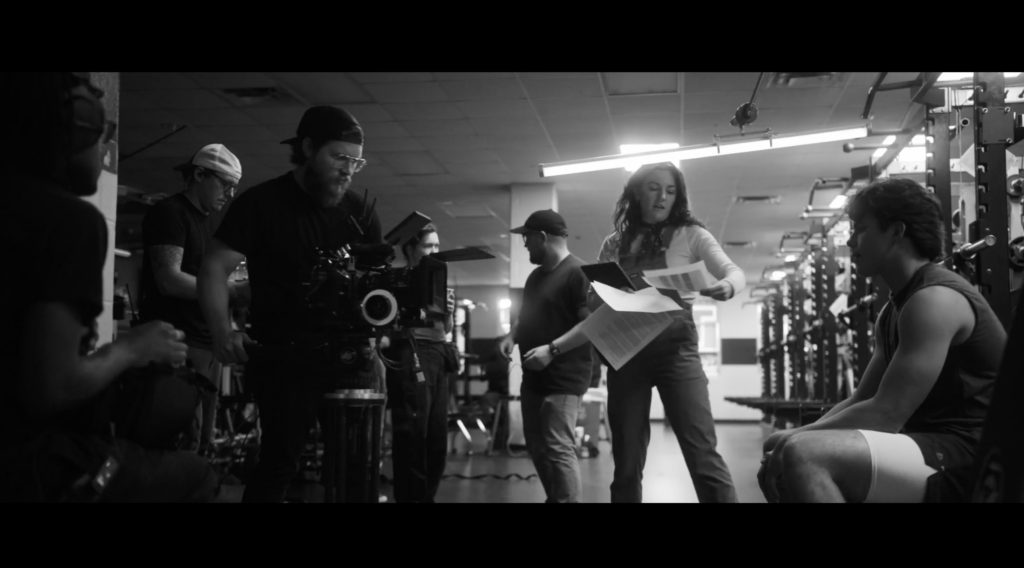
Distributed creator platforms occupy a third position, connecting brands with photographers and videographers who produce product-centered content at volume.
If geographic reach is the priority, scale wins. If cinematic consistency and creative direction are the priority, curation wins. Be honest about which one your brand actually needs.
“Custom” can mean very different things. Before choosing a partner, understand who controls creative direction, casting, locations, wardrobe, shot lists, camera style, and final asset selection.
For some brands, the goal is simply content more relevant than generic stock. For others, every frame needs to look unmistakably like the brand. That second standard requires more than sending creators a brief. It requires a production partner who aligns on brand, audience, and distribution before a camera turns on, then lets the client curate the strongest footage into the final library.
When interviewing potential partners, ask one simple question. Who makes the creative decisions? The answer tells you most of what you need to know.
Great footage is useless if nobody knows where the company is allowed to use it. Rights should be one of the first things you compare, not a detail resolved after production.
Any credible provider should answer these clearly, in writing:
Cardboard Spaceship delivers selected clips as cleared, licensed assets intended for broad use across paid, owned, and earned channels. Do not assume every provider’s definition of custom content includes the same rights.
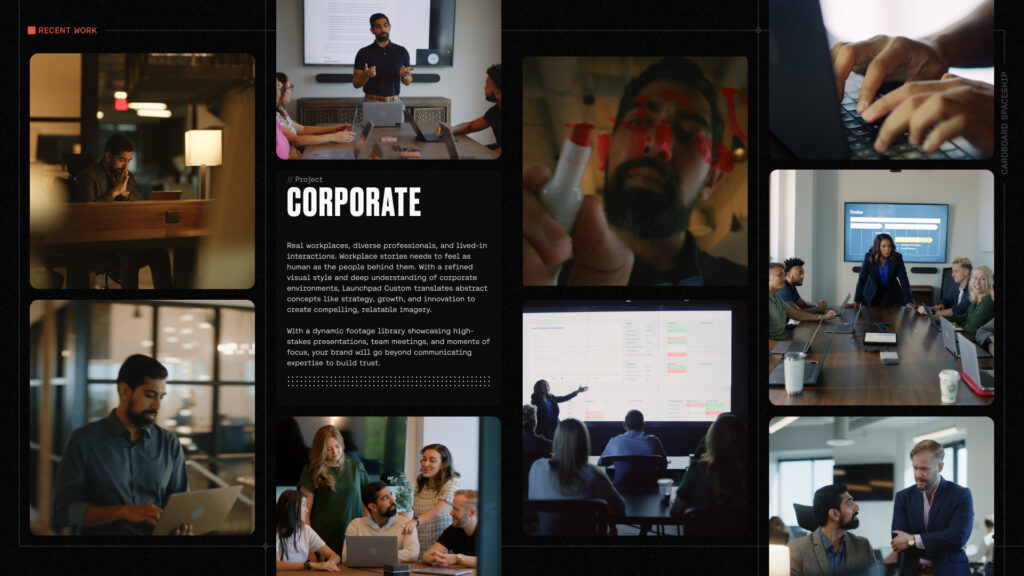
A strong custom library should reduce how often your team says, “We don’t have anything that works for this.”
Consider everywhere a single library may eventually appear. Paid and organic social. Websites and landing pages. Recruiting campaigns. Investor presentations and corporate video communications. Product launches, trade shows, and brand films.
The footage does not need to be created for any one of those deliverables. It needs to be flexible enough to work in many of them. That is why evergreen actions, clean environments, and strong coverage carry so much value.
The real return on custom stock is not what the footage does in its first month. It is what the footage eliminates the need to reshoot over the next two or three years. Content that compounds instead of expiring with a campaign.
Not every project should be a library. If your real need is one hero commercial or a single brand film, designing the shoot around custom stock adds complexity you do not need. A full-service video production engagement built around that one deliverable will serve you better.
The decision comes down to the question you are asking. “How do we make this one piece exceptional?” points to traditional commercial video production. “How do we stop starting from scratch every time we need content?” points to custom stock.
This is the distinction that should drive the entire evaluation.
Traditional stock is an expense. A well-constructed custom stock library behaves differently. It becomes a brand asset. Each production adds new people, environments, products, and stories to a growing visual ecosystem, and every reuse increases the return on the original investment.
The question stops being what the shoot costs. It becomes how many future pieces of content the shoot can help you create.
If the goal is simply another video, commission another video. However, if the goal is a proprietary footage library that gets more valuable every time it is used, build a proprietary custom stock footage library that delivers more value with every campaign. Choose a provider that creates versatile footage for long-term use across marketing, advertising, social media, and future productions.
Cardboard Spaceship helps brands create reusable video content libraries that maximize the value of every shoot. Through our custom stock model, we deliver premium, cinematic content – purpose-built for your brand, and designed to work across campaigns, channels, and time.
If that is the library you are trying to create, we should talk.
There is no single best alternative for every organization. Brands seeking premium cinematic footage built as an evergreen library are best served by a curated production model like Cardboard Spaceship’s Custom Stock. Brands needing distributed product content across markets may prefer a creator-network platform. The right choice depends on what you are building.
Custom stock footage is professionally produced video created around a specific brand but intentionally shot for reuse across many future projects. It can feature the brand’s people, products, locations, and visual style while retaining the versatility of stock.
A commercial shoot is optimized around completing one specific edit. A custom stock production is optimized around creating a large collection of individual clips that support multiple future campaigns and deliverables.
It depends on the agreement. Rights, exclusivity, and ownership vary by provider, so examine the specific license rather than assuming “custom” means unrestricted ownership. Cardboard Spaceship delivers selected Custom Stock clips cleared and licensed for broad brand use.
It is most valuable for organizations with ongoing video needs across multiple campaigns and channels. If footage from one production can be reused in paid media, websites, social, presentations, and future edits, evaluate the cost across all of those uses, not against a single video.

The IPO window is open again. After several muted years, offerings are moving steadily across sectors, not just the headline mega deals, but retailers, restaurant groups, industrial operators, and a long queue of private-equity-backed companies whose exits were delayed by the last cycle. International demand is building, and companies eyeing 2027 debuts are already being told to refine their equity story and start investor conversations early.
Nearly every one of those equity stories now includes AI. That’s the problem.
When every prospectus claims an AI advantage, the claim itself stops differentiating anything. Institutional investors have adjusted accordingly. The question they asked in 2023, “are you exploring AI?” has been retired. The question now is harder: show us what you’ve deployed, what it measurably changed, and why we should believe the numbers. Companies that arrive at the roadshow with an exploration narrative are answering a question nobody is asking anymore.
This shift is usually framed as a messaging challenge. It’s more accurate to call it a production challenge. A measurable AI strategy can’t be communicated with the same materials that carried an aspirational one. Bullet points that say “AI-powered” were adequate when the bar was intent. Now the bar is evidence, and evidence has format requirements. If you would like to watch a great interview about this, take a look at Anton Nicholas, Chief Executive Officer at ICR, Inc. interview at Nasdaq with marketinsight
An AI-native company gets a degree of benefit of the doubt. Its product is the demonstration.
A restaurant group claiming AI-driven demand forecasting gets no such courtesy. Neither does a retailer citing machine-learning inventory allocation, or an industrial operator describing predictive maintenance. For these companies, AI is an operating claim about businesses investors think they already understand and investors have well-calibrated instincts for the difference between a deployed system and a pilot program wearing a press release.
That skepticism is earned. Regulators have pursued companies for overstating AI capabilities, and analysts now routinely probe AI claims the way they probe same-store sales: with follow-up questions designed to find the floor under the language. “We use AI across our operations” invites exactly the follow-up a management team least wants on a roadshow: where, specifically, and what changed?
The companies that clear this bar share a communication pattern, not a technology pattern. They name the system, quantify the before-and-after, forecast accuracy, labor hours, waste reduction, throughput, and they scope the claim honestly, which paradoxically increases its credibility. And critically, they show the deployment rather than describing it.
Here is where most pre-IPO communications programs underinvest. Management rehearses the language of the AI story extensively and gives almost no thought to its physical and visual form. But investors don’t just evaluate the numbers in a high-stakes presentation; they evaluate confidence, coherence, and credibility, and format carries a surprising share of that signal.
Consider the difference between two versions of the same claim.
Version one: a slide reading “Proprietary AI demand forecasting deployed across 400 locations,” delivered verbally.
Version two: ninety seconds of footage from an actual location, the forecasting interface a general manager sees at 5 a.m., the prep quantities it generated, the manager explaining what changed in her ordering, followed by a single visualization connecting the rollout timeline to the waste-reduction curve.
Both are truthful. Only one is verifiable by watching. The second version does something the first cannot: it lets the investor feel like they’ve conducted diligence rather than received a pitch. That feeling is worth more than any adjective.
This is why demonstration footage belongs in the roadshow toolkit for any company making operational AI claims. Well-produced full-service video production of systems working, in the kitchen, on the fulfillment floor, inside the maintenance bay — converts an abstract claim into observed reality. It also travels: the same footage supports the roadshow, the Investor Day, the analyst-education library, and the earnings communications that follow.
Demonstration only lands if the presentation architecture sets it up. The most common structural failure in AI sections of investor presentations is the inventory approach: a dense slide listing every AI initiative underway, which reads as breadth and registers as noise.
The disciplined alternative sequences one claim at a time: state the operational problem, name the deployed system, show it working, quantify the result, then connect it to the financial line item investors already track. Presentation design in this context isn’t decoration; it’s the argument’s load-bearing structure. A narrative this dependent on sequencing shouldn’t be assembled by whoever has the slide template open latest at night.
A IPO roadshow meeting ends. An Investor Day ends. The analyst’s verification process doesn’t. In the weeks after a management presentation, analysts rebuild the story from whatever materials persist, and if the AI evidence lived only in the room, it decays into a line in their notes.
This is the argument for treating investor microsites as part of the AI story’s infrastructure rather than an afterthought. A well-architected destination holds the demonstration footage, the deployment metrics, the methodology behind the numbers, and management’s framing, organized the way an analyst actually works, not the way a marketing site converts. For a newly public company, it becomes the canonical source that keeps the AI narrative consistent across the roadshow, the first earnings cycles, and the first Investor Day.
Video, presentations, events, and microsites aren’t separate deliverables here. They’re connected parts of one investor experience, and the AI story is only as credible as its weakest format.
The broader market context makes this discipline more valuable, not less. A reopening IPO market means more offerings competing for the same institutional attention, and a deep private-equity-backed pipeline means many of those offerings will be operationally similar companies telling operationally similar stories. In that environment, the companies that stand out won’t be the ones with the most AI language in the prospectus. They’ll be the ones whose AI story an analyst can watch, verify, and repeat to their investment committee without hedging.
That’s the practical takeaway for any team targeting a 2027 debut: start producing the evidence now. Film the deployments as they scale. Build the metric visualizations while the before-and-after data is clean. Architect the presentation and the digital destination as one system. The equity story refinement everyone recommends is, in large part, a production program, and it takes longer than the final quarter before the filing.
If you’re preparing a roadshow or a first Investor Day and the AI section of your story still lives in bullet points, that’s a solvable problem, and solving it early is considerably cheaper than solving it during testing-the-waters meetings. We’re always glad to talk through what demonstration would look like for your specific operation.
Measurable deployment rather than exploration narratives: named systems, quantified operational impact, honest scoping of what’s rolled out versus piloted, and evidence that can be verified — ideally visually.
By treating AI as an operating claim with the same evidentiary standard as any other: show the system in production, quantify the before-and-after on metrics investors already track, and connect deployment to unit economics.
AI-washing is overstating AI capabilities or deployment. It matters because regulators have pursued enforcement against it and because analysts now probe AI claims aggressively — an unsupported claim damages credibility across the entire equity story.
On a persistent, well-architected investor destination — a microsite holding demonstration footage, metrics, and methodology — so the story stays consistent and verifiable through earnings cycles and the first Investor Day.
In June, Heidrick & Struggles published a board effectiveness insight built on Benjamin Franklin’s old line about an ounce of prevention. Their argument: shareholder activism has become too frequent, too sophisticated, and too board-focused to treat as a crisis you respond to. It’s a condition you prepare for.
The numbers behind that argument are hard to ignore. Heidrick reports that activists launched a record 255 campaigns globally in 2025, with the US accounting for 141. That’s a 23% year-over-year increase. Nearly a third of campaigners were first-timers, and more than a third of all campaigns explicitly targeted board change: refreshment, governance reform, leadership credibility. The contest is no longer just about strategy. It’s about the people overseeing it.
The cost of getting caught flat is equally concrete. Citing Deal Point Data, Skadden reported that the eight US proxy contests that went to a vote in the first half of 2025 cost target companies $69.1 million in aggregate, roughly $8.6 million per company, before you count management distraction, delayed execution, and the internal erosion that follows a public fight.
Heidrick’s prescription is a four-part preventive discipline: stress-test your own vulnerabilities the way an activist would, run a forward-looking diagnostic of board composition and performance, insist on decision-grade data rather than reassuring dashboards, and build a credible value creation narrative.
It’s a strong framework. We’d push on one point: the fourth step is where most companies stop one move short. Because a narrative that exists only in the boardroom isn’t a defense. It’s a draft.
Here’s the short version, for boards and IROs who want the takeaway up front: activist preparedness has two layers. The first is governance — the self-assessment and refreshment work Heidrick describes. The second is communications infrastructure — the proxy site, the Investor Day record, the executive video library, and the presentation system that make your value creation story visible, consistent, and verifiable to shareholders before anyone forces the question. Companies that build both layers early control their own story. Companies that build only the first end up arguing from a position of credibility they never made public.
One of the sharpest observations in the Heidrick piece is that activists rarely win by uncovering something new. They win by taking familiar, public facts from filings, TSR comparisons, segment economics, board tenure and assembling them into a story that’s more pointed than the company’s own.
Read that from a communications perspective and the implication is uncomfortable: an activist campaign is, at its core, a competing content operation. The activist arrives with a thesis, a deck, a website, and a media plan. If the company’s answer is a hastily assembled press release and a proxy statement written for compliance rather than persuasion, the activist doesn’t need better facts. They just need a better-built argument.
This is also why one of the blind spots Heidrick flags is inconsistent messaging across earnings calls, proxies, and investor decks and matters more than it looks. Inconsistency isn’t just sloppy. It’s raw material. Every gap between what the CEO said in March and what the deck showed in September is a slide in someone else’s presentation.
In our experience producing contested-situation and investor communications, the pattern is consistent. Companies don’t lose the narrative fight because they lack a story. They lose it because they try to build the delivery system for that story in the middle of the fight.
That looks like: standing up a shareholder site in days under legal review pressure. Recording executive video for the first time when the executives are already defensive. Rebuilding the investor deck mid-contest because the standing version was written for a friendlier audience. Discovering that the company’s last visible, produced statement of its own strategy is three years old.
None of this is a strategy failure. It’s an infrastructure failure. And it’s preventable in exactly the sense Franklin meant.
So what does activist-ready communications actually look like? Four assets, built or maintained before you need them.
A digital center of gravity. In a contested situation, shareholders, proxy advisors, and journalists all ask the same question: where is the company’s case? A proxy fight site answers it in one controlled destination for the board’s recommendation, materials, governance messaging, video, FAQs, and voting information.
When we built the proxy defense site for Victoria’s Secret & Co., We built the site alongside executive video interviews across three locations because stakeholders based the contested vote on both the supporting documents and whether leadership looked and sounded like a team worth backing. Companies that map their information architecture, messaging, and approval processes before a contest begins are best positioned to launch a site like this quickly.
A public record of the value creation story. Heidrick argues that the strongest narratives have coherence, credibility, and continuity. Investor Days are where all three get tested in public. The board’s answer to “why this strategy, why this team, why now,” delivered on the record is why Investor Day production belongs in an activist-preparedness conversation, not just a marketing calendar. It’s also why the connection runs both directions: often times we’ll create a proxy fight site and the produce a full Investor Day shortly thereafter, turning a complex multi-business story into one coherent investor experience. The site holds the line; the event proves the case.
An executive presence that already exists. The first time investors see your CEO on camera should not be during a contest. Year-round investor relations content such as strategy explainers, leadership interviews, segment stories builds the familiarity and credibility that a defense campaign can draw on instead of manufacture.
A presentation system, not a deck. The proxy, the earnings deck, the Investor Day materials, and the contested-situation presentation should read as chapters of one book. Heidrick notes that leading boards now treat the proxy as a strategic narrative rather than a compliance document. We’d extend that to every investor-facing asset: same story, same structure, same visual logic. Consistency is the cheapest credibility you can buy.
Investor audiences don’t only evaluate the numbers. They evaluate confidence, coherence, and control — and they read those qualities partly through the quality of what a company puts in front of them. A defense that arrives late, looks improvised, or contradicts itself does damage no set of facts can fully repair.
That’s why we think of activist preparedness the way Heidrick thinks of board effectiveness: as ongoing discipline, not episodic response. The board does the governance work. Someone has to build the system that carries it — and the time to build it is when nothing is on fire.
If a campaign never comes, none of this is wasted. A strong proxy-ready microsite becomes an IR content hub. Investor Day materials compound into a public strategy record. Executive video keeps working across recruiting, media, and shareholder engagement. Prevention, done well, is just good investor communications with a harder edge.
If your board is doing the self-assessment work Heidrick recommends, it’s worth asking one more question in the same session: if the letter arrived Monday, what would shareholders find when they went looking for our side of the story? If the honest answer is “not much yet,” that’s the gap to close — and we’re glad to talk through what closing it looks like.
A proxy fight website is a dedicated digital destination used during a contested shareholder situation to present the company’s position, board recommendations, key materials, voting information, and supporting content in one controlled place. It may also be called a proxy contest website, activist defense website, or shareholder communications site.
Ideally before it needs one. Mapping the information architecture, messaging, and approval process in advance means a site can launch in days rather than weeks when a situation turns contested — and the same foundation can serve as an IR content hub in the meantime.
An Investor Day puts the board’s value creation narrative on the public record — strategy, leadership, capital allocation, and targets, delivered in the company’s own voice. That record makes it materially harder for an outside party to reframe familiar facts into a competing story.
According to Skadden, citing Deal Point Data, the eight US proxy contests that went to a vote in the first half of 2025 cost target companies $69.1 million in aggregate — about $8.6 million per company — before accounting for management distraction and reputational drag.
Hybrid event production connects an in-person program with a live online experience through one coordinated production system. The team aligns staging, cameras, audio, graphics, streaming, speaker support, and audience interaction so people in the room and people joining remotely experience the same clear story. Cardboard Spaceship provides full-service event production for live, virtual, and hybrid programs.
A strong hybrid event does more than point a camera at a stage. It gives every audience a deliberate point of view, clear sound, useful ways to participate, and consistent visual standards from the opening cue through the final question.
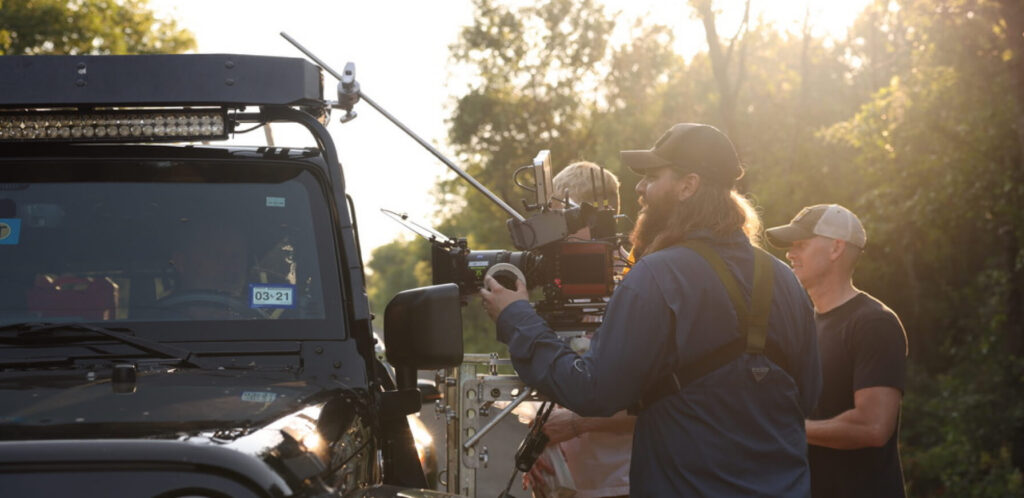
Global meetings often bring together teams, investors, customers, and speakers across countries and time zones. Hybrid production gives them one shared program while adapting the experience to each viewing environment. In-room attendees follow the stage, while remote attendees receive a broadcast with intentional camera direction, branded graphics, clear audio, and moderated participation.
The production team also plans for the realities of a distributed audience. Platform access, speaker time zones, captioning, playback, technical support, and on-demand delivery all shape the experience. One coordinated plan keeps those details from fragmenting the message.
Effective hybrid event production depends on three connected systems:
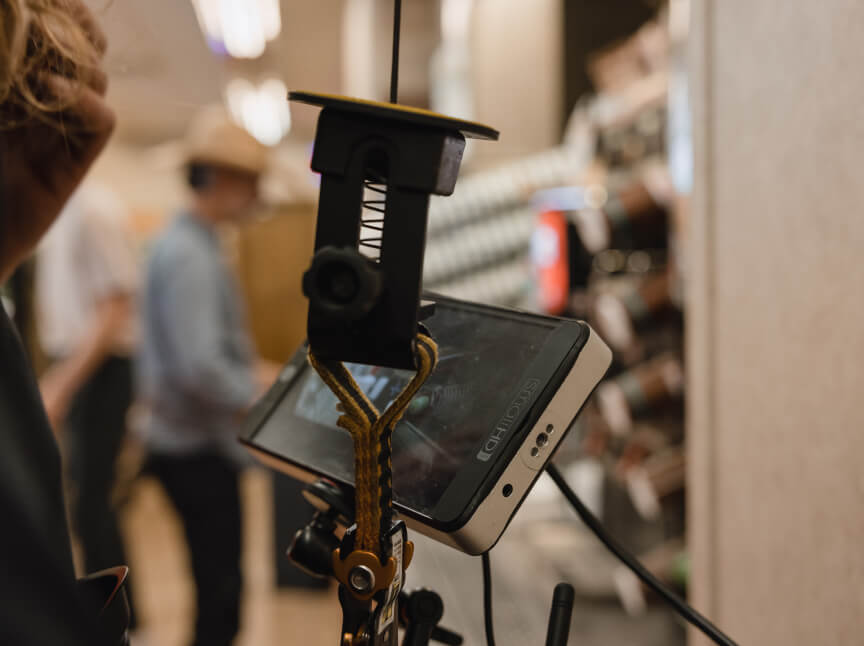
Hybrid event production works when the room and the remote audience share one show. One run-of-show, one production team, and one visual system keep every speaker, cue, and interaction aligned across locations.
Start with the audience and the message, then build the technical plan around how people need to watch and participate. A practical planning sequence looks like this:
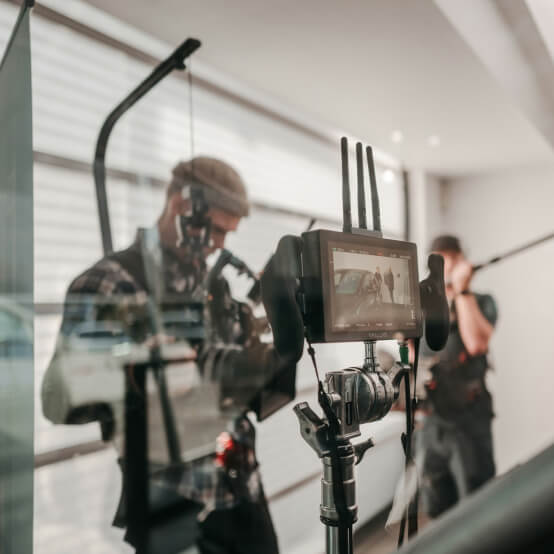
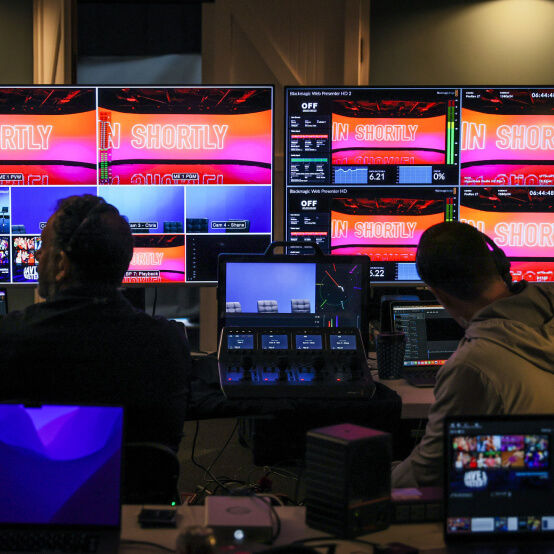
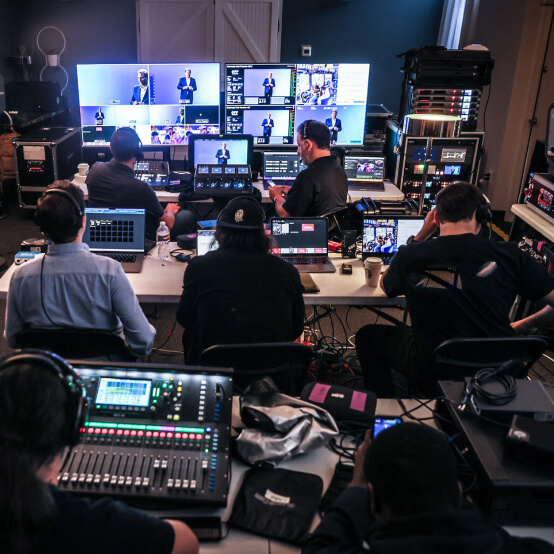
For high-quality hybrid production, begin with broadcast-level video and audio. Stable streams, clear sound, and professional visuals minimize technical distractions, enabling the audience to focus on the message.
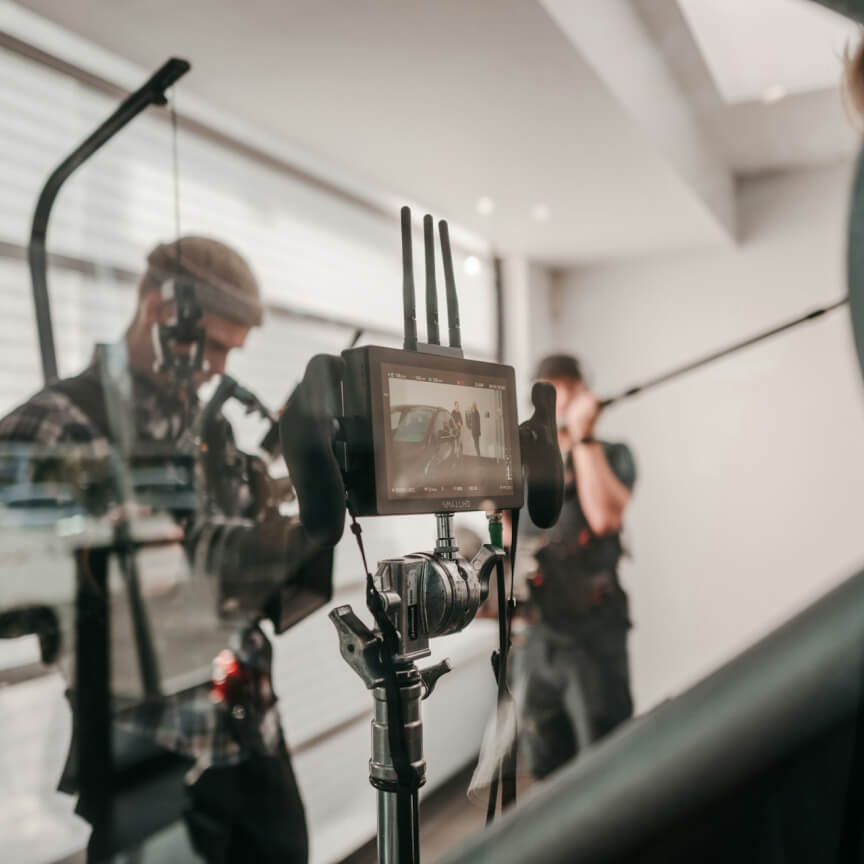
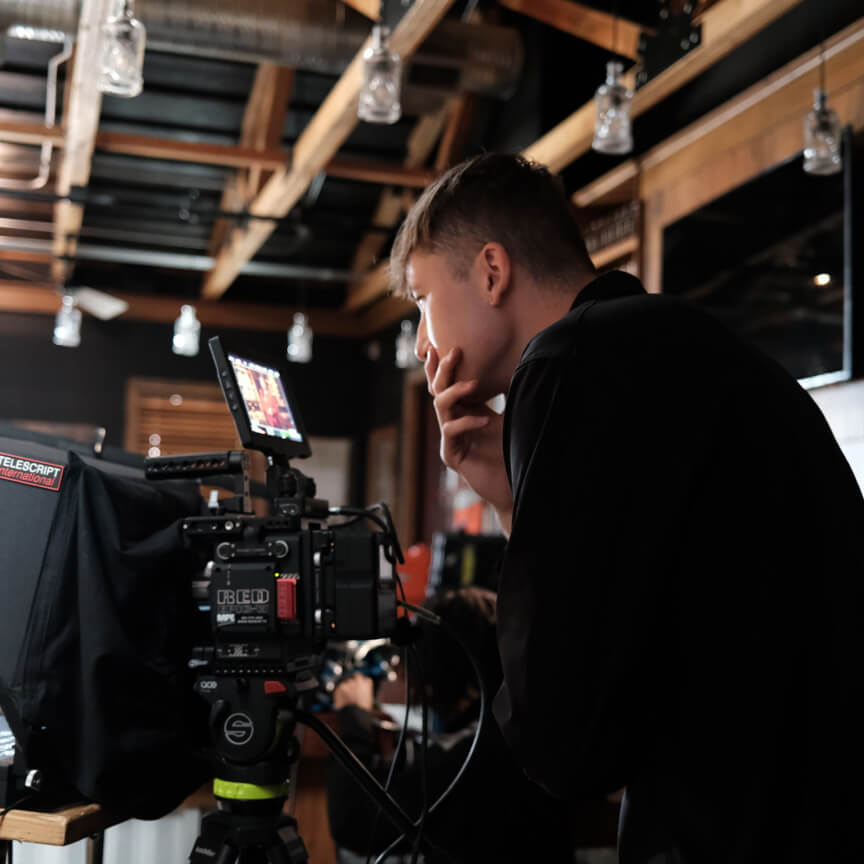
Hybrid production expands access without asking every attendee to travel. It gives leadership a consistent way to reach employees, investors, partners, or customers while preserving the energy and accountability of a live program.
It also turns one event into a reusable content system. Teams can deliver the live broadcast, publish an on-demand replay, create session edits, capture executive interviews, and build short-form recaps from the same production. Coverage of programs such as the NVIDIA GTC keynote shows how strong event production can serve both the live moment and the audience that arrives later.
These four Investor Day programs show how one production system can connect leadership, live audiences, and remote stakeholders across different event formats:
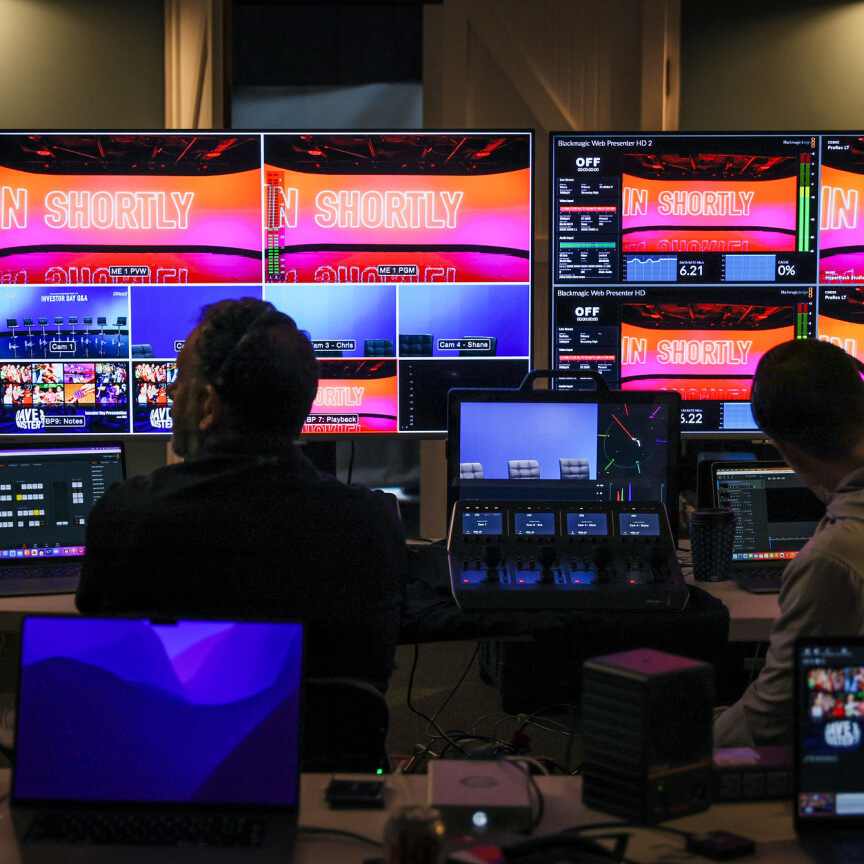
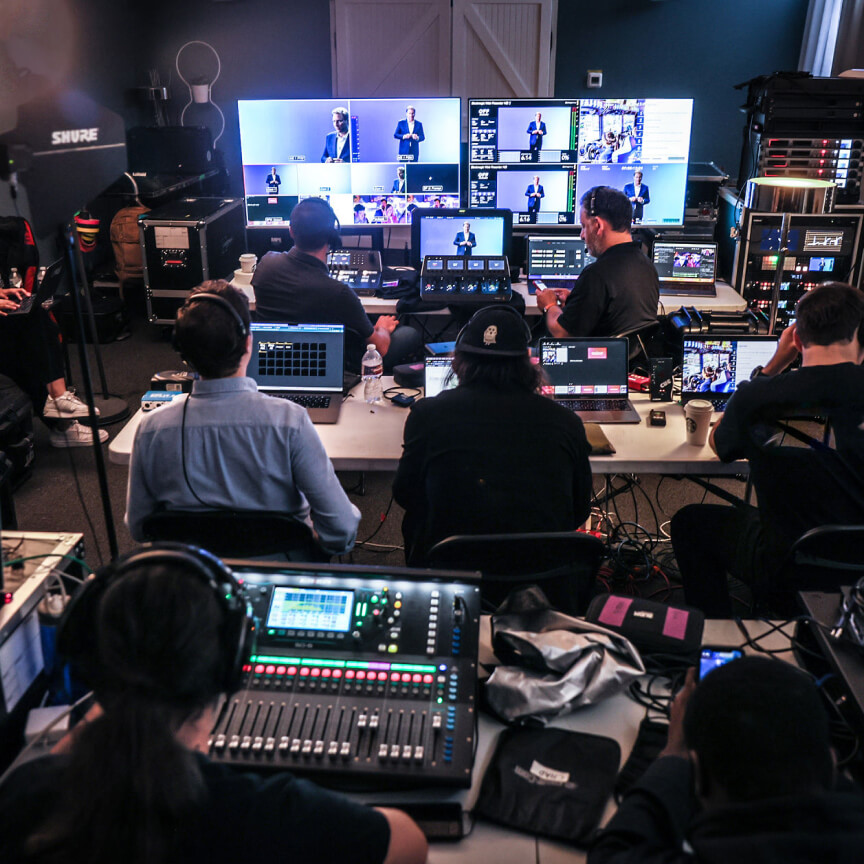
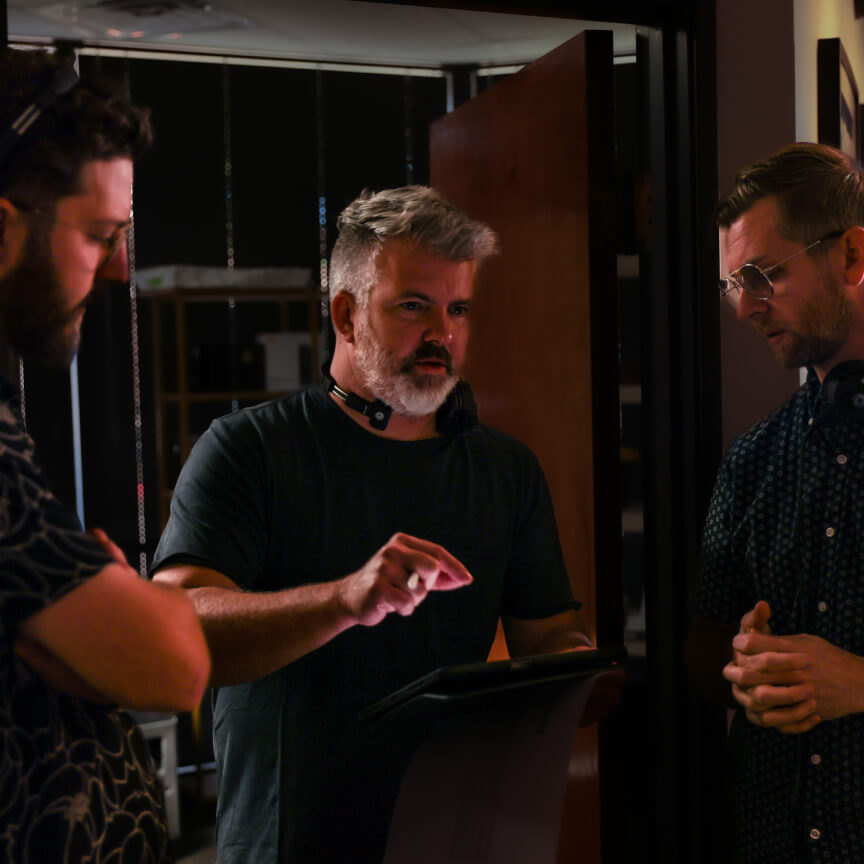
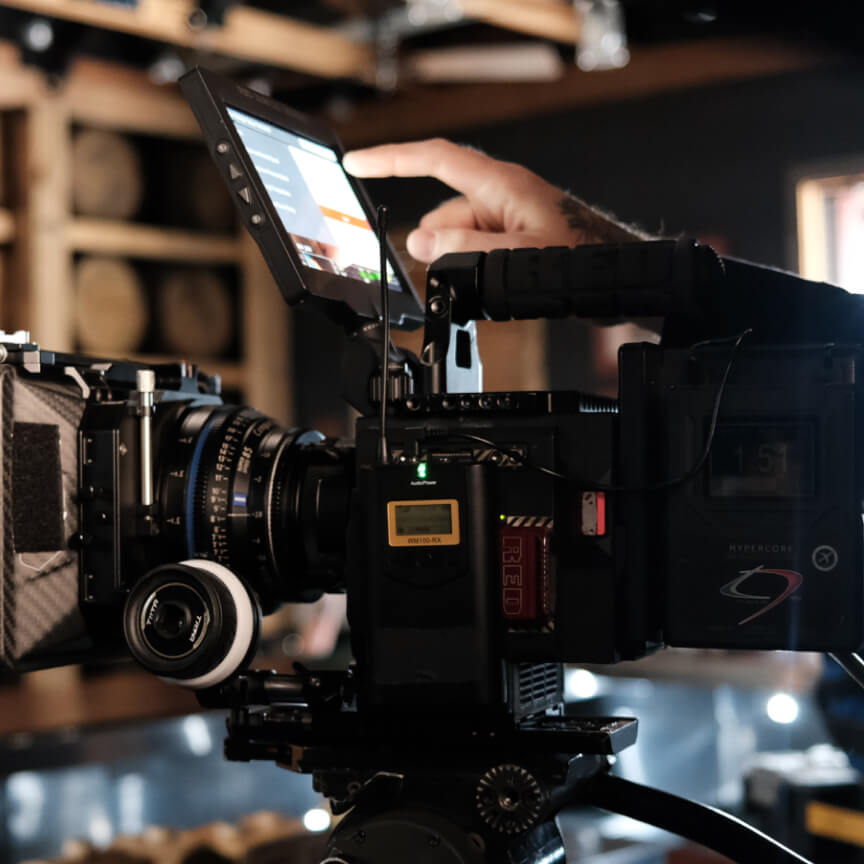
A hybrid event production company can manage the run-of-show, staging, cameras, lighting, audio, graphics, streaming platform, remote speakers, rehearsals, audience interaction, technical support, recording, and post-event deliverables. The exact scope should match the audience, venue, platform, and distribution plan.
Most teams should begin planning several weeks before the event, and complex global programs may need a longer runway. Early planning gives the production team time to confirm the venue and platform, collect speaker materials, build graphics, test remote connections, rehearse transitions, and prepare backup systems.
Give remote attendees a broadcast designed for them. Use intentional camera coverage, concise segments, branded graphics, live Q&A, polls, moderated chat, and a host who acknowledges the online audience. Clear audio and responsive technical support matter just as much as interactive features.
The best hybrid events treat the room and the stream as two views of one experience. A single production partner can align the story, run-of-show, technical systems, and post-event content so every audience receives the same confident message. Explore Cardboard Spaceship’s live, virtual, and hybrid event production services to plan the full program.